
By Lehlohonolo Lehana.
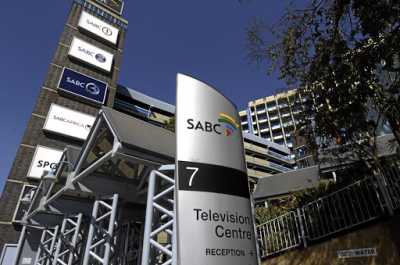
The South African Broadcasting Corporation (SABC) is on track to lose R1-billion this year, and it could be forced to apply for the business rescue.
The Sunday Times, reports that the public broadcaster is in extreme financial distress and will not be able to pay salaries.
The SABC said that its financial challenges are due to load shedding, the current economic downturn, and the analogue switch-off.
Group CFO Yolande van Biljon said that if the group cannot sort out its financial situation, it could go into liquidation.
If it did follow the liquidation process, it would become the second institution under the Department of Communications to do so after the South African Post Office (SAPO).
“The business rescue application that [the Post Office] is currently contemplating is going to become a very real consideration unless other sources of funding or support [are] identified and confirmed as a matter of urgency in the medium to longer term, while in the short term, immediate significant interventions that are in the corporation’s control are required,” van Biljoen wrote in a memorandum in June.
Despite the memorandum coming out last month, the SABC board is yet to intervene on the matter.
Most observers put it down to the presence on that new board members of former SABC head of news, Phathiswa Magopeni. She refused to interview the president before the last elections after the interview was hastily arranged at another broadcaster’s facilities. The spat turned very ugly, with the board and Magopeni lodging grievances against each other – which ultimately resulted in Magopeni leaving under a cloud.
It’s worth remembering that Fikile Mbalula, now the ANC’s secretary-general, was then the governing party’s head of elections (and allegedly had a day job as transport minister), blamed the broadcaster for his party’s woeful showing.
Could it be that the president allowed another state-owned entity to fall into financial disrepair because of a silly attempt to keep a former journalist, who has a known penchant for independence, off the SABC board before a crucial election?
In addition, the memorandum said that the available cash to settle the obligations at the end of May was short R60 million, despite the company not paying its monthly instalment to Sentech for roughly a year.
In the SABC’s own 2021 annual report, Auditor-General Tsakani Maluleke clearly warned that “a material uncertainty exists that may cast significant doubt on the public [entity’s] ability to continue as a going concern”.
The SABC has also recently announced a plan to solve one of its biggest financial problems – the non-payment of TV licenses.
Responding in a parliamentary Q & A Minister of the Department of Communications and Digital Technologies (DCDT) Mondli Gungubele said there are 9.2 million account holders with outstanding balances for their TV Licences – valued at R44.2 billion.
However, the minister said that the department is working on a new funding model that would eliminate the TV Licence altogether.
“In terms of the South African Broadcasting Corporation SOC Ltd Bill 2022 that was approved by Cabinet on 29 November 2022 for the submission to Parliament for processing, the DCDT is proposing that the television licence model be replaced with the household fee model,” Gungubele said.
As per the group’s annual performance plan in May 2022, the new ‘household’ levy will mean that South Africans who do not have a television set will still be required to pay.
Essentially, the levy will be applied to all households and businesses in the country and will not be based on actual viewing but rather on access to content. Thus, the levy will be payable even if SABC content is not consumed.