
By Lehlohonolo Lehana.
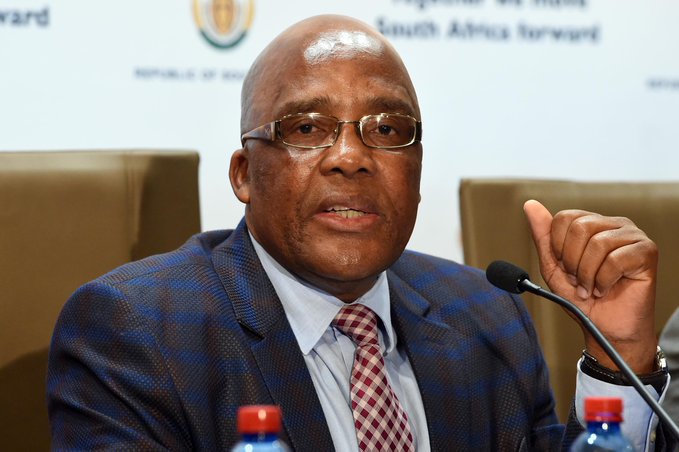
Minister of Health, Dr Aaron Motsoaledi says South Africa’s HIV/Aids programme is not at risk of collapsing in the wake of the Pepfar withdrawal.
Motsoaledi was responding to media reports that HIV testing and monitoring across the country had fallen since the US cut aid that funded health workers and clinics. Pregnant women, infants and youth are the most affected, previously unpublished government data shows.
South Africa has the world’s highest burden of HIV, with about 8-million people – one in five adults – living with the virus. The US was funding 17% of the country’s HIV budget until Trump announced the withdrawal of aid early this year.
Data from the National Health Laboratory Service (NHLS) showed that viral load testing had fallen by up to 21% among key groups in the last two months.
During media briefing in Pretoria, Motsoaledi listed steps taken by the Department of Health to address the loss of aid, including assistance for members of key populations affected by the closure of Pepfar-funded clinics and new training programmes for health workers.
“Over the past three weeks there have been numerous media statements, articles and claims by prominent South Africans who are well known within the HIV/Aids [sector]. The general thrust of their narrative is that since the announcement on 20 January 2025 by President Donald Trump to withdraw funding from Pepfar, that the HIV/Aids programme has collapsed or is on the verge of collapsing,” Motsoaledi said.
“We wish to confirm today that the fight against HIV/Aids and TB is in our villages, in our communities and townships, and even on the streets of our country, and that is where our focus is, has been and… should be.”
Motsoaledi’s words appeared to be a criticism of health experts and activists who have been vocal in recent months about the need for a clear emergency plan from the government to address the loss of US funding for the HIV/Aids programme in South Africa.
Pepfar funding made up R7.9-billion of South Africa’s R46.8-billion HIV/Aids programme. It supported the Health Department in 27 high-burden HIV/Aids districts, according to Motsoaledi.
Across these districts there were 12 NGO-managed, specialised clinics serving key populations through Pepfar funding, which supported 63,322 individuals, he continued.
“When the Pepfar-funded clinics were closed, we removed the files of these people from those clinics to the nearest public health facilities, and we can confirm today that all 63,322 files belonging to these key populations were moved to public health facilities.”
The minister added that 34 facilities funded by the Global Fund and four NGOs supported by the South African government had continued to provide uninterrupted services for members of key populations living with HIV/Aids.
Of the 271,606 people working in the HIV/Aids programme across the 27 districts, 15,539 were funded by Pepfar, continued Motsoaledi.
“We can confirm today, unfortunately, 8,061 are out of their jobs,” he said. “The remaining 7,478… are still employed because they are funded through Centres of Disease Control, or CDC, at least until September this year.”
Pepfar funds were distributed to South African implementing partners by the US Agency for International Development (USAID) and the CDC. The USAID issued funding termination notices to South African partners in February.
According to Motsoaledi, there is no plan to absorb the 8,061 unemployed health workers into the public health system at this stage, though he described them as “people of interest” in the Health Department’s talks with potential funders and National Treasury.
Motsoaledi listed several engagements he’s had since the funding withdrawal, including with the Bill Clinton Foundation and the Bill and Melinda Gates Foundation.
However, he said that none had come through to help plug the nearly R8 billion hole.
“We’ve raised nothing except the R1 billion from the global fund to buy ARVs [anti-retrovirals]. Up to so far, we haven’t raised a cent from anybody, we’ve raised nothing.”
Motsoaledi said he’d also met with the National Lottery to assist, but this had also not yet been successful.
In 2010, the National Lottery contributed R17 million to the treatment campaign. Last week, the deputy president, as the chair of the South African National Aids Council, also said the council had approached the lottery for assistance.