
By Lehlohonolo Lehana.
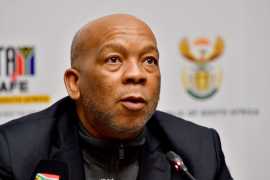
Electricity Minister Kgosientsho Ramokgopa says the higher load shedding stages experienced over the past week, cannot become the norm.
The country was plunged into stage 6 load shedding throughout last week amid a cold snap which hit most of the country.
Snowfall was experienced last week in parts of the country, including Gauteng, leading to a sudden spike in the demand for electricity.
Ramokgopa spoke during a media briefing in Pretoria on progress being made in the battle against load shedding.
“Load shedding is unacceptable, and going to higher stages of load shedding, especially stage 6, that should not become the norm. If anything, that should constitute an extraordinary occurrence, and we are going to make it the case that for purposes of protecting the grid, there is a need for us to initiate stage 6 load shedding.”
“We have gone through a very difficult three days since we got a significant amount of reprieve over the past 21 days when we were able to sustain a relatively healthy performance of the units and of course we experienced a reduction in the available capacity I think starting on Thursday.
“We had to take measures that are meant to protect the grid and we went to stage 6 load shedding. So we would like to express our most sincere profuse apology for having taken you through a very difficult stage of intensive load shedding,” he said.
“I’m not in anyway suggesting that load shedding is acceptable, but I think the intensity of load shedding that goes beyond stage 4 is something that should become unacceptable and it is something that… from a technical point of view, we are able to avoid. I’m raising this because I know it disrupted life and businesses – especially those who are operating over the weekends.”
The minister has urged South African households to become more energy independent.
“Our view is to encourage people to the extent that they can go through an exercise of getting renewables as part of our commitment to the decarbonisation agenda, just households becoming energy independent and some of them over a period of time, can be net generators of energy as compared to consumers.”
However, load shedding actually reduced going into the winter period, with most of June seeing stage 3 as the highest stage of load shedding.
This was due to multiple reasons, including a reduction in planned maintenance, a decline in unplanned outages, and, crucially, lower-than-expected demand.
Last week, South Africa was hit with a particularly biting cold front, resulting in a significant increase in demand.
For instance, demand on Saturday, 8 July, was 27,725 MW, but by Monday, 10 July, when the cold front hit, demand reached 33,370 MW. This, coupled with an increase in breakdowns, pushed Eskom to stage 6.
Although load shedding has since lessened to a rotation between stage 2 and 4, the Bureau for Economic Research (BER) said that higher levels of load shedding could hurt the economy as the country moves into Q3.
Although the economists said they remain constructive on Q2 2023 real GDP dynamics – with manufacturing and mining production higher in Q2 than Q1 – elevated levels of load shedding might halt Q3 growth momentum.
“Therefore, the weakness we initially expected for Q2 may simply be postponed to the third quarter,” the BER said.
That being said, the BER previously said that there may be some positive news for load shedding in the near future.
The BER said that an update from Operation Vulindlela – a joint operation between the Presidency and National Treasury that wants to introduce reforms in the energy space – has led to optimism.
Importantly, Operation Vulindlela’s Embedded Generation Task Team has tracked an increase in private sector generation projects from approximately 4,000 MW in March 2022 to a combined capacity of 10,000 MW.
3,000 MW of this is expected to come online next year, which should help reduce load shedding by three stages.
The BER also noted that Eskom should return several major generation units from long-term outages by the end of this year or the start of 2024.
This, ultimately, means that South Africa’s energy crisis should lessen in intensity in 2024.
Watch Live in the video below:
Video Courtesy of GCIS.