
By Lehlohonolo Lehana.
ANC Secretary General, Fikile Mbalula says the BRICS Political Parties has reaffirmed their opposition to unilateralism, inequality, weaponisation of international finance and trade through unfair sanctions and economic blockades, as well as the waging of wars as a means to effect global control.
Mbalula said it was, therefore, appropriate that an expanded platform of the BRICS Political Parties Plus Dialogue be convened to mobilise greater support for the advancement of the progressive and common global agenda for change.
“BRICS will remain open to engagements with all. We welcome those who want to be part of the BRICS family of nations and want to guarantee their right to choose their development paths and social systems. Humanity has a beautiful diversity of cultures, religions, and civilizations, which is our common and shared heritage,” he said.
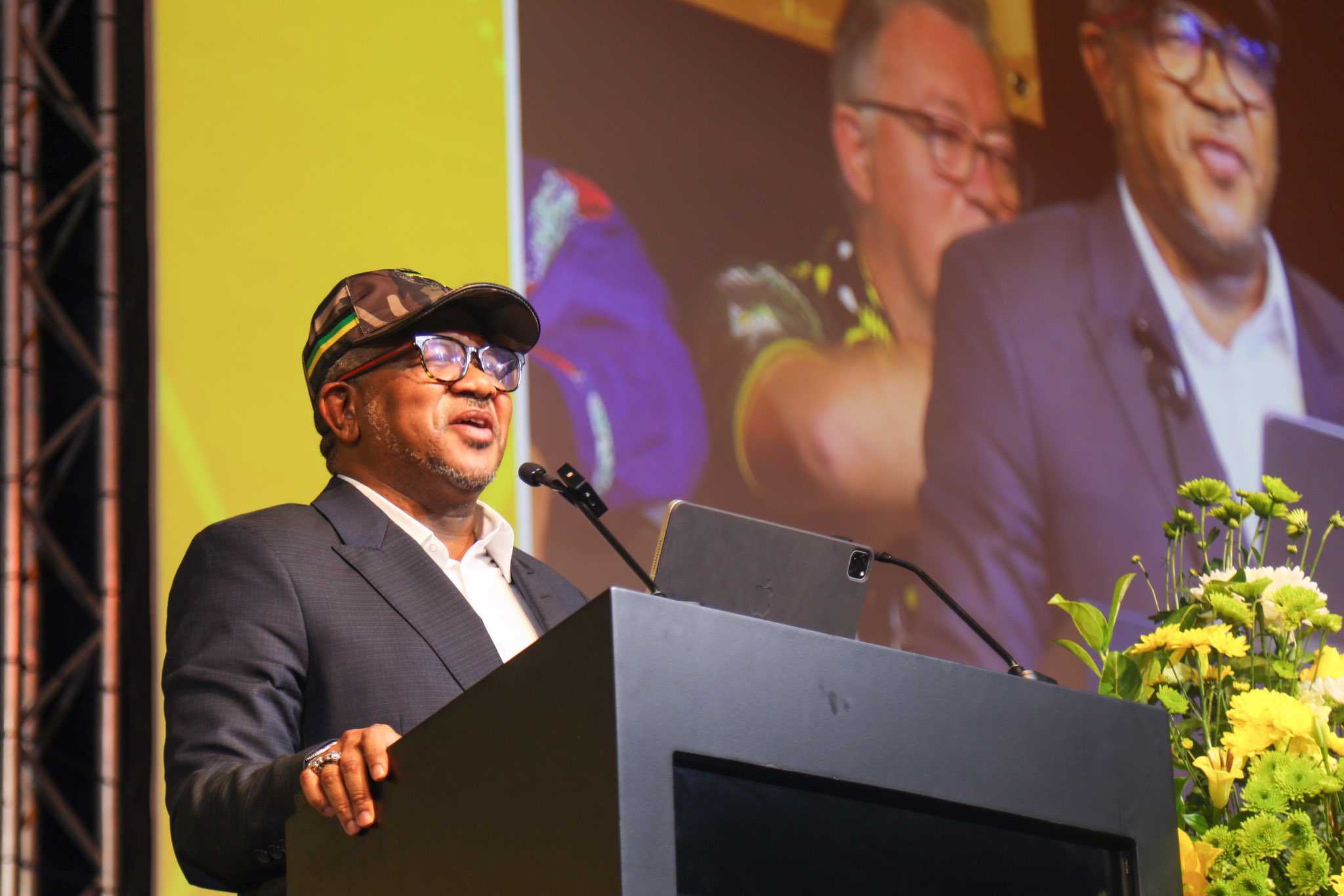
Mbalula delivered the closing address at the BRICS Political Parties Plus Dialogue on Thursday.
Delegates from more than 50 progressive political parties across the continent and internationally graced the three-day event that got under way under the theme of Partnership for mutually accelerated growth, sustainable development, and inclusive growth.
The closing day was attended by a number of former and current ANC leaders, including Dr Zweli Mkhize, Bathabile Dlamini, Lindiwe Sisulu, Supra Mahumapelo, and others.
Mbalula said it is important to declare that BRICS and all its associated meetings and programmes are not opposed to any country.
“As BRICS, we refuse to declare any country as our enemy,” said Mbalula.
His sentiments come amid ongoing war between member nation in Russia and neighbouring Ukraine.
Questions about whether Russian President Vladimir Putin would travel to South Africa for the upcoming BRICS Summit in August cast a shadow over the event, but President Cyril Ramaphosa on Wednesday confirmed that Putin will not attend the BRICS summit in August.
South Africa is set to host the leaders of Brazil, Russia, India and China at the summit from 22 to 24 August.
Mbalula said the growing influence of BRICS and other multilateral forums, such as the G20, is evidence that countries are refusing to be spectators in this changing geopolitical environment.
“As this BRICS Political Parties Plus Dialogue showed, we are co-architects of change in our world, “said Mbalula.
Mbalula’s words followed two days of commissions that reflected on potential cooperation between BRICS and Africa in a changing geopolitical landscape, and included topics of mutually accelerated growth and sustainable development and promoting peace and security through dialogue and negotiations.
He said strong, progressive and moral voices were needed about a new, more equitable and just world order.“As progressive political parties, we must be conscious agents of a global system that puts people first, that respects the cultural diversity of all and respect the rights of countries to chat their own development paths.“It is a quest of global humanity that must be underscored by shared values of multi-laterism, democracy, equality, universal development, peace and stability, a humane and prosperous world.
Various political parties and countries represented at the three-day Political Parties Dialogue hosted by the ANC have committed to finding solutions to the issues affecting a number of countries in the changing multipolar world.
ANC first deputy secretary-general Nomvula Mokonyane read out the BRICS declaration made by various countries and participants at the Political Parties Plus Dialogue on Thursday.
Mokonyane said the declaration was a statement of intent and solidarity with the resolutions of the three-day dialogue, just weeks before the 15th BRICS Summit in August.
She added that the declaration also spoke to the need for countries belonging to the global south to find their own sovereignty away from the restrictive structures of Western countries, which continue to dictate matters to these countries, including economic and industrial development policies.