
By Lehlohonolo Lehana.
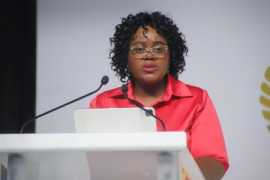
Human Settlements Minister Mmamoloko Kubayi, says additional resources will be allocated towards disaster prevention in the country’s informal settlements.
The consensus was reached at a meeting involving the Members of the Executive Council (MINMEC) of Human Settlements, Members of the Mayoral Councils (MMCs) of Human Settlements, and Executive Mayors.
The plan unfolds the redirection of 5% of the Informal Settlements Upgrading Partnership Grant. The resources will be utilized to reposition densely populated informal settlements into clusters, facilitating improved access for emergency services and enhancing facilities for water, electricity, and sewerage.
On emergency and disaster interventions in informal settlements, the meeting agreed that reblocking (reconfiguration) will help to proactively deal with disastrous fire emergencies in provinces and municipalities, which often lead to loss of lives and the complete destruction of property.
The meeting also expressed a need for more stringent measures to deal with land invasion across the provinces, as it impacts on development efforts by all three spheres of government.
“The meeting recommitted to finding ways to speed up more land acquisition to relocate people, including those affected by disasters, amidst government’s decision against the use of Temporary Residential Units for emergency interventions in favour of more permanent solutions, like Alternative Building Technology (ABT).
“In addition to informal settlements upgrading as one of the priorities for the Human Settlements sector, the meeting reemphasised the rapid rollout of the title deeds programme as a priority to ensure that South Africans become the rightful owners of their own homes – as part of reforms by government to significantly unlock economic benefits,” Kubayi said.
The MINMEC also reflected on other sector priorities, including the expansion of First Home Finance; the provision of service sites, elimination of mud houses or informal dwellings in rural areas, as well as the removal of asbestos from homes.
It further undertook to find urgent solutions to address housing needs of communities, collaborating with other sister departments, like Co-Operative Governance and Traditional Affairs (COGTA), to provide support packages for metros to resolve challenges related to bulk infrastructure and procurement delays affecting service delivery and delays in the proclamation of township.
The MINMEC received input from the COGTA Minister, Thembi Nkadimeng, and her team on the work done on secondary cities and metros.
“A joint submission is expected to be made to Treasury with a view of initiating a process to address funding needs of secondary cities, which often act as catalysts for development in their regions, alleviating demographic pressure from a country’s metropolitan areas,” Kubayi said.
The alignment and improvement of business plans of Metros came into sharp focus to resolve existing housing delivery, as well as delays in proclamation of townships.
The MINMEC recommitment to combine efforts to strengthen internal controls, project planning, management, and implementation – which are key elements to ensure that projects are completed timeously, with achievable set targets and improved performance on the Medium-Term Strategic Framework (MTSF).
Meanwhile, Kubayi said an analysis of the Human Settlements Grants Performance, for the period ending 30 June 2023, has flagged challenges in procurement, skills capacity and contract management.
The Minister said due to this, a team from the department will at the end of this month embark on consultations with various provinces and municipalities to discuss noncompliance and performance improvement strategies to ensure that funds are utilised for the intended purposes.
She said the team will conduct assessments of projects to close gaps early and avoid under-expenditure, which leads to loss of money from the sector.
“In that regard, MINMEC resolved there must be transparency before any considerations to withhold or reallocate unspent funds for noncompliant provinces found to have substantially underspent during the end of the second quarter, in accordance with the Division of Revenue Act. In instances of overspending, a process will be undertaken to determine value for money,” the Minister said.