
By Lehlohonolo Lehana.
Former president Jacob Zuma appeared at the Estcourt correctional facility on Friday morning and was released under a remission process.
National commissioner for correctional services Makgothi Thobakgale says Zuma reported to the Estcourt Correctional Centre on Friday morning, was processed there and then released on “remission” shortly thereafter.
“In compliance with the SCA judgment, Zuma did report back at Estcourt Correctional Centre. A consideration has been made as per legislation, including processes that were already unfolding in the management of Correctional Services.
Thobakgale added that Zuma was “never a free man” when he was released on medical parole, arguing that he was on “community corrections”.
Zuma’s initial arrest two years ago led to violent protests across South Africa that saw over 300 people killed.
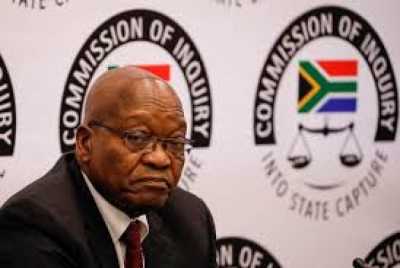
Zuma, 81, was sentenced to 15 months imprisonment for defying a court order to participate in a corruption inquiry into high-level corruption during his nine-year tenure as president.
He handed himself over to authorities in July 2021 but was released on medical parole due to ill health two months later. He denies corruption allegations.
Correctional Services Minister Ronald Lamola later announced that the former statesman had benefitted from a special remission of prison sentences for non-violent offenders, approved by President Cyril Ramaphosa.
Lamola said the decision to have a special remission was to address overcrowding in prison, not to let the former president off the hook.
This meant Zuma spent less than two hours in prison before he was released. As a result of the remission, he will not be on the parole system.
Zuma is one of the beneficiaries of this decision as a low-risk offender. This decision will result in the deportation of 3064 foreign nationals serving short-term sentences under the guidance of the Department of Home Affairs.
“Additionally, it will alleviate overcrowding in correctional centres by releasing approximately 9,488 inmates and a further 15,000 inmates who are currently under correctional supervision and parole.
“The majority of the beneficiaries of this decision are already serving parole or under correctional supervision in their communities.
“The exercise of exploring special remission commenced on 24 April 2023 when we lost approximately 1112 bed space due to dilapidation in most of our centres,” Lamola added.
Lamola says the recent fire at Kutama Sinthumule meant that overcrowding will increase by 4%, raising the overcrowding rate to 47.06%.