
By Lehlohonolo Lehana.
The BRICS group of major emerging economies – Brazil, Russia, India, China and South Africa – is holding its 15th heads of state and government summit in Johannesburg between Aug. 22 and Aug. 24.
Topping the agenda of the much-anticipated BRICS summit will be the financial vulnerability of member states, but the creation of a common currency and a new financial world order.
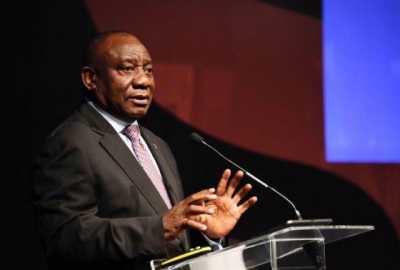
The Brics grouping summit in Johannesburg is being hosted by the South African president, Cyril Ramaphosa, and brings together the prime minister of India, Narendra Modi, as well the presidents of China, Xi Jinping, and Brazil, Luiz Inácio Lula da Silva.
Dozens of leaders of other countries in Africa, Asia and the Middle East are also attending, many hoping to be invited to join the bloc. The two-day summit opens on Tuesday morning.
Russia is being represented by its foreign minister, Sergei Lavrov, after Vladimir Putin decided not travel to Johannesburg to avoid forcing South Africa to choose between fulfilling conflicting obligations as hosts of the summit and as a member of the international criminal court.
The summit may see the group, whose economies account for a quarter of global gross domestic product, take a clearly anti-western turn. This raises the prospect of a new and re-energised economic and political actor against the US and its allies in world affairs.
On Sunday, Ramaphosa sought to reassure concerned observers and domestic opponents that South Africa would “not be drawn into a contest between global powers” and wanted to avoid a world that was “increasingly polarised into competing camps”.
“China and Russia have expressed interest in expanding the group in an effort to grant it greater weight in international affairs. Over 40 countries have expressed interest in joining the BRICS group with 22 formally requesting membership. These include Arab allies of the United States such as Saudi Arabia, the United Arab Emirates, Bahrain and Egypt, and rivals such as Iran. The list also includes countries from Africa, South America and Asia.
The second issue is de-dollarisation. China and Russia seem intent on using a larger BRICS forum as a focal point of their efforts to cut their dependence — and that of the global economy — on the US currency that has dominated cross-border invoicing and settlements since World War II. Beijing and Moscow are already conducting most of their trade in local currencies, especially the Chinese Yuan. Russia has pitched for a new BRICS currency, perhaps backed by gold, that would be used as an international medium of exchange between the members instead of the dollar.
For Russia and China, de-dollarisation has taken on fresh importance as they’ve increasingly come under sanctions from the West. Fear of how American and Western economic statecraft can damage their economies and limit their national security autonomy is a major issue of debate in both Moscow and Beijing.
But while South Africa, Brazil and India have better relations with the West, they too see lesser reliance on the dollar as being a positive for their economic growth and trade potential.
Meanwhile South African finance minister Enoch Godongwana believes it’s too early for South Africa to enter discussions about de-dollarisation and creating an alternative to the cross-border payments system Swift.
Godongwana was speaking to the media on the sidelines of the state visit by Xi Jinping at the Union Buildings on Tuesday.
The conversation around de-dollarisation is one of the topics on the agenda as emerging economies seek to assert their voice as a counterweight to Western dominance in global affairs.
“It is too early for South Africa to enter that discourse because our trade as it stands is skewed in favour of the West,” said Godongwana.
“Seventy-five percent of our foreign liabilities are Europe and North America, now to come and say we as South Africa can do that is premature. It doesn’t mean we can’t participate in other payment systems. There are some discussions within central bank streams.”
“There are a lot of languages that are being used which I am uncomfortable using at this stage because that is not the current debate. The current debate is how do we finance projects in each of the BRICS member states in their own currencies,”
He said the New Development Bank has raised R1,5 billion to finance South African projects.
“In the NDB we have already extended the scope of the membership, Egypt has already joined, and Saudi Arabia and other countries have already joined. Botswana is likely to apply, and Namibia has also shown interest.”
He maintained that South Africa is still an attractive investment destination.
“We, as South Africa, look at it from our own eyes, an investor look at South Africa comparably with other emerging markets. When you look at South Africa compared to other emerging markets, South Africa is still one of the best investment destinations.”
Amid claims that the summit will be merely another talk shop, Godongwana said he believes it will put South Africa on the map as a global player.
“The decisions that are going to be implemented here have been work that has been ongoing, chaired by different South African streams from deputies up to ministers.
“So, what we are likely to see here is an emergence of a work already done. This meeting is going to profile South Africa as one of the major countries in the global South. That is the benefit we are likely to see.”
Trade, Industry and Competition Minister, Ebrahim Patel, has reflected on the issues facing global economies as he welcomed all delegates at the 15th BRICS Summit, which officially kicked off in Johannesburg on Tuesday morning.
A special welcome to all of you to the province of Gauteng, the economic powerhouse of the African continent, where 35% of South Africa’s wealth is generated. This small but very productive province accounts for 5% of Africa’s GDP [Gross Domestic Product],” said Patel.
Patel told the room full of delegates that the world looks different from five years ago when the country hosted the 10th BRICS Summit in 2018.
“Today, the world is more polarised, climate change is more pressing and the speed of technological innovation is rapidly increasing. These trends are in turn reshaping our economies and societies in more profound ways than more of us can project,” he said.
The Minister noted that change across the globe has created turmoil and tension.
“As the world changes, we have seen a rise of unilateralism and a pushback on the global rule-based system.”
Brazil’s Finance Minister, Fernando Haddad, said his country always strives to facilitate investment in the interest of his country. He described BRICS’ contribution as “enormous”.
“In Brazil, we believe in multilateralism and cultural and social diversity, and that we equitably distribute the opportunities.”
Haddad said it was important for BRICS to be unified.
India’s Minister of Commerce and Industry, Piyush Goyal, commended businesses for organising centres for them to discuss the BRICS economies.
He said India, which grew its GDP grew by 7.2% last year, is one of the world’s fastest growing economies.
Goyal said India is also transforming its infrastructure, and that it boasts more than 800 million internet users and an increase in online services.
In addition, the country is also growing its renewable energy sources.
Goyal also reflected on the important partnership between the BRICS countries and the global south based on mutual respect.
Watch Live in the video below:
Video Courtesy of SABC.