
By Lehlohonolo Lehana.
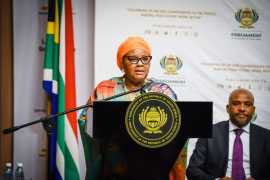
National Assembly Speaker Nosiviwe Mapisa-Nqakula declined African Transformation Movement (ATM) and the United Democratic Movement (UDM) calls for a secret ballot vote on the impeachment of suspended Public Protector Busisiwe Mkhwebane.
The parties wrote to Mapisa-Nqakula this week calling for a secret ballot vote after the Section 194 Committee recently adopted a final report recommending Mkhwebane’s removal from office.
Mkhwebane’s term of office expires on 14 October, at which time she would be entitled to a gratuity of around R10 million.
“The Speaker, after careful consideration of the matter and a thorough examination of the relevant legal precedents and principles that guide the Speaker’s discretion in determining a method of voting, communicated her decision to the ATM and UDM [on Thursday],” reads a statement from parliamentary spokesperson Moloto Mothapo.
The statement continued: The Speaker has taken into account the established law that empowers her to determine the voting procedure when no specific method is prescribed by the Constitution or rules. In this case, the rules governing the removal of Chapter 9 officebearers do not specify the method of voting. The Speaker has also considered the circumstances surrounding the section 194 enquiry and the impending removal proceedings.
Mapisa-Nqakula believes that a closed voting procedure would deprive citizens, who have a significant public interest in the matter, of identifying their representatives’ positions and holding them accountable.
She also emphasised that Chapter 9 office bearers are held accountable through various oversight processes of the Assembly, conducted openly and transparently, and the section 194 proceedings themselves have always been conducted in a transparent manner.
“The Speaker has found no reason to believe that any member will be bribed or exposed to corrupt activities in relation to the vote or that there were any safety concerns which may necessitate a secret ballot.”
Mapisa-Nqakula also noted that there was basis in law to delay the debate and vote on the report which, in terms of Parliamentary Rules, has to be scheduled with due urgency.
“The proposal for an open roll call voting procedure was discussed and agreed upon in the Chief Whips’ Forum and later formally approved in the NAPC. Importantly, no objections were recorded by the ATM or UDM or any other political party in both instances. The Speaker has noted that this request for a secret ballot by the ATM has come six full business days after the decision of the NAPC, raising concerns about the timing of the request,” said Mothapo.