
By Lehlohonolo Lehana.
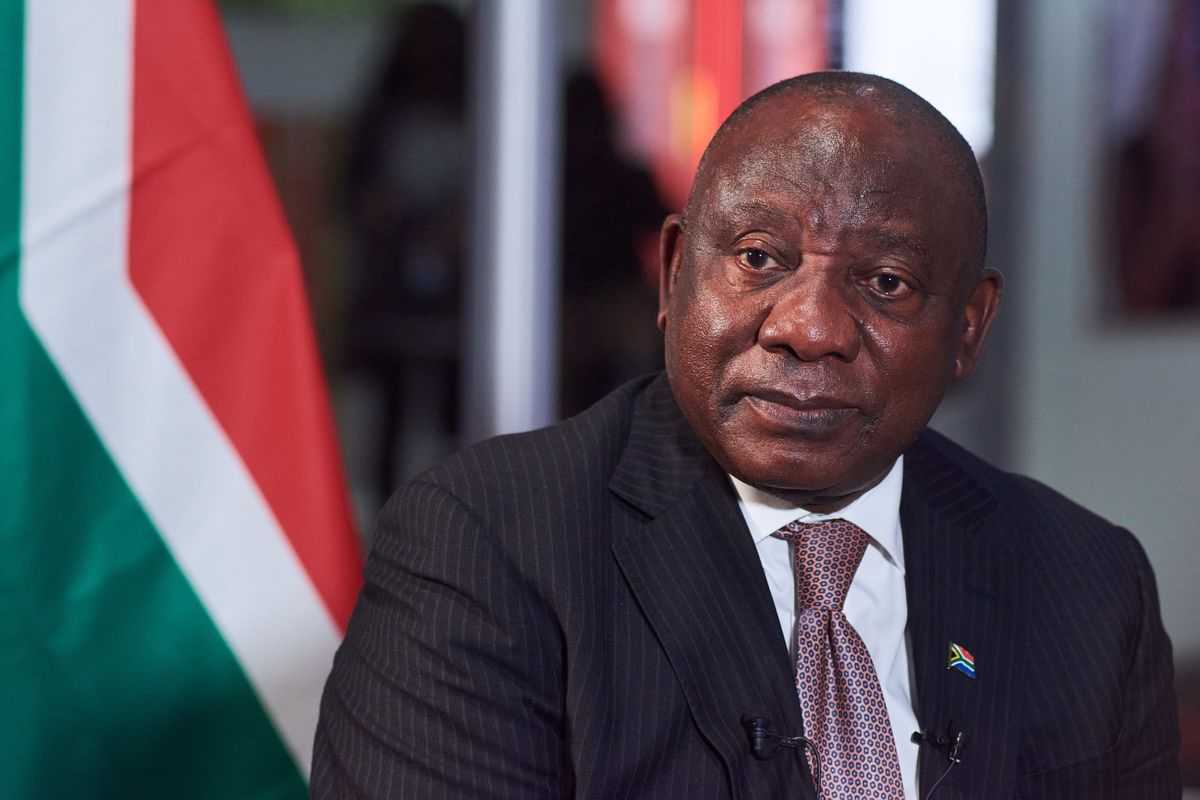
President Cyril Ramaphosa has welcomed the Indian Presidency’s efforts to accelerate progress on the Sustainable Development Goals.
Ramaphosa stated on Saturday that “the SDGs must continue to be at the center of international financing discussions to ensure that finance is mobilized in sufficient quantities and of suitable quality to support development in low- and middle-income countries.”
All nations, developed and developing, are urged to take immediate action as part of a global partnership by the 17 Sustainable Development Goals (SDGs).
They recognize that ending poverty and other deprivations must go hand-in-hand with strategies that improve health and education, reduce inequality, and spur economic growth – all while tackling climate change and working to preserve our oceans and forests.
In his statement on the Working Session II: the President applauded the Indian Presidency’s focus on women’s empowerment as part of achieving the Sustainable Development Goals.
“South Africa has embarked on a journey of ensuring the empowerment of women. The education of girls must be prioritised. We must act to end gender-based violence and enable women to enter the mainstream of economic activity, “Ramaphosa said.
He emphasised the importance of committing to strengthening the global health architecture for pandemic prevention, preparedness and response, and support ongoing engagement on how this proposed architecture will be funded.
“Our experience of the devastating COVID-19 pandemic sends a clear message that global health security is paramount. There is need to develop robust global one health surveillance systems that promote effective collaboration at national, regional and global level.”
“We urgently need a coordination mechanism that supports the sharing of information and resources, research, outbreak investigation and response,” he said.
He noted that countries continue to face an unsteady global economic recovery.
“As policy makers, we therefore need to be flexible and respond quickly and appropriately to risk. Multilateral cooperation is critical to addressing food and energy insecurity. As African countries, we support a discussion on policy options to address the effects of volatility in food and energy markets.