
By Lehlohonolo Lehana.
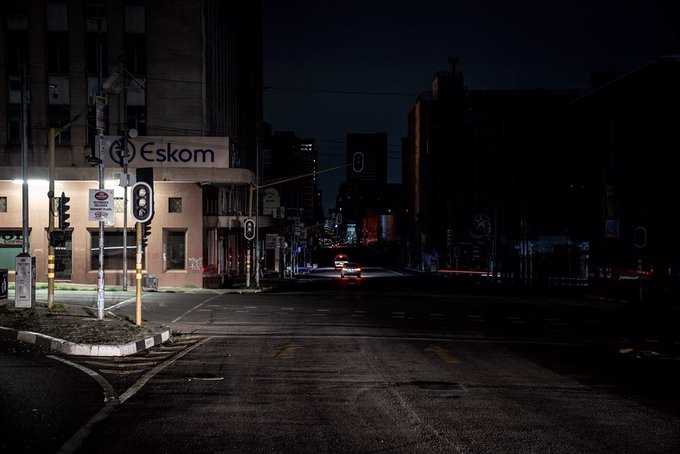
State owned power utility Eskom has suspended load shedding until late Saturday afternoon due to the generation capacity improvements.
Due to further improvement in generation capacity, load shedding will be suspended from 11:00 today until 16:00, Eskom said. Stage 3 load shedding will resume from 16:00 today until 05:00 on Sunday.
Thereafter, load shedding will continue to be implemented as previously communicated. Eskom will publish another update should any significant changes occur, it added.
Earlier in the week, Minister in the presidency responsible for electricity Kgosientsho Ramokgopa said, South Africans should expect intensified power cuts to persist in the short term.
“We are going to stick to planned and philosophy maintenance. We do accept that in the short-term, it’s going to result in the possibility of intensified load shedding,” said Ramokgopa.
Eskom planned to shut down coal plants without introducing sufficient alternative energy generation. This is what caused load shedding, said the Ministry.
Since being appointed Ramokgopa decided to delay the shutdown of Eskom’s coal power stations and fast-track the introduction of renewables.
This means many stations must undergo intensive maintenance to improve their performance, resulting in elevated levels of load-shedding, the Ministry said.
Meanwhile the City of Cape Town says that all grid-tied energy generators need to be authorised – and from October 2023, all small-scale solar energy generator systems will need a city-approved inverter and professional clearance to get approval.
The city said that this applies to all solar PV and battery systems connected to the wiring of the building.
It does not apply to the trolley inverters, for example, that plug into wall sockets. These are regarded as electrical appliances.
The city noted further that applications for standby and off-grid systems will not be accepted. From October 2023, standby systems will no longer be allowed.
According to the city, national legislation and regulations require the authorisation of all power-generating systems connected to the electricity supply.
“Authorisation requirements have been around for almost a decade and the city continues to work to refine processes to the benefit of customers,” it said.
The increased levels of load shedding have resulted in a significant increase in solar and inverter installations, it said, but not all of these installations are done correctly, posing risks to the grid.
The city said it has received large volumes of applications for approvals for these systems, but because there are so many different types of configurations, this has caused delays in the authorisation process.
“Currently, many systems using non-approved inverters are not wired correctly, posing risks to the safety and integrity of the network.
“This significantly slows down the registration process because there are too many different wiring configurations for the city professionals to consider. Reducing the wiring configurations speeds up the process,” it said.
The city said it is working to shorten authorisation approval times, including appointing more staff for faster turnaround, and is in the process of developing an online application tool, which should launch in early 2024. To date, the city has authorised almost 6,000 systems.