
By Lehlohonolo Lehana.
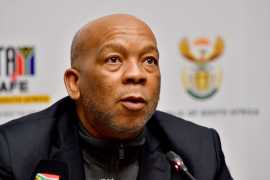
Minister in the Presidency responsible for electricity Dr Kgosientsho Ramokgopa says Eskom’s transmission expansion will require a “considerable amount of resources” that will require government and the private sector to work together.
Ramokgopa said he will table his report in Cabinet in October after he met with business and various stakeholders at the JSE last week where they discussed the financing of the grid expansion.
The government would need more than R250 billion to expand the grid over the next 10 years.
Ramokgopa was briefing media on the progress of the Energy Action Plan.
“We are looking to tap into the liquidity that is available from the private sector to allow us an opportunity to expand the grid so that we are able to accommodate the renewable energy solutions that have been rolled out in the country, and a number of them have not been connected to the grid as a result of the constraint on the transmission side.
“The transmission expansion and strengthening exercise will require a considerable amount of resources and we know that the Eskom balance sheet is constrained and we know that the sovereign matrix has deteriorated, so it’s important that we explore opportunities for the country to tap into the liquidity that is sitting with the private sector,” the Minister said.
He said government is “doing everything possible” to engage the private sector on what will attract more investment in transmission.
“We don’t want to repeat the same mistakes that have been committed on the generation side, where we kicked the can down the road and we just thought that the private sector on its own will come into the space and resolve the issues of generation capacity constraints.
“What we know is that the State must be a very active participant in that space and that’s why we are doing everything possible to create those conditions. For us to create those conditions, it is necessary upfront, to have an appreciation and understanding from the private sector what are some of those… conditionalities that in their own view will make it possible for them to be able to finance,” he said.
Maintenance of power stations
Turning to planned maintenance of power stations, Ramokgopa said Eskom will continue to carry this out on generating units.
“We will continue relentlessly with our efforts to ensure that planned maintenance gets to be executed. The intention is to make sure that everything possible is done to address the issues around the possibility of these units failing, going into the future.
“Therefore, planned maintenance is something that receives our attention and we are going to be diligent in ensuring that we are able to execute planned maintenance so that we are able to derive the benefit going into the future…” he said.
On Eskom’s Unplanned Capacity Loss Factor [UCLF], progress was recorded from the week 18 – 22 September.
“[The UCLF] averaged about 13 751MW and… we are now beginning to be consistently below 15 000MW.
“We are striving to go even below 13 000MW to ensure that we have as many megawatts available because once we reduce the [UCLF], those megawatts get to be added to the available capacity and they are also able to defray the intensity of planned maintenance.
“That’s why there’s no reason, as a result of this exercise of reducing the [UCLF], for us to further intensify load shedding to levels that are unacceptable. Of course, load shedding by definition is unacceptable,” he said.
Load shedding
The Minister also reflected on the lower stages of load shedding over the long weekend and the uptick in load shedding stages announced by Eskom on Monday.
“It came back yesterday on account of a number of reasons, including the challenges that we are experiencing in the Western Cape as a result of the weather conditions there. Palmiet [power station] was a big casualty of those conditions and we were unable to exploit Palmiet, our pump station there.
“On account of the inclement weather in the Western Cape and the Eastern Cape and our desire to make sure that we are able to support the efforts of the… emergency people to address and respond to the challenges that are associated with the… storms that have been experienced there, a decision was taken by Eskom to say that those areas, because of the difficulties that they are experiencing, will be exempt from load shedding and then the rest of the country will carry the load,” he said.
National Treasury meanwhile said it has not yet been able to quantify the financial losses incurred by municipalities due to load shedding.
It added that this is not only reserved for load shedding, noting further that the additional costs and losses incurred by municipalities due to theft and damage of electricity infrastructure (because of the extended stages of load shedding) are also absent.
“This issue is technical in nature and requires further work to be done in order to quantify the financial impact of it. National Treasury’s reporting structure by municipalities, unfortunately, does not accommodate data of this nature,” it said.
“We understand that the South African Local Government Association may have undertaken some work in this area; the details of this work have not yet been shared with the National Treasury,” it said.
Renewable Energy
Energy Minister, Gwede Mantashe told a nuclear meeting in the Eastern Cape two weeks ago that government would have to expand grid capacity in the coastal provinces of the Eastern Cape, Western Cape and Northern Cape to accommodate a number of renewable projects that have been put on hold.
In the past, the transmission lines were concentrated in the coal belt of Mpumalanga.
Ramokgopa said they need to get business to invest in grid expansion to allow renewable energy projects to be connected to the grid.
But that will require investment, as the Eskom balance sheet was not in a position to finance these projects and they will put together a report to send to Cabinet on the financing of transmission lines.