
By Lehlohonolo Lehana.
State owned power utility is aiming to limit loadshedding to Stage 4 during the summer months to the end of March by restricting unplanned breakdowns to 14 500 MW during, what is also its high-maintenance season.
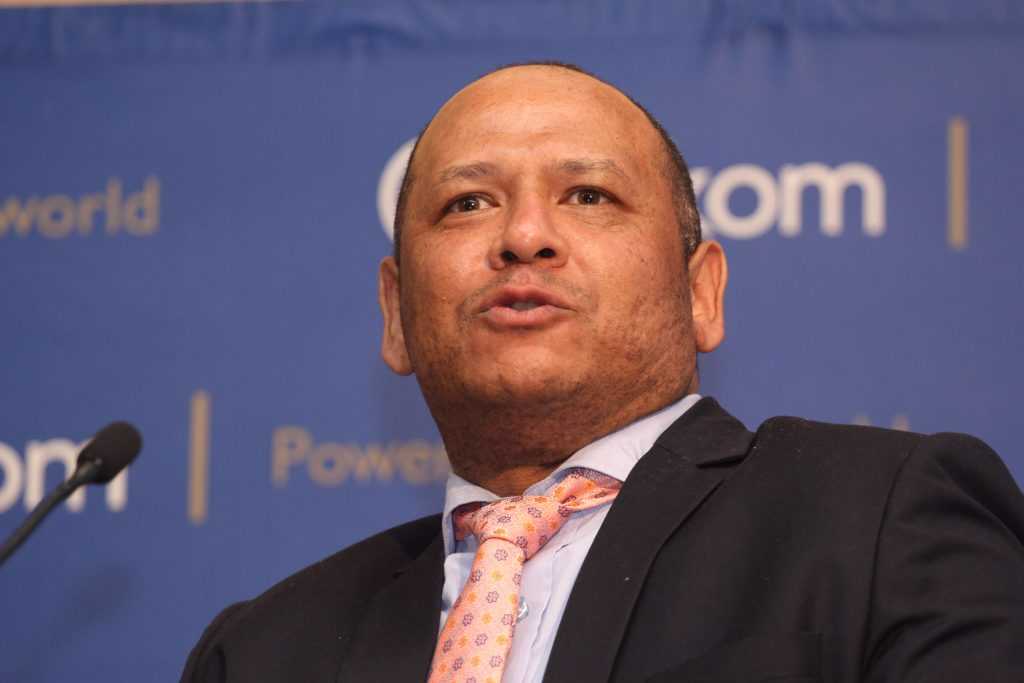
This was revealed by Eskom Acting Group Chief Executive, Calib Cassim, during the power utility’s State of the System media briefing held on Wednesday.
South Africa experienced 39 days of stage 6 load-shedding in winter, with Eskom aiming not to exceed stage 4 in summer.
According to Cassim, Eskom anticipates a lower Unplanned Capacity Loss Factor [UCLF] – or unplanned breakdowns – over the summer period.
However, Cassim warned that the power utility does not rule out load shedding stages rising.
“Our base case of 14 500MW [UCLF] shows a maximum of Stage 4 load shedding in terms of the outlook. Does it mean we are saying that there’ll be no stage 6? No we are not saying that. If the unplanned outages increase to the outer scenarios of 17 500MW, then you would utilise Stage 6 to protect the integrity of the grid,” Cassim said.
The acting CEO explained why the power utility believes that it can achieve a UCLF of 14 500MW over the coming months.
“In winter, the average UCLF was around 16 500MW. This outlook for summer is… 14 500MW. Why are we saying that? The fundamental point is that you are bringing back over 2 000MW [at] Kusile… the three units plus unit 5. That is why we are confident with the 14 500MW.
“In doing this outlook of these scenarios, we, on the Kusile side, had the assumptions of these units returning from the temporary stacks, coming online at the end of November and December.
“From a management perspective, yes we’ve got our base case, [but] we are making every effort to reduce below 14 500 MW,” he said.
Cassim apologised to the nation for the load shedding currently facing the country.
“Eskom does apologise for the inconvenience to the economy and livelihoods and the impact it’s having on everyone in the country and the impact on the GDP.
“But let’s also understand and appreciate that we implement load shedding to manage the system to avoid a blackout,” he said.
Generation head Bheki Nxumalo confirmed again that Unit 3 at Kusile could be commissioned immediately once Eskom secured all its environmental approvals.
Ahead of Eskom’s summer outlook presentation, Forestry, Fisheries and the Environment Minister Barbara Creecy upheld the decision of the National Air Quality Officer to permit the temporary operation of the Kusile coal power station using temporary stacks that bypass the flue gas desulphurisation pollution-control plant.
Therefore, Eskom was now only awaiting a decision by the Nkangala district municipality relating to an Atmospheric Emission licence appeal.
Nxumalo expressed optimism that it was still possible, once all the approvals were secured, to meet the revised return-to-service schedule of October 14 for Unit 3, followed by October 30 for Unit 1 and November 30 for Unit 2.
Nevertheless, he highlighted that the units had been idle for nearly a year and that there were likely to be “teething issues” during commissioning.
Transmission head Segomoco Scheepers said that, should breakdowns be restricted to below 14 500 MW during summer, there would be 116 days of loadshedding across the 213 days until the end of March and that the intensity of such cuts would be restricted to Stage 4 or below.
Should breakdowns rise to 16 000 MW or 17 500 MW, however, the number of loadshedding days would rise to 187 and 211 respectively, while the intensity of the cuts would be between Stages 5 and 7.