
By Lehlohonolo Lehana.
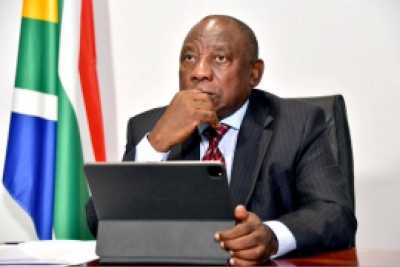
President Cyril Ramaphosa says that the economy is now larger than it was before the Covid-19 pandemic, and the two million jobs that were lost have largely been recovered.
SA’s economy grew ahead of expectations in the second quarter at 0.6% as power cuts eased in June. Data released by the SA Reserve Bank in September showed economic activity grew 0.1% month on month in July after an upwardly revised 0.2% uptick the previous month, marking the second consecutive month of improvements in the business indicators after four straight months of declines.
However, he admits that the combination of global economic instability and the effects of South Africa’s electricity crisis means the economy continues to grow too slowly and is unable to create jobs at the required pace, with most South Africans feeling the pressure of the rising cost of living.
“While government has done much to implement the economic reconstruction and recovery plan, which we launched in October 2020, we have always maintained that the success of our efforts would depend on greater partnership across society,” said the president.
The President highlighted that he recently met with business leaders and the leadership of the country’s four labour federations respectively, where they agreed to work more closely to address the immediate challenges that confront South Africa’s economy.
“These efforts are important because an economy that is growing slowly cannot create enough jobs. It can also not generate enough revenue for government to fully implement the programmes needed to improve people’s lives.
“The fact that the country’s debt service costs are the fastest growing budget item means that spending on education, health, social protection and infrastructure come under even greater pressure.
“We are acting with increased focus and effort to remove the most immediate constraints on growth and doing so together with our social partners,” the President said.
Last week’s meeting confirmed that good traction has been achieved in these areas, most notably in the work being done by the national energy crisis committee (Necom) to end load-shedding and achieve energy security.
He said a good example is the mobilisation by business of additional capacity and skills to support the recovery of Eskom’s power plants, citing the deployment of technical support teams to five power stations — Kendal, Kriel, Majuba, Matla and Tutuka — and experts to help speed up the repair of units at Kusile power station that were damaged in November last year.
“This weekend, Kusile Unit 3 was returned to service two months earlier than planned. Full implementation of the plan to improve the performance of Eskom’s existing power stations, add new generation capacity and reform the energy sector is expected to result in over 12 000 megawatts of generation capacity being recovered or added to the system by the end of 2024.”
The president shared that work is underway to improve the operational performance of the bulk freight rail network and port system through the national logistics crisis committee (NLCC), with corridor recovery teams established for five strategic rail corridors, comprising Transnet executives, industry representatives and independent experts.
“They are working to urgently increase the volume of freight traffic on our rail lines. Through this collaboration, business is working with government to build capacity within the National Prosecuting Authority and the Hawks, along with the modernisation of the 10111 emergency response centre and collaboration between industry and the South African Police Service to address crimes targeting infrastructure”.
The SA economy — one of the largest and most diversified in Africa — however is still dogged by limiting fiscal constraints that have spurred the National Treasury to propose a raft of measures to rein in public spending, including implementing a wage freeze, a moratorium on new projects and cutting down the number of government departments.