
By Lehlohonolo Lehana.
The Deputy President Paul Mashatile says Africa should accelerate investment in critical infrastructure and digital solutions for smart mobility to succeed on the continent.
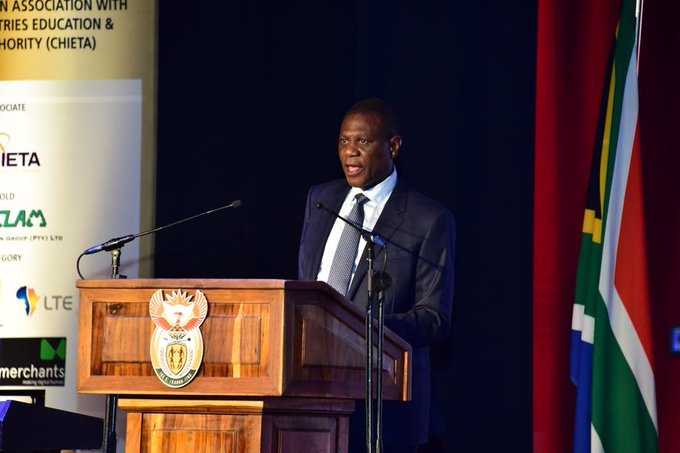
Mashatile was delivering a keynote address at the Smarter Mobility Africa (SMA) Conference Gala Dinner at the Gallagher Convention Centre in Midrand, Johannesburg.
He believes, SMA is another opportunity to collaborate to build a better and smarter transport system that will assist in growing the economy, create jobs and improve people’s quality of life.
Mashatile said governments should develop clear guidelines and regulations to ensure a safe and reliable transportation system.
These, he said, include regulations on data privacy, cybersecurity, and standards for electric vehicles.
“We must make it our responsibility to establish a harmonised approach to smarter mobility across Africa.”
In South Africa, Mashatile said smarter mobility has been embraced to align with ongoing worldwide discussions regarding the trajectory of mobility and climate change.
Government is pushing ahead with a National Transport Master Plan (NATMAP) 2050 strategy to establish a safe, affordable, dependable, and efficient means of transporting people and products.
“We understand that we cannot discuss the transport sector’s transformation without addressing the exclusion of our youth, particularly girls and women, who continue to face devastating and discouraging unemployment and the risk of poverty and violence in our society.”
Urban planning
In light of the accelerated urbanisation expected over the next few years, Mashatile told attendees that governments and cities must prioritise urban planning policies that are responsive to changes.
“There is no doubt that the need for the transportation of both people and goods will always exist and is, in most aspects, one of the few ways in which economic development occurs.”
According to Mashatile Africa must seize the opportunities presented by technology to enhance the efficacy and sustainability of our transport systems.
“This is because major cities, such as Lagos, Nairobi, and Johannesburg, face significant challenges in heavy congestion, overcrowded public transport systems, poor traffic management, and overall inefficient public transportation systems.”
He has since called for more imaginative mobility solutions that can leverage technology to optimise routes, reduce traffic congestion, and use data to provide real-time information to commuters.
The Deputy President believes that this could transportation networks’ overall efficiency and reliability and will go a long way towards the development aspirations and efforts.
“In addition, smart mobility solutions can have a significantly positive impact on the environment.”
By transitioning to electric vehicles and adopting clean energy sources, he said the continent can reduce carbon emissions and contribute towards achieving carbon neutrality by 2050.
New energy vehicles
The State, remains committed to supporting and investing in the expansion and development of new and existing manufacturing plants to support the production of new energy vehicles (NEVs) components and grow employment in the automotive sector, He said.
Investing in the NEV, he said, also contributes to the decarbonisation of road transport.
Shifting his focus to the African Continental Free Trade Area (AfCFTA), Mashatile said the continent should address the inconsistent and inefficient goods and logistics services that have long impeded intra-African trade and commerce.