
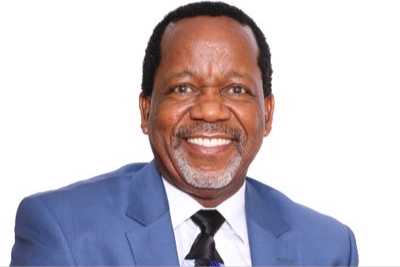
By Lehlohonolo Lehana.
The African Christian Democratic Party (ACDP) has joined Multi-Party Charter coalition signed earlier this year by opposition parties to set up pre-election bid to unseat African National Congress (ANC) in 2024 general elections.
The seven parties in the Multi-Party Charter for South Africa are the Democratic Alliance (DA), Inkatha Freedom Party (IFP), Freedom Front Plus (FF+), ActionSA, United Independent Movement (UIM), Independent SA National Civic Organisation (Isanco) and the Spectrum National Party (SNP).
ACDP Deputy president Wayne Thring says the party was initially opposed to joining or establishing coalitions prior to an election but it reconsidered its position after it was approached.
“Post the establishment of the Multi-Party Charter, the ACDP was approached to join the Charter. Our leadership sought clarity as to whether the Charter represented a coalition and what was the status of the Moon-Shot Pact,” he says, referring to the DA’s former naming of the coalition grouping.
“It was confirmed that the Pact was obsolete and that the Charter was not a coalition, rather a gathering of parties who are concerned about the wrong trajectory SA is taking under the current governing party.”
“Furthermore, it was confirmed that what the Charter sought to do was to draft rules, systems, and mechanisms for the efficient running of a coalition post 2024,” says Thring.
“The leadership of the ACDP, the NEC, discussed this matter at length and in the end decided that the ACDP should join the Multi-Party Charter.”
The coalition agreement states that positions will be awarded based on merit and principle while the diversity of parties must be represented in leadership positions and the principle of separation of powers should be observed within the coalition.
Before the convention, several opposition party leaders questioned whether the DA was still considering working with the ANC after the 2024 elections.
“We will not entertain any working arrangement or co-governing agreements with the ANC, EFF or any rival formations, and we will not vote for any office bearers of the ANC and EFF — nominated either directly or indirectly — at any inaugural meetings of the National Assembly, National Council of Provinces, and provincial legislature,” the document read.
The agreement slams cadre deployment and aims to build a professional public service instead.
All candidates who will be put forward to occupy office, either nationally or provincially, must undergo an independent lifestyle audit, the results of which will be considered before any resolution to support their candidature. The outcomes of the lifestyle audits will be made public.
The parties also agreed that a “fundamental and wholesale review of the Ministerial Handbook be initiated to ensure that a Cabinet of a new multi-party coalition government reflects the need to redirect budget resources to address the pressing needs of South Africans”.
The agreement will commence on the date of the founding parties signing it and can be amended only by consensus. However, parties can withdraw from the agreement “if they provide written notice of their exit from the Multi-Party Charter For South Africa or if they are removed from the agreement by a consensus decision of the other signatory parties”.
The agreement “will only cease to exist by unanimous resolution of the signatory parties or upon the adoption of a multi-party coalition agreement being agreed after the 2024 national and provincial elections”.
The Multi-Party Charter for South Africa has been criticised for its lack of diversity.
Their agreement states, “The collective cabinet or executive committee must reflect the diversity of the South African people.” But the negotiation team had only three women.