
By Lehlohonolo Lehana.
President Cyril Ramaphosa says South Africa has successfully “reset” its relationship with the United States following his meeting with U.S. President Donald Trump in the White House last week.
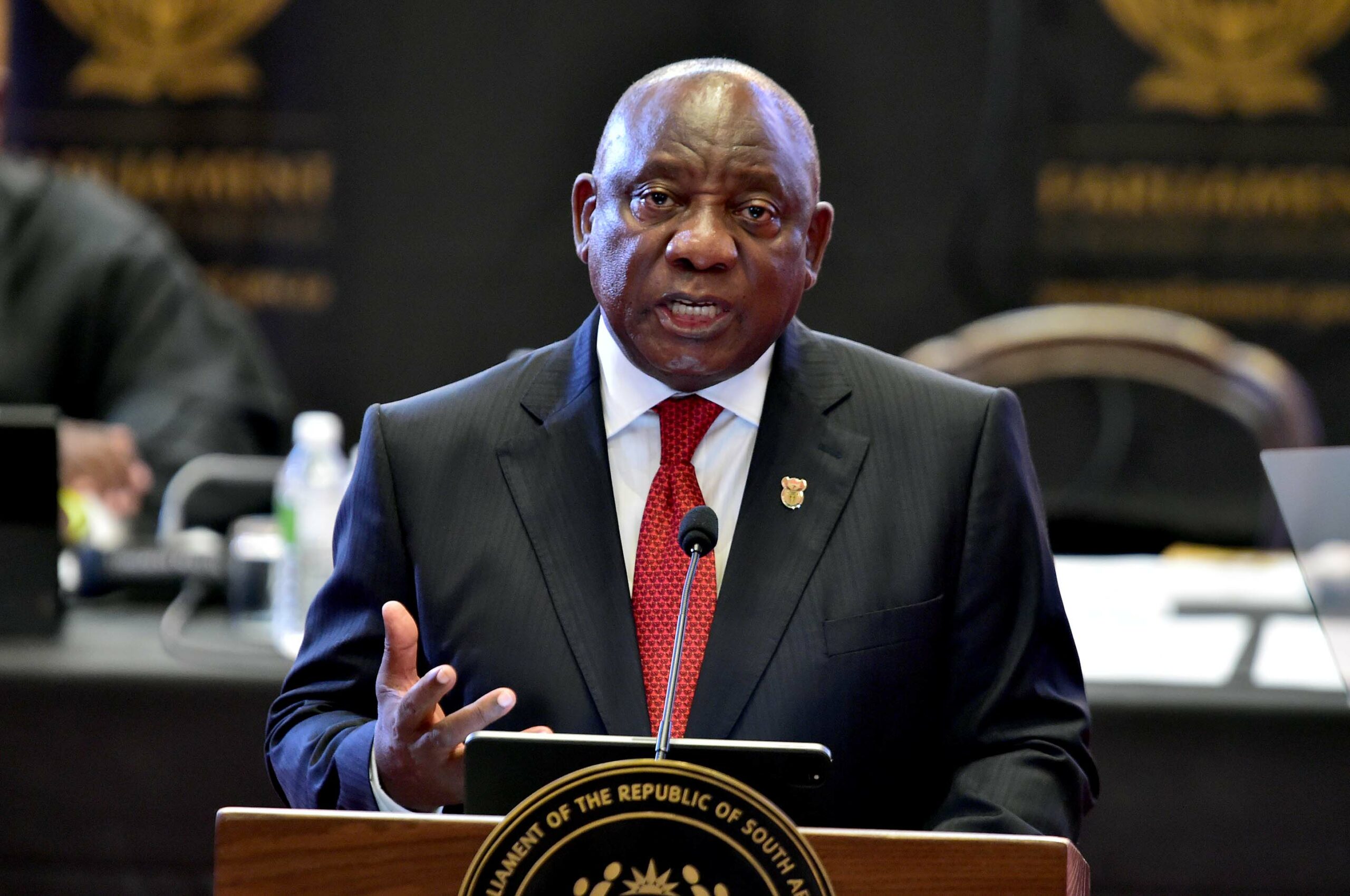
Ramaphosa made the remarks during an oral question-and-answer session at the National Assembly in Cape Town.
Ramaphosa made the ‘reset’ assertion during a scheduled appearance in Parliament to respond to questions for oral reply and in a specific response to hostile questioning by Economic Freedom Fighters MP Omphile Maotwe, who was eventually ejected from the house for refusing to abide by her allotted time slot.
“Despite what we could have seen on television, we were able to have a much more meaningful discussion and meeting with Trump and his representatives [in] the quiet room where we had lunch together,” Ramaphosa said.
The decision to travel to Washington, he said, was motivated by three objectives, which he felt had been achieved.
The first objective related to resetting South Africa’s relationship with an historical trading and investment partner, where an ongoing deterioration in relations would have adverse consequences for companies and employment, particularly in the agriculture, automotive, steel, aluminium, machinery and mining sectors.
Secondly, the South African government was keen for a resumption of government-to-government relations, especially in the areas of trade and investment, and particularly in light of a threat that tariffs of 30% could be imposed on South African exports to the US once the current 90-day pause expired.
The third objective related to highlighting the importance of the US’s participation in the G20, which South Africa would host in Johannesburg in November, while also seeking to entice Trump himself to participate in the Leaders’ Summit.
“We believe we achieved those objectives.
“Soon after we left Washington, the engagement has now commenced and there are discussions happening in relations to tariffs, in relations to investment and we believe we have reset the relationship,” Ramaphosa said.
BBBEE Laws
Ramaphosa did not take kindly to a suggestion by FF Plus leader Cornè Mulder that the country should rethink its racial redress legislation, which in his view hindered economic growth.
gave Mulder a history lesson on the ownership of the economy during apartheid and why legislation such as BEE was necessary.
“I’m rather surprised and taken aback when I hear that policies of BEE militate against the growth of our economy. That I find quite surprising. I work from a starting point that our economy was held back over many years by the racist policies of the past.
“Those racist policies prevented a majority of South Africans to play a meaningful role in their own economy. Black people were brought in as hewers of wood and drawers of water, as labourers. They were not even seen as consumers or active players in the economic landscape of our country.”
He said democracy saved the day, opening up the economy and broadening participation.
“It is right in your face. During apartheid South Africa, you’d never see a black personality being made to advertise soap or milk or anything. Today every advert you look at has got black people. This is because it has now been realised that it is black people who are the consumers and are economic players.”
Those who would want black people just to play the consumer role are truly mistaken, Ramaphosa said, adding that black people must play a productive role as well.
“I am really baffled by people who still hanker for policies of the past and to have you, sir, say that BEE is holding our economy back goes completely against even what the World Bank says. What is known clearly is that there was a report that detailed that what holds South Africa back is the level of concentration.
They said what holds South Africa back is the fact that the ownership of the economy is in far too few hands and has not spread, that is what the World Bank and IMF said. In our country it is the privileged white people who intimidated to own the means of production. I find it very worrying that we continue to have this notion that BEE is holding us back.
Ramaphosa said the constitution’s equality clause implores the government to redress the imbalances in the country, including the ownership of the economy.
Economic Freedom Fighters (EFF) Disruption
Deputy Speaker of the National Assembly Annelie Lotriet says she will report Economic Freedom Fighters’ (EFF) MPs for contempt of the House.
Several EFF MPs continued to raise points of order.
They also demanded that the security personnel for both Ramaphosa and his Deputy Paul Mashatile not be present inside the chamber.
Lotriet said she will refer the matter to the Speaker of the National Assembly Thoko Didiza for further action to be taken against the EFF MPs.
Watch Live in the video below:
Video Courtesy of Parliament.