
By Lehlohonolo Lehana.
The African National Congress (ANC) has welcomed former president Thabo Mbeki’s criticism of the party’s renewal project, saying it has been all talk and no action.
Mbeki told guests at Aziz Pahad memorial in Johannesburg that he was yet to see signs of renewal in the organisation.
The renewal project, first initiated in 2017 and reaffirmed as a party resolution in 2022, is aimed at cleansing the ANC of rogue elements that infiltrated it, which have led to the escalation of corruption, money politics, convicted criminals being elected to or appointed in critical positions in the party and government, as well as unqualified and unskilled people leading important state organs.
Mbeki said since the adoption of the renewal resolution in 2017 and 2022 nothing tangible has been done to implement it.
His criticism came on the eve of the party’s national executive committee (NEC) meeting.
Mbeki has been continuously critical of the leadership of President Cyril Ramaphosa, often slamming the slow pace at which his government and the ANC NEC implement policies.
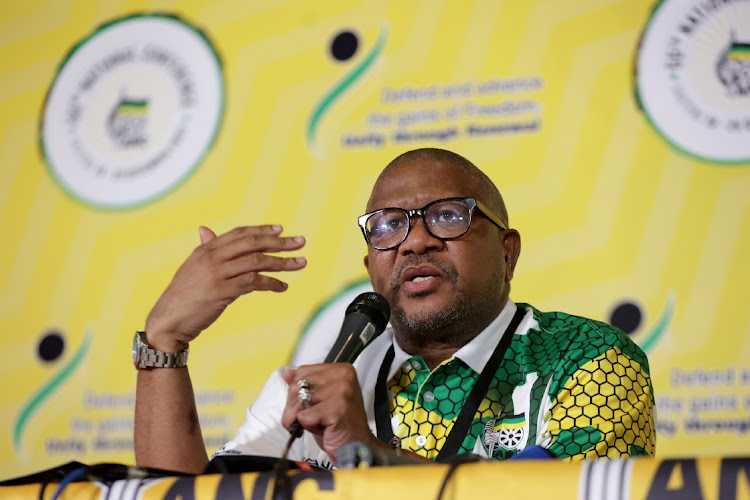
Secretary-General Fikile Mbalula described it as constructive.
He added that Mbeki is an elder of the ANC and the party needs to embrace what he said as “constructive criticism”.
“Even if they have to raise it in public, in the midst of our enemies, it’s still fine with us,” Mbalula said.
“President Mbeki is a veteran of the ANC, he’s a stalwart, he’s decorated. When you see him, you see ANC itself. So, the issues that he raises about renewal, we are attending to them. We are almost one year from the conference. I’ve met with him several times and we have agreed on this.”
Mbalula added that the ANC has adopted a renewal committee, and the issue has gone beyond a simple conceptual level.
Mbalula made these remarks while speaking to journalists on the sidelines of a meeting by the governing party’s National Executive Committee (NEC) in Boksburg.
He also defended Public Enterprises Minister Pravin Gordhan in response to criticism that he had led the country’s state-owned enterprises (SOEs) into a crisis.
Former Eskom board chair Prof Malekgapuru Makgoba was one of those who had been critical of the minister, but Mbalula stated that those serving on the boards should voice their complaints while still in service.
“You can even challenge the person who appointed you. You are not appointed as a stooge. You are appointed because of certain qualities.
“There are ministers who like to take chances about the powers that you get, you think you can manipulate, but others with good intentions, to even accelerate and deepen transformation.”
Mbalula said no rule said the minister could not interface with the board.
“As a shareholder, what is your expectation? In terms of the boards, the shareholder has a shareholder agreement with the board and that states in line with the mandate of the ruling party – these are things that we want to achieve.”
On Friday, former Transnet board chair Popo Molefe resigned the board. Earlier in the week, Eskom board chair Mpho Makwana also resigned from Eskom.
Africa’s most-industrialised nation has been struggling in its bid to revive the two state monopolies. Incessant power outages implemented by Eskom and Transnet’s inability to run rail operations at capacity impairs mineral exports and has roiled the $406 billion economy.
Watch Live in the video below:
Video Courtesy of MYANC.