
By Lehlohonolo Lehana.
Minister in the presidency responsible for electricity says massive progress has been made to ensure that load-shedding is consigned to the dustbin of history.
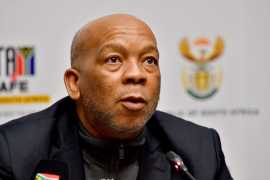
Addressing the media on the implementation of the Energy Crisis Plan, Ramokgopa said the country has turned a corner and it may soon be the end of loadshedding.
Improved performance of Eskom’s generating fleet meant the suspension of load shedding over the past weekend and much lower stages of the planned power outages during the week.
“We have turned the corner, although we are not out of the woods yet. We are beginning to show sustained improved performance over an extended period of time and this is good news in that it’s an affirmation and validation of the work that the team is doing at Eskom,” he said.
The Minister said the intensification of maintenance plans at Eskom are beginning to have a positive impact despite a difficult period in September when load shedding was intensified as a result of maintenance outages.
These maintenance outages are aimed at reducing the incidence of generating units tripping on their own and improving performance.
“These plans that have been put into motion are beginning to bear fruit. I did indicate some time ago when we were experiencing heightened levels of load shedding Stage 6, that essentially what we are dealing with is short term pain which is going to result in long term gain and we are beginning to see the kinds of gains that I was referring to.”
“Our actions are deliberate. We are going to invest a lot of our efforts to ensure that we are able to maintain the units,” he said.
Ramokgopa insisted that both Eskom and the department will not show any signs of complacency going forward.
“It’s important that we shouldn’t be complacent and we have never been complacent…even when are beginning to see … green shoots. I think what that does is just bolster and raise the morale of the team to ensure that we even achieved greater results and we are able to save the South African economy.
“We introduced these interventions when we came into office, after the President appointed and sat with the team and thought the best way of getting out of this situation is to ensure that we make these investments into these units. What are the results – when the units come back, they remain on load for the longest period of hours.”
“Essentially we have undermined the rate and frequency of failure of these units. We have improved on their efficiency. They are beginning to produce more… closer to their design capacity. This is not by accident. It’s not some intervention that comes from a place that is unknown. It is simple engineering and we really want to commend the team, “he said.
Interim CEO Calib Cassim did state recently, however, that he saw unlocking immediate grid capacity through curtailment as an urgent priority while Eskom and other stakeholders assessed funding options for expanding the transmission network.
Without offering any update on when South Africa would launch additional public procurement rounds, Ramokgopa reported that 1 338 MW of private generation was expected to connect to the grid in 2023, followed by 3 081 MW in 2024.
He also stated that one project falling under the much-delayed risk-mitigation scheme was on track to reach legal close by the end of October, and two further projects by December. The projects would contribute an additional 424 MW, he said, implying that the 1 200 MW powership projects were not the ones in question.
He added that three more projects from the delayed fifth renewables bidding round were on track to reach commercial close by the end of November, representing 300 MW.
The Minister also stated that the capacity of rooftop solar had doubled since July 2022 to over 4 500 MW, which had helped to reduce loadshedding over the winter months.
He insisted that government remained supportive of yet further rooftop investment, despite some system operator concerns over these additions taking place under a tariff framework that was not fully cost reflective and equitable.
The Minister reiterated that work was under way to develop a funding instrument to enable poorer households to invest in rooftop solar.
Watch Live in the video below:
Video Courtesy of GCIS.