
By Lehlohonolo Lehana.
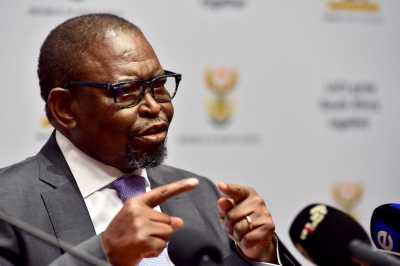
Finance Minister Enoch Godongwana will deliver the Medium-Term Budget Policy Statement (MTBPS) at 14h00 later today, 1 November.
Political parties, trade unions, businesses, credit rating agencies, investors, and civil society – will be keeping a close eye on Godongwana when he takes the stage at the Cape Town City Hall.
The tabling of the budget comes amid growing concern over government expenditure and fears that the country could be heading for a debt crisis.
Several organisations are calling on the government to find alternative ways of saving money other than cutting the budget for public goods and services.
Dr Gilad Isaacs from the IEJ called on the private sector to carry a larger portion of the tax burden.
“There is room for the private sector to pay a larger share of tax because we are in difficult economic circumstances, and the ability to tax corporations is not unlimited in the global capitalist economy even if we would like it to be.”
SAFTU’s Trevor Shaku said South Africans should reject the idea that cutting government spending will resolve the economic crisis.
“We know what’s going to be there tomorrow, and they are going to cut expenditure on public goods and services. What we have to do is rally our people to reject the austerity because that is going to be the stable for this country in the next coming years.”
North-West University Business School Professor Raymond Parsons has called for a realistic and sound Medium-Term Budget Policy Statement (MTBPS), given the additional fiscal and economic challenges facing the country.
“The National Treasury has already warned of the tough decisions that will need to be taken in the medium-term budget. A shortfall of about R100 billion is now widely forecast. Unless remedial steps are taken, the risks of another ‘fiscal cliff’ for South Africa will rise,” Parsons said.
He said the latest Monetary Policy Review also emphasised that a lack of fiscal sustainability would keep interest rates elevated for longer.
“It is now generally recognised that the combination of low growth, less-than-expected tax revenues, and continued high government spending means that the economic and financial assumptions on which the 2023 Budget projections in February were based are no longer valid.
“Several of the fiscal risks outlined in the main Budget have materialised. These factors have now severely reduced available fiscal space, necessitating a realistic approach to a less favourable set of circumstances. If the medium-term Budget is not credible in its actions, it will be assumed that there will just be more borrowing or big tax rises to come later, “Parsons said.
He identified government bailouts to struggling state-owned enterprises as a persistent problem.
“Transnet recently asked government for financial support – which is basically a bailout – to implement its turnaround plan. The Bureau for Economic Research has warned that Transnet’s request comes at an inopportune time for the fiscus.
“How the National Treasury decides to respond to Transnet’s need for further assistance will be seen in the MTBPS. South Africa is already at the outer boundary of what it can reasonably do to contain its debt burden and stabilise its public finances. Reducing the deficit inevitably now means recalibrating the broad dynamics of its public finances,” he said.
With the debt-to-GDP ratio now over 70% and expected to increase further, Parsons said South Africa’s rising debt bill is already absorbing too large a share of the budget at the expense of other major social spending and infrastructure.
“A long-range fiscal plan is, therefore, now needed to steadily wind down spending and debt and bring them under control in a way that establishes clear priorities for the future.
“Fiscal policy will inevitably have to be pragmatic and realistic to deliver sensible trade-offs in order to project a credible medium-term Budget that offers more predictability and certainty.
“This fiscal balancing act will, therefore, require a skilful but level-headed revised Budget ‘mix’ and projections. It requires successfully managing multiple spending pressures at a time when political elections are pending in 2024,” he said.