
By Lehlohonolo Lehana.
Minister of International Relations on Wednesday expressed “serious concern” over the US decision to sanction four judges of the International Criminal Court (ICC) for alleged “transgressions against the United States and Israel.”
Last week, the US announced sanctions against four ICC judges, namely second vice-president Reine Adelaide Sophie Alapini Gansou from Benin, Judge Solomy Balungi Bossa from Uganda, Judge Luz del Carmen Ibanez Carranza from Peru, and Judge Beti Hohler from Slovenia.
The ICC slammed the move, saying it was an attempt to undermine the independence of an international judicial institution that provides hope and justice to millions of victims of “unimaginable atrocities.”
The new sanctions come at a difficult time for the ICC, which is already reeling from earlier U.S. sanctions against its chief prosecutor, Karim Khan, who last month stepped aside temporarily amid a United Nations investigation into his alleged sexual misconduct.
The ICC, which was established in 2002, has international jurisdiction to prosecute genocide, crimes against humanity and war crimes in member states or if a situation is referred by the U.N. Security Council. The United States, China, Russia and Israel are not members.
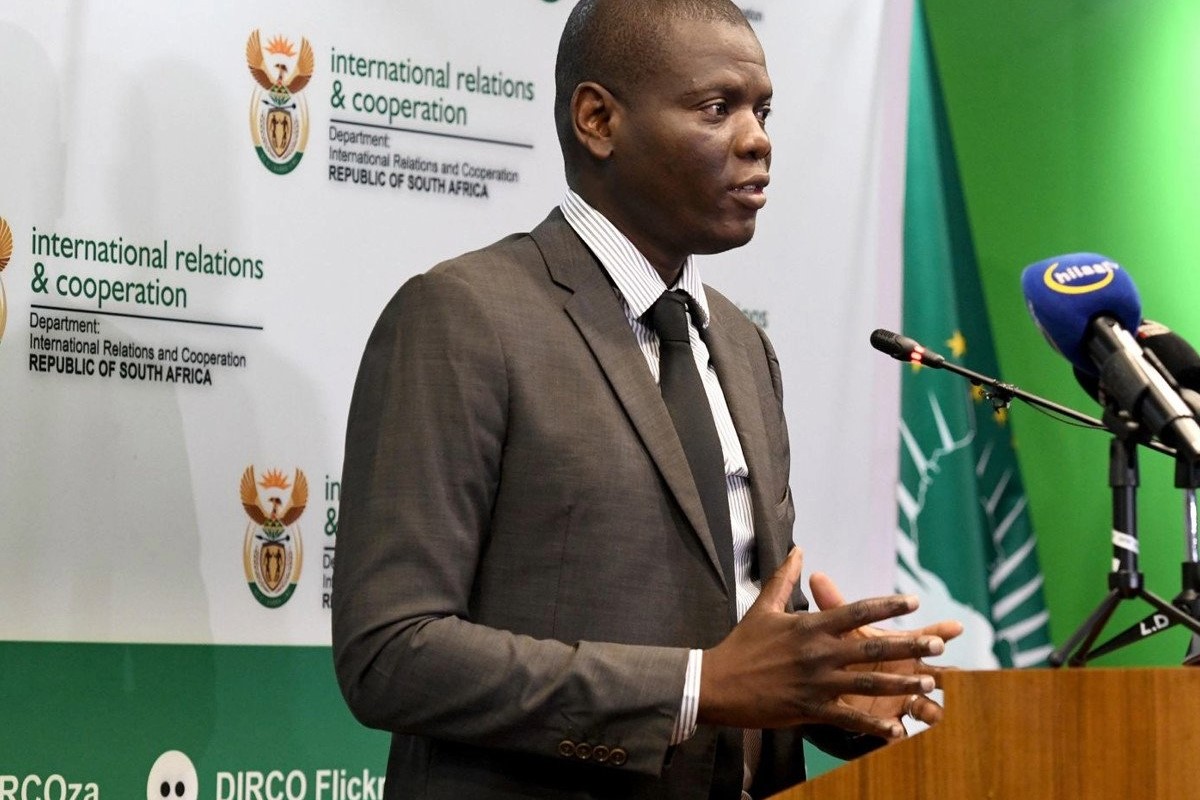
In a statement, Lamola said, “These measures, in addition to those imposed earlier on the Prosecutor, represent a direct affront to the principles of international justice and the rule of law. Such punitive actions against judicial officers performing their mandated duties are regrettable and they undermine the independence of the ICC and threaten the integrity of international legal institutions. They furthermore hinder the Court and its personnel in the exercise of their independent judicial functions.
“South Africa, as a founding member of the ICC views these sanctions and previous threats as an attempt to intimidate and obstruct the Court’s efforts to hold perpetrators of the most serious crimes accountable, Lamola said.
“The imposition of sanctions on ICC judges sets a dangerous precedent that could embolden those who seek to evade accountability for egregious violations of human rights and international humanitarian law. It also poses a significant challenge to the global fight against impunity and the enforcement of international norms, added Lamola.
“South Africa reaffirms its commitment to the principles enshrined in the Rome Statute and will continue to work with like-minded nations to safeguard the integrity of international legal institutions. In this regard, we highlight our participation in the Hague Group, a coalition of countries dedicated to defending the rulings and authority of the ICC and the International Court of Justice (ICJ), concluded Lamola.
ICC has high-profile war crimes investigations under way into the Israel-Hamas conflict and Russia’s war in Ukraine as well as in Sudan, Myanmar, the Philippines, Venezuela and Afghanistan.
The ICC has issued arrest warrants for President Vladimir Putin on suspicion of deporting children from Ukraine, and for Netanyahu for alleged war crimes in Gaza.