
By Lehlohonolo Lehana.
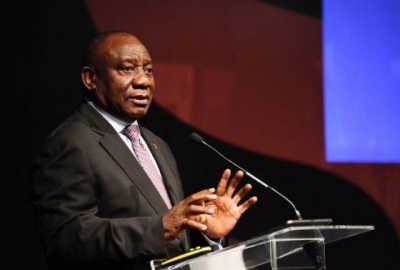
President Cyril Ramaphosa launched the Presidential PhD Initiative, to create opportunities for South Africa’s “brightest young minds” at world-leading universities and research institutions.
Ramaphosa made the announcement on Tuesday at the inaugural presidential plenary on science, technology and innovation, which brought together role-players from the public and private sectors to discuss how to drive innovation forward in South Africa.
The initiative received R1 billion in initial funding from the National Skills Fund.
Ramaphosa told the attendees that the studies will be to large scale and established research programmes in public research facilities and industry.
The initiative will build critical skills in artificial intelligence research, advanced biotechnology, fuel cell development, battery storage, and next-generation mining.
The country’s first citizen has since called to extend a call to the private sector and international partners to assist in growing the investment for the Presidential PhD Initiative fund to R5 billion by 2030.
He said collaboration is needed to ensure synergy between programmes across the national innovation system.
“We must harness education, science and innovation to protect our natural environment, drive inclusive economic growth and enrich all areas of human endeavour.”
The president described the first plenary as an important initiative that brings together government, academia, civil society and industry to collectively drive South Africa’s National System of Innovation (NSI).
In November 2022, the Cabinet adopted the STI Decadal Plan to guide the first 10 years of implementing the 2019 White Paper on STI.
“Science, technology and innovation are essential for economies to thrive and for societies to prosper.
“In the new world of work, in the era of the Fourth Industrial Revolution, science, technology and innovation determine which countries move forward and which are left behind. Our country has several strengths.”
Citing the 2022 Global Innovation Index published by the World Intellectual Property Organisation, he said South Africa ranked above the upper-middle-income group average in three areas.
These include market sophistication, knowledge and technology outputs, and creative outputs.
According to the index, South Africa also improved the number of patents by origin, citable documents, intellectual property receipts, high-tech manufacturing and high-tech exports.
“However, our performance is mixed for the factors that drive innovation, such as education expenditure, expenditure on research and development and access to information technology, added Ramaphosa.
Also speaking was Higher Education, Science and Innovation Minister Dr Blade Nzimande, who said there were two pillars underpinning the implementation of South Africa’s Science, Technology and Innovation Decadal Plan, which was approved by National Cabinet in 2022 to implement the country’s White Paper on STI 2019.
Nzimande explained that the first pillar entailed widening, deepening and transforming South Africa’s NSI, building on past investments and achievements, to raise the scale and intensify, and the impact, of the country’s innovation capabilities.
He highlighted that this was being done through enhancing human capabilities, expanding the research system to increase knowledge creation in targeted areas, ensuring an enabling environment for innovation and its flow into the economy, and increasing both public and private investment in STI.
Nzimande said that as part of the Innovation and Skills Compact, the department recently identified the critical skills needed to ensure effective implementation of the STI policies in line with the country’s Skills Masterplan.
He also mentioned considerable progress in integrating STI into planning for government as a whole, done in collaboration with the Department of Planning, Monitoring and Evaluation.
Nzimande highlighted the implementation of a Budget Coordination Mechanism for STI across government to streamline the allocation of resources to fund STI programmes at critical mass, for maximum impact.