
By Lehlohonolo Lehana.
President Cyril Ramaphosa says reconciliation is a commitment to creating a society where diversity is celebrated and where the scars of the past are transformed into stepping stones towards a brighter future.
This year, the government is commemorating the day under the theme: “Strengthening unity and social cohesion in a healing nation.”
The National Day of Reconciliation aims to promote national unity, social cohesion, constitutional democracy, human rights, and equality by highlighting and advancing the constitutional values and principles that bind together all South Africans.
The 16th of December holds different meanings for different groups in South Africa’s diverse society. The Afrikaans community commemorates it as the Day of the Vow, which remembers the 1838 Battle of Blood River.
On the other hand, the liberation struggle movement celebrates it as a tribute to the birth of Umkhonto we Sizwe in 1961. Today, in a South Africa free from apartheid, the day shines as a symbol of national unity, fostering hope for a country healing from its divisive past.
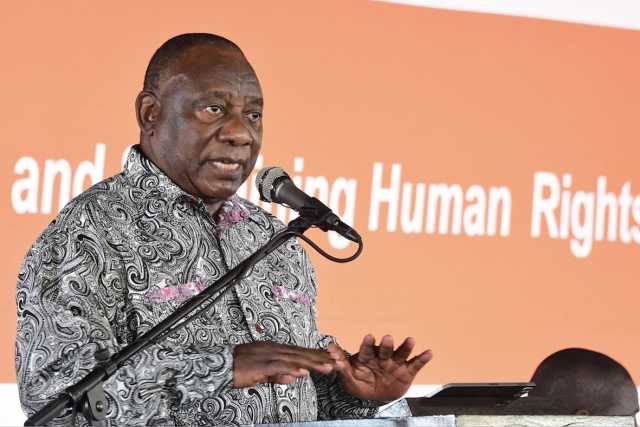
Speaking at the National Day of Reconciliation at the Thohoyandou Stadium in Limpopo on Saturday, Ramaphosa said reconciliation is not an act of forgetting or ignoring the wounds of the past.
“Instead, it is a courageous and intentional effort to confront our history, to learn from it and to build bridges of understanding across the chasms of misunderstanding and mistrust, “the President said.
Ramaphosa said many believed it was not possible for the former oppressor and the oppressed to make peace and reconcile and they did so.
“Our national days, our flag, the national anthem and our national symbols stand as testament to a new, unique nation that emerged from a difficult and bitter past. These are no mere symbols or gestures. They serve as important reminders of what we have been able to build within a relatively short period of time.
“Our democracy will soon be 30 years old. Some of the world’s oldest democracies are still grappling with racial and ethnic tensions among their people,” the President said.
He said South Africa, despite its many challenges, has not slid into the morass of bigotry, racism and tribalism that is prevalent many other societies.
“This year we bore witness to the power of reconciliation when our national rugby team the Springboks won the Rugby World Cup in France.
“To have seen so many South Africans of all races and all ages rallying behind the team, showing their support so passionately and joining in the victory celebrations reminded us that, despite our many challenges, we are a united nation, proud of who we are and proud of how far we have come.
“The proud and resilient South African spirit has carried us through the many difficulties of the past and it will continue to do so well into the future.
“We came together and rallied behind the national effort to contain COVID-19. We all played our part to keep ourselves and others safe, “Ramaphosa said.
South Africans must confront the uncomfortable truths, learn from them and work together to create a society where everyone can thrive, regardless of their background or identity.
“Inequality is the greatest challenge to meaningful and lasting reconciliation in our country. Central to the advancement of reconciliation must therefore be a concerted effort to end poverty and unemployment and meaningfully reduce inequality.”
“We have undertaken a massive redistribution of resources towards mainly black South Africans through the provision of basic services, subsidised housing, improved education and health care, and social grants, “the President said.
Watch Live in the video below:
Video Courtesy of SABC.