
By Lehlohonolo Lehana.
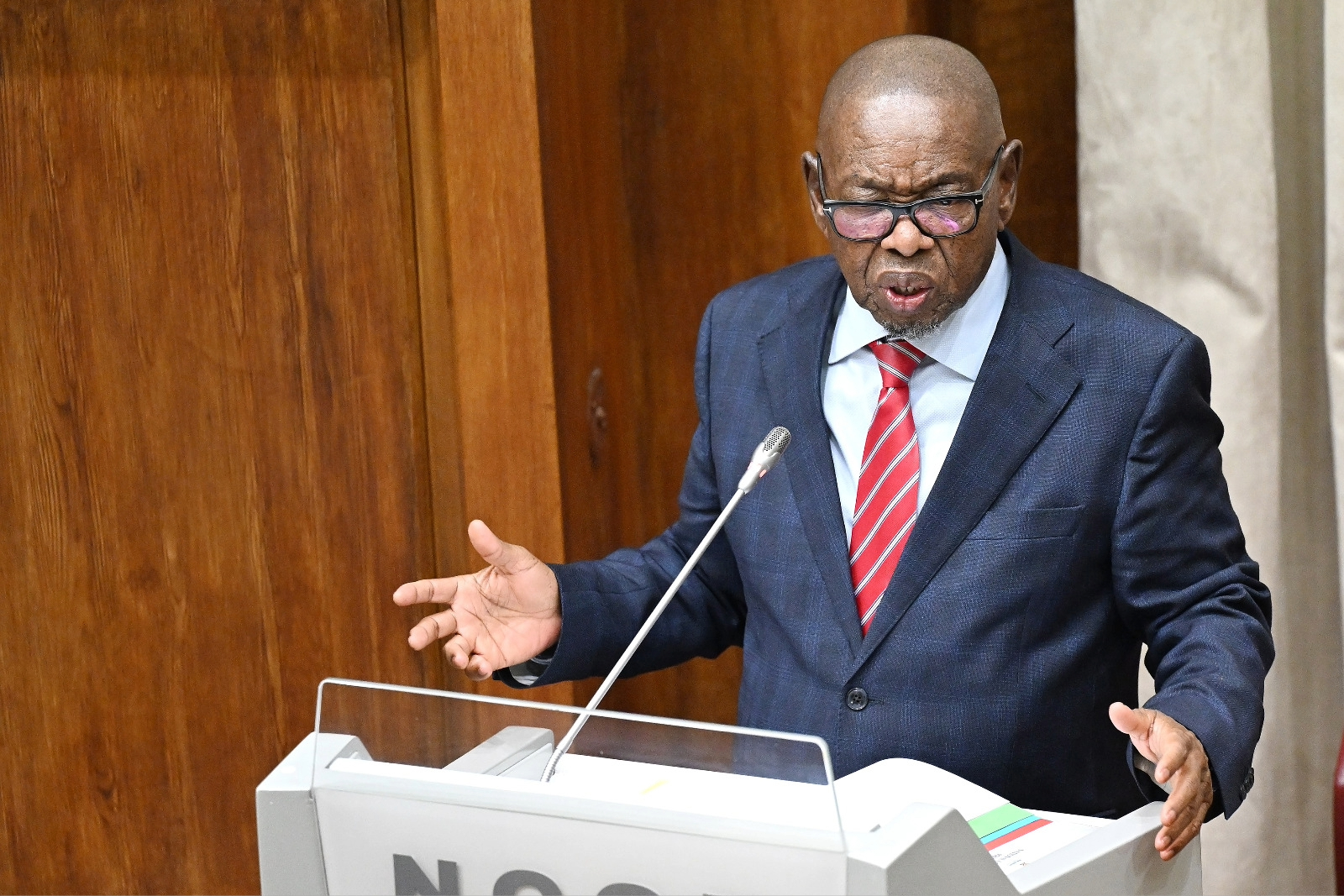
Minister of Science and Innovation Blade Nzimande says his department plans to introduce a number of initiatives to improve students’ access to Mathematics and Science.
Nzimande has launched the 2025 National Science Week at the Tshwane University of Technology in Pretoria West.
This year’s science week is observed between 4 – 8 August, and takes place under the theme: Science, Technology and innovation are for everyone.
He says plans includes introducing National Science Month in 2026, upscaling Science centers through mobile laboratories to reach schools without labs.
Nzimande says South Africa should follow in the footsteps of countries around the world and hand-pick the best mathematics and science students while they are in school and assist them.
“We must not be ashamed to take the cream of our science learners and put them in a first-class institution. If we wish to address our skills development needs and significantly reduce youth unemployment, one of the things we need to do is to ensure that the majority of people can access high-quality methods and science education.”
The 2023 Trends in International Mathematics and Science Study revealed that South African learners finished stone last, even though they competed against much younger children.
South Africa was last with a score of 362, well below the second-lower country, Kuwait, which scored 382. It was also well below the international average of 503.
The country fares even worse in science. It scored only 308, well below the second-last-placed Kuwait at 373. Again, it was far below the average of 494.
In science, most countries’ scores also fell within 400 to 600 points, and Singapore topped the list again with 607.
It is important to reiterate that South Africa finished last in both mathematics and science despite local students with one more year of schooling being assessed.
In May this year, Basic Education Minister Siviwe Gwarube revealed in Parliament that 464 public schools across the country no longer offer maths as a subject.
The Department of Basic Education said the trend is driven by a combination of factors that include low learner enrolment, budget constraints, and a national shortage of qualified mathematics teachers.
Nzimande shared his own experience with maths while he was in school, saying he is working towards changing the negative sentiment towards the subject.
“Don’t be like us. Under apartheid, we were so afraid of mathematics. If people ask me –by the way, I did maths in matric – so when people ask me, what symbol did you get in math, I tell them proudly that I got an A. But let me clarify what I mean. I got a D in mathematics, but the way I was so afraid of it, that a D was as good as an A to me.”
TIMSS is typically conducted every four years. The most recent study, TIMSS 2023, is the eighth cycle. TIMSS has consistently provided trend data on mathematics and science achievement at the fourth and eighth grades for 28 years.