
By Kevin Rademeyer.
Photo Credit: Getty images.
On 9 August, South Africa marked Women’s Day – a time to honour the sacrifices, achievements, and resilience of women in our history. It’s a day to celebrate progress and confront the stark realities of inequality that remain. Yet, in the very week we championed gender equality, our women athletes, who work tirelessly to represent our country , continued to compete in front of empty stands and muted applause.
At the Cricket South Africa Annual Awards, Minister of Sport, Arts and Culture Gayton McKenzie shared an observation from his recent trip to England. He had witnessed the nation’s overwhelming celebration for their UEFA Women’s Euro 2025 champions, fresh off a dramatic penalty shootout win over Spain. Streets were lined with fans. Media coverage was extensive. Merchandise flew off the shelves. The country celebrated their heroines as national treasures.
South Africa, meanwhile, loves to quote Nelson Mandela’s famous words: “Sport has the power to change the world… to unite people in a way that little else does.” But this unity seems reserved for our men’s teams. Our women athletes face a different reality, one defined by limited funding, scarce marketing, secondary scheduling, and the need to juggle sport with other jobs just to earn a living.
The Reality for Our Women Athletes
Our women’s cricket, rugby, football, and hockey teams are world-class competitors. Athletes like Prudence Sekgodiso ( (800m) , Jo-Ane Van Dyk ( Javelin) , Marione Fourie (100m hurdles), Lara van Niekerk (swimming), Vicky van der Merwe (triathlon), Kgothatso Montjane (wheelchair tennis), Caitlin Rooskrantz (gymnastics), Thembi Kgatlana (football), Gerda Steyn (marathon), and Nadine Roos (rugby) are globally respected, yet barely known at home. The list is endless.
Unlike their male counterparts, most are not full-time professionals. They train in the early hours before work or late into the night after their day jobs. They operate with a fraction of the resources, medical support, and travel budgets afforded to men’s teams.
Empty Seats, Missed Opportunities
The Springbok Women recently faced world number two Canada. The fixture was included in the price of a larger match-day ticket, yet only around 2,000 fans bothered to watch. The rest of the 50,000 ticketholders were at the B-field entertainment instead. Many were even naïve that the match was taking place. Such indifference would be unthinkable for a men’s international.
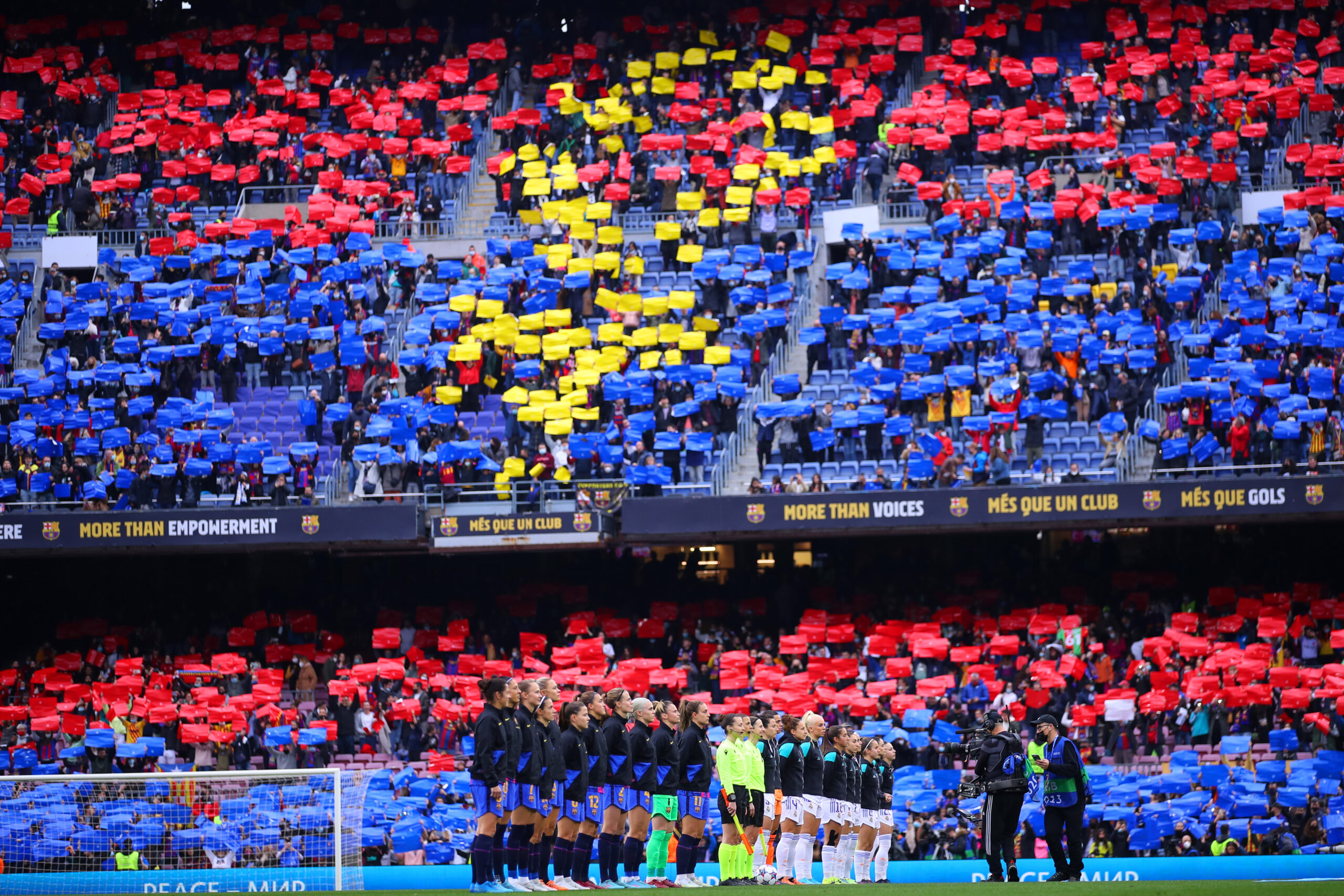
Compare this to the record-breaking 92,300 fans who packed into Nebraska’s Memorial Stadium for a women’s volleyball match in August 2023, or the 91,648 who filled Camp Nou for Barcelona vs Wolfsburg in the UEFA Women’s Champions League final. In women’s rugby, 42,579 fans sold out Eden Park for the Rugby World Cup final between the Black Ferns and England in 2022, a figure expected to be matched or beaten at this year’s tournament in England, where almost 400,000 tickets have already been sold.
Who and What Is to Blame?
Is it a lack of major trophies? A marketing failure? Women not supporting women? Or is it simply that South Africans choose other forms of entertainment over women’s sport? Should corporate South Africa put more emphasis on our women, or should our athletes, both men and women act?
The US Women’s National Soccer Team fought, and won, a landmark battle for equal pay, securing $24 million in back pay and a commitment from their federation to match the men’s salaries. Tennis recognised the value of its women stars decades ago, the US Open led the way with equal prize money in 1973, followed by the other Grand Slams in the 2000s. These victories were not given; they were fought for.
South Africa’s women athletes should not have to fight alone. With the Women’s Rugby World Cup kicking off in less than two weeks and the Women’s Cricket World Cup just over a month away, now is the time to act.
Beyond Lip Service
Women’s Day speeches mean little without action. Our athletes need investment, not just inspiration. They need marketing campaigns, not token posts. They need stadiums filled with fans who understand that their success is as important as any men’s trophy.
If we truly believe sport can unite a nation, then we must unite behind all our athletes, not just the ones in the most televised jerseys. Anything less is hypocrisy.