
By Lehlohonolo Lehana.
@GalloImages.
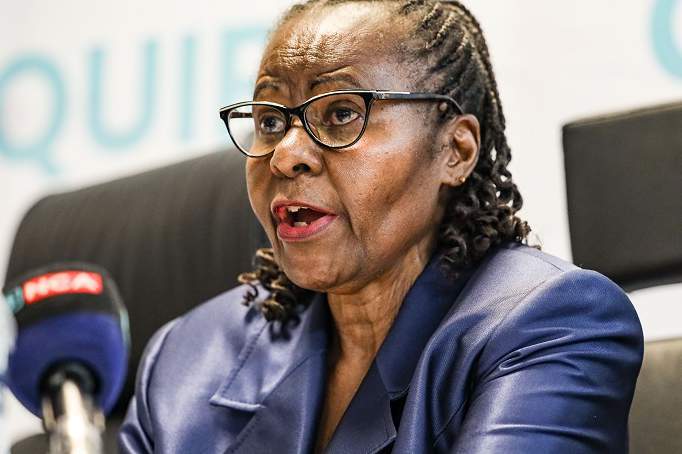
The chairperson of the Judicial Commission of Inquiry, Justice Sisi Khampepe, has announced a further preparatory consultative meeting for those who did not participate in the Truth and Reconciliation Commission (TRC).
The inquiry will look into allegations made by 23 families in pending High Court proceedings that there has been political interference in TRC cases.
Speaking during a media briefing held at the Hector Petersen Memorial in Orlando West, Soweto, Justice Khampepe indicated that the commission will ensure that victims of apartheid era crimes find the closure they deserve, adding that anyone who wishes to participate will be given a chance to present their case before her commission.
“Upon full disclosure, the applicants would then receive amnesty for all their crimes. We do not want to make this inquiry adversarial. Those perpetrators of those cruel injustices and atrocities who did not participate in the TRC processes, as well as those who failed to make full and complete disclosures regarding their part in the perpetration of these human rights violations, were to be investigated and where evidence was obtained to support the prosecution, those individuals were supposed to have been prosecuted,” she said.
The commission, which has been given a six-month mandate to probe crimes from 2003 to present, also includes retired Judge President Frans Diale Kgomo and senior counsel Advocate Andrea Gabriel.
“The TRC cases inquiry will adopt a more sympathetic, engaging and empowering approach and will bring together all interested persons and institutions to a pre-hearing meeting, as it is in the interest of justice for the victims and their families to find closure,” she added.
More than three decades after the country’s democracy, many families affected by unresolved apartheid-era cases are still searching for justice, with many hoping this process will finally deliver closure.
Earlier this month, former president Thabo Mbeki and ex-justice minister Brigitte Mabandla lost a court battle to intervene in a R167 million damage case related to the failure to prosecute apartheid-era crimes.
The case was brought by the families of the victims, including the Cradock Four.
They argue that the government violated their constitutional rights by failing to implement the recommendations of the TRC to prosecute those responsible for apartheid-era atrocities.
Separately the court heared an application on Aug. 6 from president Cyril Ramaphosa to halt the case, based on his argument that because he has ordered a commission on inquiry into the matter, there is no need for legal proceedings. The judgement has since been reserved.
The TRC was established in 1995 as South Africa’s transitional justice vehicle, granting amnesty to qualifying perpetrators of human rights violations, and making recommendations on reparations for victims and prosecution of those not granted amnesty.
Former National Director of Public Prosecutions Vusi Pikoli and National Prosecuting Authority (NPA) officials had stated that interference from Mbeki’s government resulted in the NPA ending TRC investigations into apartheid crimes by those that denied offenders’ amnesty.
Pikoli was fired in 2007 by Mbeki.
Mbeki denied there was a secret pact that would have spared himself and other ANC members from potential prosecution for activities during the anti-apartheid struggle. He added that he never interfered in the cases.
The TRC and Department of Justice figures together show that 7,112 people applied for amnesty for more than 14,000 incidents, and about 5,034 were refused amnesty for not meeting the basic requirements. The rest were referred to hearings by the Amnesty Committee. Eventually, 849 applicants were granted amnesty, while about 358 were refused, most for murders.
The TRC’s Final Report of 21 March 2003 stressed that amnesty should not promote impunity and required a “bold prosecution policy” to avoid any suggestion of impunity or South Africa contravening its international law obligations.