
By Lehlohonolo Lehana.
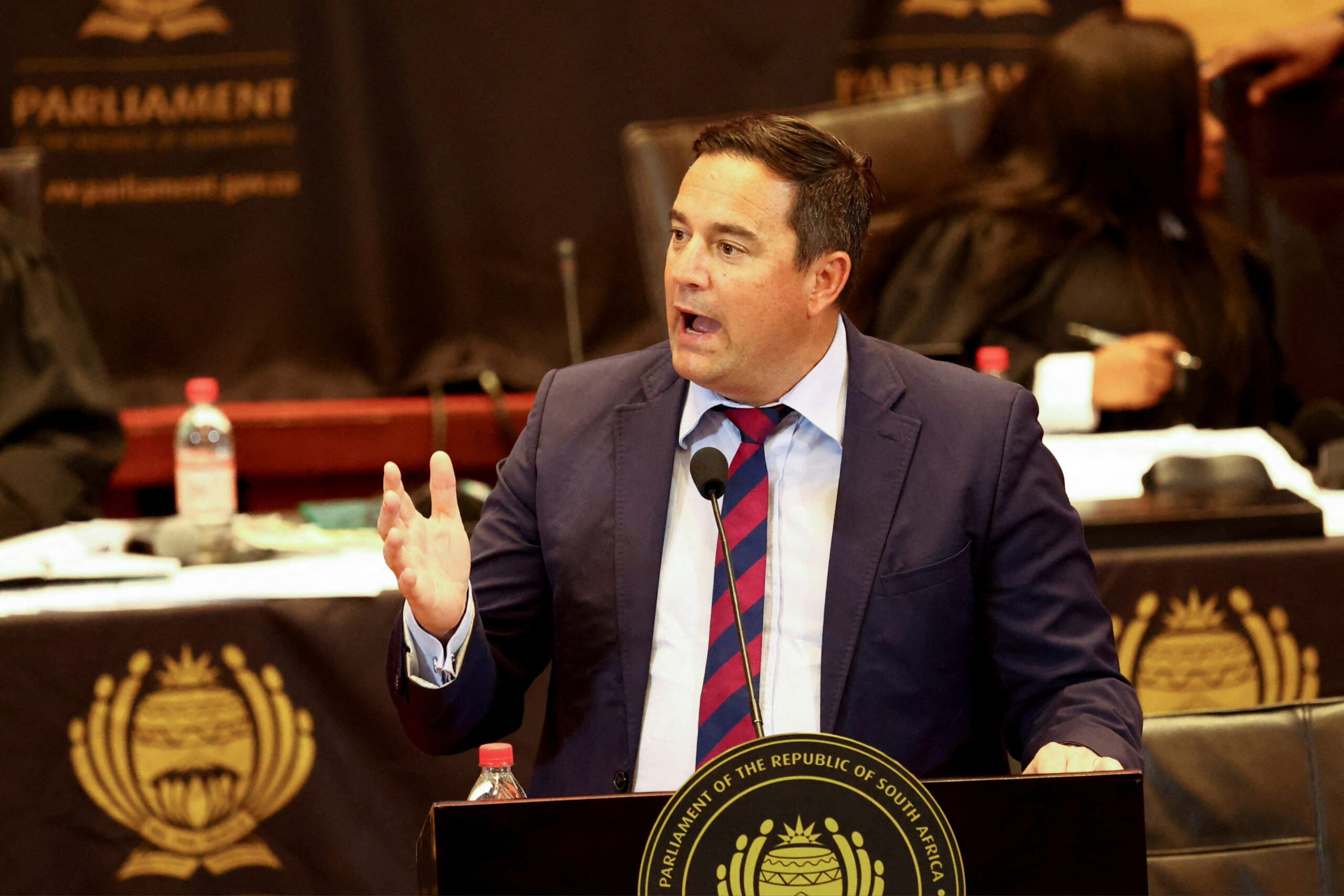
Department of Agriculture minister John Steenhuisen says South Africa procured over 900 000 vaccines for Foot and Mouth Disease (FMD) to the tune of R72 million from Botswana.
Steenhuisen was briefing the media at the Imbizo Centre, Cape Town.
Steenhuisen said South Africa will produce FMD vaccines by the first quarter of next year.
He said the spread of FMD from Kwazulu-Natal (KZN) to Mpumalanga was through an auction that took place in February. By late May, the virus had spread to parts of the country, including Gauteng, the North West and Free State.
The Department of Agriculture held a two-day FMD Indaba to engage stakeholders and drive collaboration across government and the private sector.
At present, there are 274 unresolved outbreaks across KZN, Gauteng, Free State, North West, and Mpumalanga provinces. Positive cases have been confirmed in all cattle farming systems, including commercial beef herds, animal breeding, feedlots, dairy cattle, and communal herds,” Steenhuisen said.
Steenhuisen urged farmers to comply with regulations aimed at curbing the disease.
“Reports of farmers moving cattle showing clinical signs of the disease, or treating them privately without reporting, are deeply concerning and irresponsible. These actions not only contravene legal directives but risk entrenching FMD as endemic in South Africa,” said the minister.
While last year’s outbreak in the Eastern Cape has been contained and the Western and Northern Cape remain disease-free, Gauteng and KZN continue to face new cases under close monitoring.
The minister also announced the industry-government task team on animal prevention, management and control. For government, the team is as follows:
- Dr Emily Mogajane – Chief director of biosecurity coordination (chairperson and convener)
- Dr Botlhe Modisane – Chief director of animal health and production, DoA
- Dr Nomsa Mnisi – Director of biosecurity support services, DoA
- Dr Themba Sikhakhane – Chief director of veterinary services, KwaZulu-Natal
- Dr Bheki Cele – Chief director of veterinary services, Mpumalanga
- Dr Wynton Rabolao – Director of veterinary services, Gauteng
- Dr Baratang Lubisi – Research team manager, ARC
- Dr Moses Mabunda – Director of veterinary services, Limpopo
- Dr Marietta Swanepoel – Deputy director: secretariat support
- Dr Oseke Ngoveni – State secretariat support
- Additional provincial veterinarians will be included as required.
The Red Meat Industry Services has nominated the following veterinarians to represent the industry:
- Prof. Dietmar Holm – University of Pretoria, Bovine herd health (academic/beef)
- Dr Dirk Verwoerd – Specialist in infectious diseases of intensive production systems, with emphasis on vaccine development, surveillance, and diagnostics
- Dr Jacque Marais – Dairy industry
- Dr Anthony Davis – Milk processors
- Dr Adriaan Olivier – Ostrich industry
- Dr Amanda Botes – Specialist in FMD and African Swine Fever (ASF) diagnostics and molecular epidemiology
- Dr Mark Chimes – Dairy, chairperson of the Brucellosis and Tuberculosis Steering Committee
- Dr Pieter Evans – Specialist in eradication of PRRS and ASF outbreak management
- Dr Shaun Morris – Feedlot specialist
- Dr Baty Dungu – Member of the World Organisation for Animal Health (WOAH) Scientific Commission, African Union Pan African Veterinary Vaccine Centre (AU PANVAC) Steering Committee, and African Union – InterAfrican Bureau for Animal Resources (AU-IBAR) expert panel on animal health and disease control
- Dr Danie Odendaal – Ruminant veterinarian specialist
- Dr Gerhard Neethling – Export and abattoir specialist
- Dr Francois Maree – Specialist in vaccine design, testing, and diagnostics
- Dr Livio Heath – Diagnostics, epidemiology, and international trade relations
FMD outbreaks hit farmers hard, with quarantines stopping sales and movements, leading to financial losses. South Africa’s red meat exports, worth billions, get banned when status is lost, affecting jobs in farming and processing. The 2025 spread has worsened this, with markets like China and the EU suspending imports.