
By Lehlohonolo Lehana.
South Africa is hosting the J20 Summit of heads of Constitutional ourts and Supreme courts of the G20 Countries – on Wednesday and Thursday (3–4 September) in Sandton, Johannesburg.
The summit forms part of lead-up activities to the G20 2025 Summit, which South Africa will host in November.
Deputy Chief Justice Dunstan Mlambo opened the summit with a call for Ubuntu, a value of shared humanity, alongside judicial freedom. He stressed how courts must stay true while embracing care for all, setting a warm tone for talks.
Mlambo warned that without independence, the legitimacy of the judiciary and its ability to safeguard freedoms would collapse.
“In every country, people rely on the courts for fairness and certainty. If independence is compromised, so too is the protection of their rights. If we lag in innovation or fail to cooperate, their access to timely justice suffers,” he said.
Mlambo said the gathering must be seen as more than an academic exchange, but as a platform to strengthen the role of courts in protecting citizens.
“This J20 Summit provides a sacred space for dialogue, a forge where we can temper the steel of our legal frameworks in the fire of shared experience. It is our sincerest hope that the discussions held within these halls will be rigorous, that the partnership forged will be enduring, and that the outcomes will leave a lasting legacy, not just in law reports, but in the lives of the people we are all sworn to serve.”
The event focuses on judicial independence, the rule of law, the impact of AI on courts, and justice in the face of climate change, drawing experts from various lands to find common ground.
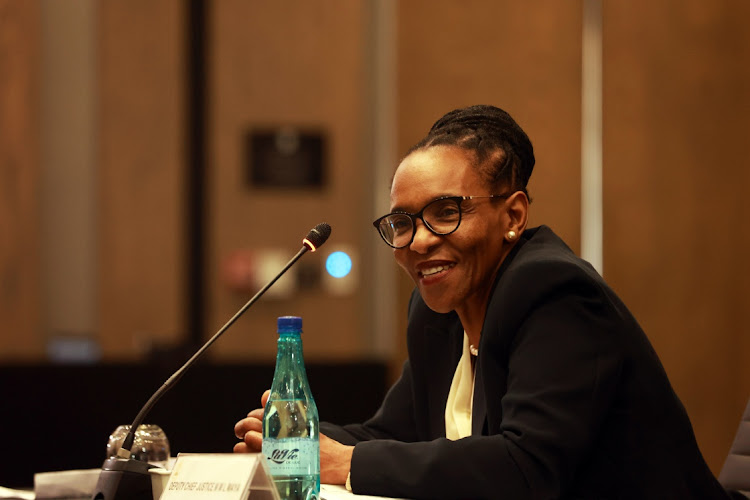
In her address, Chief Justice Justice Mandisa Maya noted the benefits that AI could provide in the work of the judiciary.
“It has been quite exciting to discover that tools for legal research, transcription, and automated administrative functions can free judges to focus on the core human element of adjudication services.”
But she said the digital transformation must be approached with a balanced perspective.
“While the use of this tool has the potential to be a powerful ally in legal practice, recent cases have also revealed how its use can also undermine professional ethics – and the integrity of our jurisprudence.”
Maya also highlighted the challenges faced by South Africa’s judiciary, including achieving complete independence.
As things stand, the judiciary does not have complete control over its budget, not allowing the Office of the Chief Justice to lead administrative and infrastructure projects in the country’s courts.
Maya called for steps to promote good behaviour in courts, ensuring judges stay true to laws while free from meddling.
South Africa’s courts have a strong past in upholding rights, but face tests like budget cuts and outside push.
Maya said technical teams from the executive and judiciary are working to make full institutional independence a reality.
“It gives me great delight to announce that the South African judiciary is finally on the path to full institutional independence … and that the technical teams of the executive and the judiciary are working feverishly to bring this constitutional imperative to reality,” Maya said.
Maya’s rise as Chief Justice marks a milestone, bringing fresh eyes to these issues. Her push for balance echoes calls for stronger checks without weakening freedom.