
By Lehlohonolo Lehana.
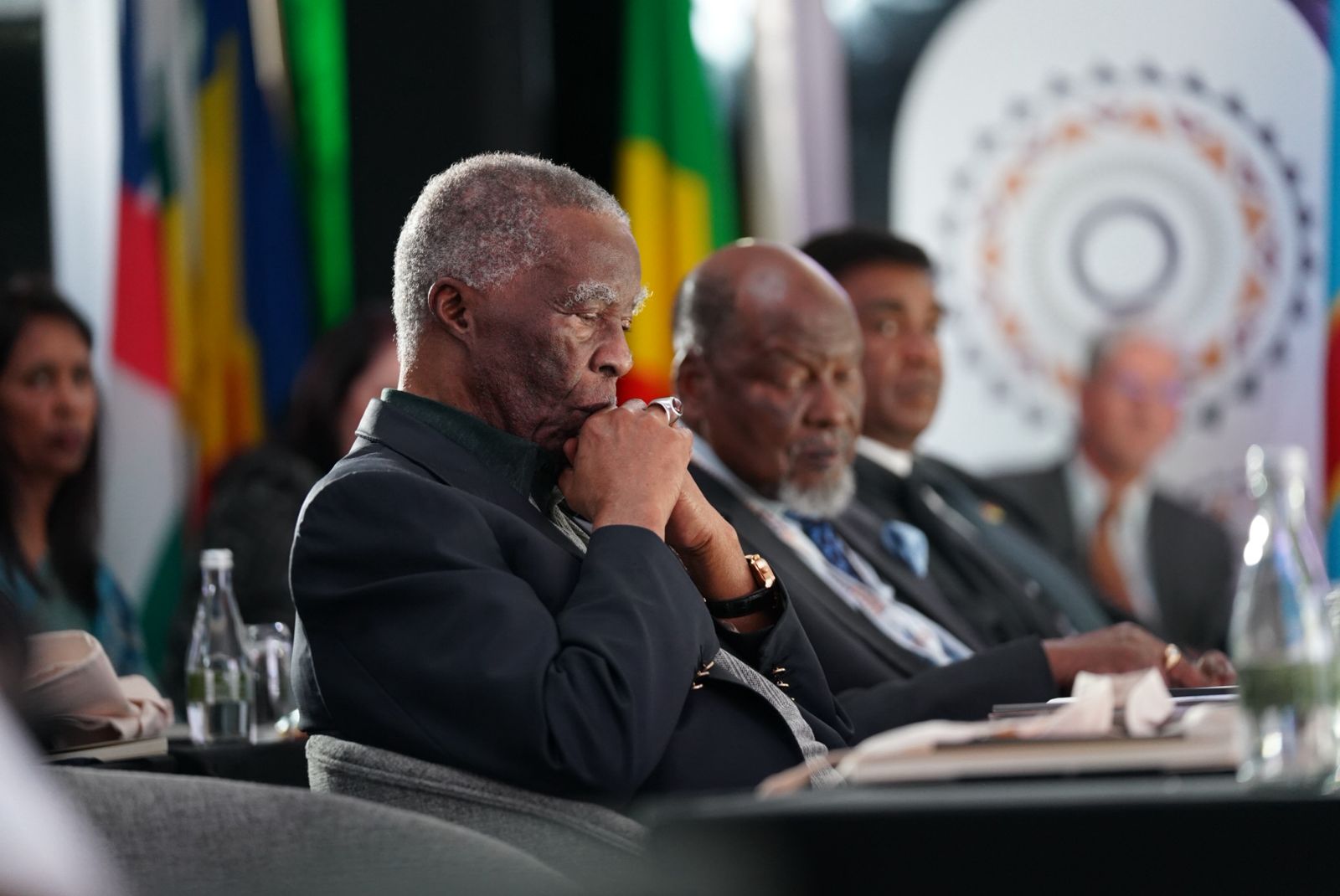
The Thabo Mbeki Foundation (TMF) has officially opened the second Annual African Peace and Security Dialogue (APSD) in Magaliesberg, Gauteng.
The Dialogue is taking place from 3 to 6 September 2025.
Building on the success of the inaugural event in 2024, this year’s Dialogue convene approximately 175 high-level participants from across the continent and the international community to engage in candid, solutions-oriented discussions on the continent’s pressing security challenges.
Last year, the inaugural APSD addressed critical issues of conflict, terrorism, and governance with a focus on West Africa and the Horn of Africa, using the situation in the Sudans as a central case study.
This year, the Dialogue narrows its lens to the complex peace and security challenges confronting Southern Africa and the Great Lakes Region. The persistent Islamist insurgency in Mozambique’s Cabo Delgado province and the deeply entrenched conflict in the Eastern Democratic Republic of Congo (DRC) will serve as key focal points for the discussions.
Key Focus Areas for APSD 2025
Over the next three and a half days, delegates will engage on a range of critical topics, including:
- Root Causes Analysis: A deep dive into the drivers of conflict, including historical grievances, resource governance, political exclusion, and the impacts of climate change.
- Regional Cooperation: Examining and strengthening the roles of the Southern African Development Community and the East African Community in conflict prevention, management, and resolution.
- Protection of Civilians: Addressing the severe humanitarian crisis in Eastern DRC, with a particular focus on internally displaced persons.
- Governance and Institution Building: Exploring pathways towards building more inclusive, accountable, and effective state structures in the affected regions.
- Tracking Progress: The Dialogue will also review developments in the Sahel and the Horn of Africa, following up on the discussions from the 2024 APSD.
Minister of International Relations Ronald Lamola delivered a keynote address, saying we stand today at a crossroads of history.
Lamola said, in the current world of heightened uncertainty, and the return of dangerous might-makes-right policies, new possibilities may emerge, with pronounced risks.
“One thing is certain: we will emerge from the fog, but it is dependent on us taking our African obligations seriously as contained in key strategic documents like the AU Constitutive Act, the APRM and the African Governance Architecture, and African Peace and Security Architecture.
The natural question that will arise is what does it mean to be non-aligned in these heightened geopolitical tensions, the minister said.
In our country some have even suggested that we should just dance to the tune of the US due to the impact of the tariffs to our economy, ignoring that the tariffs are not a uniquely South African phenomenon?
Our approach will continue to be based on a trinity of principles: Progressive Internationalism, Pan-Africanism, and Non-Alignment. These principles are the backbone of what has made post-apartheid South Africa, added Lamola.
The foundation believes that the 2025 African Peace and Security Dialogue will make a tangible contribution to building a more peaceful, secure, and prosperous future for the people of these regions and the continent as a whole, thereby furthering the vision of an African Renaissance.