
By Mmangaliso Khumalo.
A joint parliamentary oversight delegation began a fact-finding mission across Gauteng municipalities on Thursday, amid mounting public frustration over service delivery failures, unstable coalition governments, and concerns about local government finances.
The visit forms part of Parliament’s ongoing effort to hold municipalities accountable and assess their readiness to respond to residents’ everyday challenges.
Gauteng, the country’s economic hub, has been battling rolling service failures, widespread corruption allegations, and political instability that critics warn could undermine governance in the province.
Integrated system to track problems
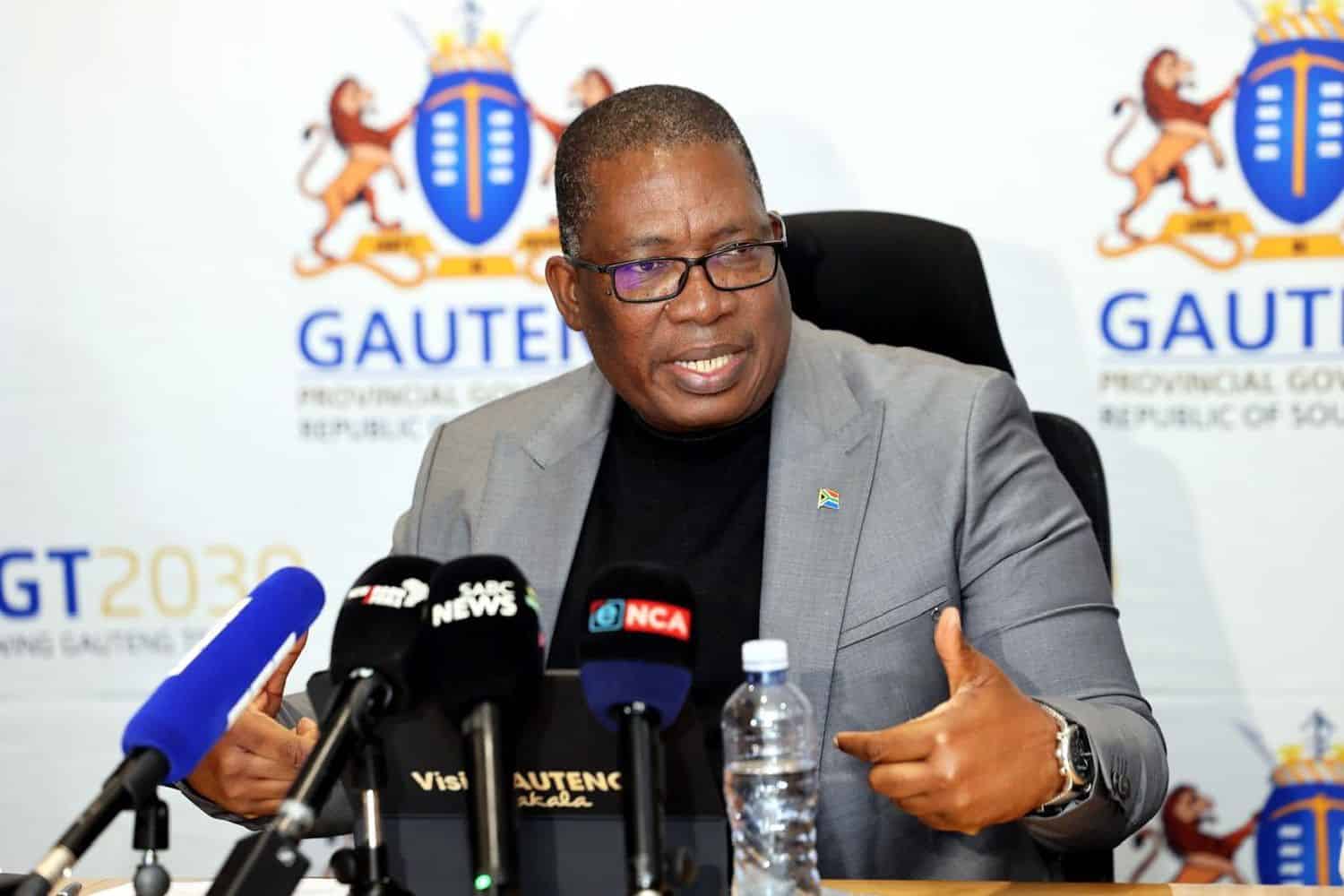
Premier Panyaza Lesufi, addressing the oversight committee, said Gauteng has made progress in establishing a coordinated response framework following its 2024 Provincial Local Government Summit.
“We have established a cohesive, integrated, and collaborative service delivery response system. This system helps us pick up issues word by word, track them in real-time, and hold local authorities accountable. Already, we’ve responded to 22,666 complaints, most from our townships, informal settlements, and hostels.”
Lesufi said the system, dubbed the Integrated Service Delivery Response, ensures that concerns raised by residents are logged, mapped, and followed up with municipalities.
Updates are then presented to executive mayors during quarterly review meetings.
“Every two years, we also conduct a study on the conditions of life in Gauteng. From these interactions, we’ve identified 13 recurring issues – the G13 – that communities have consistently raised over the past three years,” Lesufi said.
The G13 includes water shortages, cable theft, potholes, crime, mushrooming informal settlements, gender-based violence, drug abuse, failing infrastructure, unemployment, and poor access to schools and healthcare.
Lesufi said a new addition, dolomitic sinkholes threatening homes and schools in Merafong and the West Rand, has created an urgent crisis.
“If we don’t act, Merafong could face a disaster where entire suburbs collapse into the ground. Families cannot simply be told to move into small RDP houses when they have invested everything into their homes. We need innovative relocation plans before lives are lost.”
Coalition politics disrupting governance
Beyond service delivery, Lesufi raised alarm over the political instability engulfing municipalities. Of Gauteng’s 14 municipalities, 10 are currently run by fragile coalitions.
“This year alone, Johannesburg, Ekurhuleni, Sedibeng and the West Rand have faced motions of no confidence in their mayors.
“Every time leadership changes, mayoral committees are reshuffled, projects stall, and services collapse. Skilled officials are leaving because they cannot work under constant political turmoil.”
He urged Parliament to consider a framework to stabilise coalition governments.
“We need coordinated solutions to prevent endless motions of no confidence from paralysing municipalities.”
Crime, corruption and political killings
Lesufi also told MPs that Gauteng municipalities are increasingly targeted by violent crime and corruption networks.
In a joint initiative with SAPS, the province has pulled together metro police, municipal security resources, CCTV networks, and private security into a single crime-fighting strategy.
This integrated unit has, in the past four months, arrested over 1,000 of the province’s most wanted criminals, including suspects linked to cash-in-transit heists and kidnappings.
Yet Lesufi admitted another crisis: the rise in political killings. “In the last seven years, municipal managers, CFOs and whistleblowers have been assassinated. These cases remain unsolved. That is why we are establishing a political task team with SAPS to protect officials and root out criminal infiltration in local government.”
Weekly oversight, G13 Fridays
Meanwhile, MEC for Cooperative Governance, Jacob Mamabolo, reinforced the premier’s message, saying Gauteng has adopted a “new rhythm of accountability” through weekly intergovernmental relations (IGR) meetings.
“Every Monday we meet MMCs on communication, every Tuesday we monitor integrated service delivery, Wednesdays we focus on water supply, and Thursdays we track turnaround plans,” Mamabolo said. “This weekly rhythm has improved responsiveness and forced municipalities to account.”
Mamabolo revealed that Gauteng is launching a G13 Fridays programme.
“Every Friday, MECs, mayors, and councillors will go into communities to fix G13 challenges on the ground – from repairing water leaks to addressing streetlights, to tackling crime hotspots.”
He also emphasised the importance of strengthening communication between municipalities and residents, saying poor engagement fuels mistrust.
“Many municipalities do not communicate effectively with their people. By creating a Ward Councillor Forum, we are improving feedback loops and accountability.”
Financial cracks remain deep
Speaking at the same meeting, Finance MEC Lebogang Maile painted a sobering picture of municipal finances.
He praised Tshwane and Merafong municipalities for achieving capital expenditure spending rates of above 90%, but warned that poor revenue collection remains a structural weakness.
“Conditional grants and borrowings are keeping municipalities afloat, but cash flow is crippled by low payment rates,” Maile said.
“Too many residents and businesses are defaulting on services. Meanwhile, those who can afford it have migrated to solar power, cutting municipal electricity revenue.”
For 2025/26, only five municipalities – Johannesburg, Tshwane, Ekurhuleni, Mogale City and Midvaal – adopted funded budgets.
The rest remain technically insolvent.
“Unfunded budgets undermine service delivery. We’ve introduced budget workshops and required draft budgets to be vetted before approval. Still, not all municipalities complied. Without financial discipline, municipalities risk collapse,” Maile cautioned.
He also warned that National Treasury may soon withhold equitable share transfers from municipalities failing to act on irregular and wasteful expenditure.
“It is unacceptable that UIF&W expenditure keeps growing without consequence management. Municipalities must act or face national sanctions.”
Parliament’s role: oversight with teeth
The oversight delegation is expected to visit municipalities, inspect service delivery projects, and question local leaders on governance failures.
Their findings will feed into a parliamentary report and may trigger stronger interventions under Section 139 of the Constitution, which allows for national or provincial takeovers of failing municipalities.
For residents of Gauteng, the visit represents a rare chance for accountability in a system plagued by instability and service backlogs.
Lesufi concluded with a message of cautious optimism: “We are committed to working hand in hand with Parliament, municipalities, and communities. Our people deserve working municipalities – not excuses, not instability. This oversight process is a chance to restore faith in local government.”