
By Lehlohonolo Lehana.
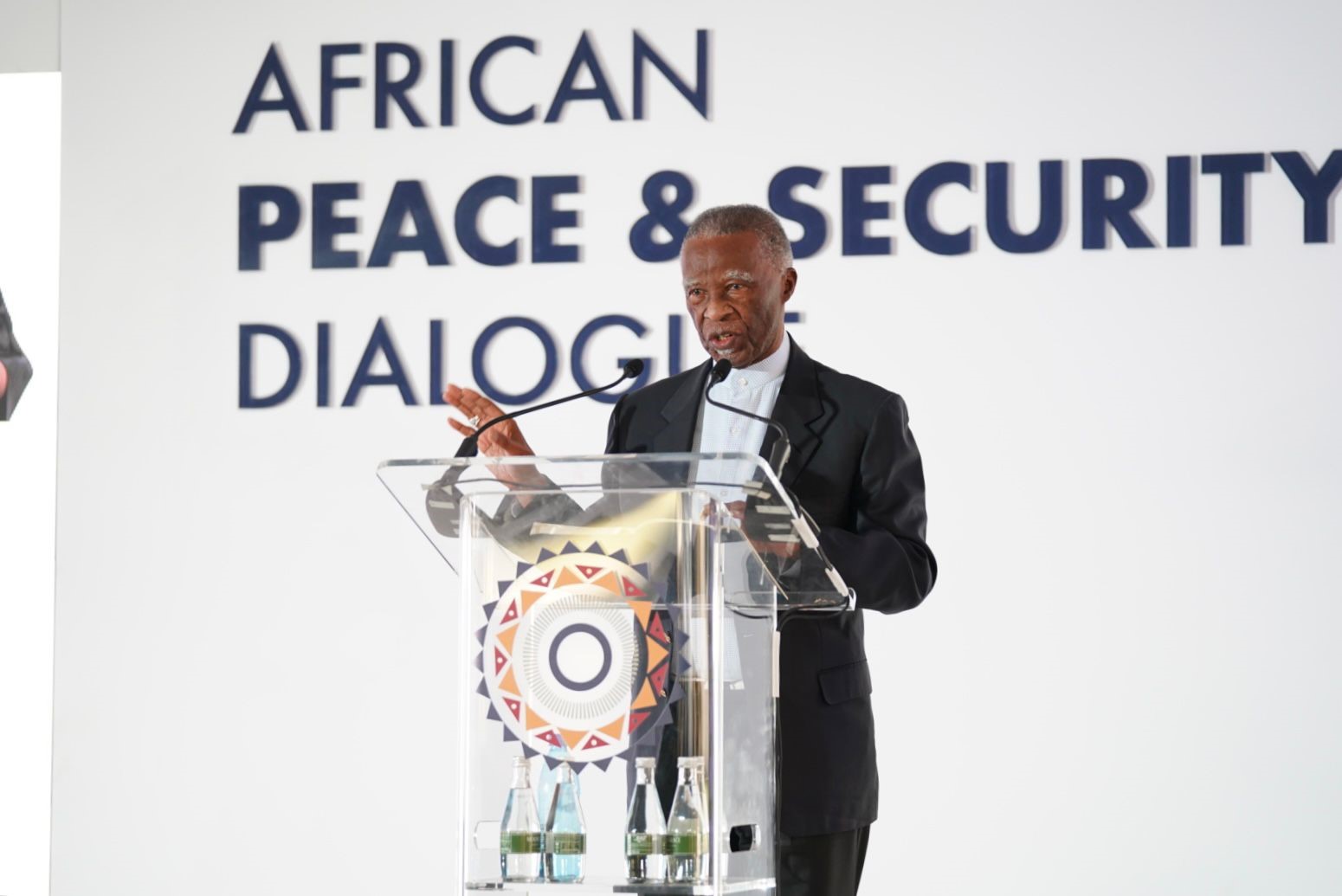
Former president Thabo Mbeki has broken his silence on the presence of the Congolese rebel group M23 at his Foundation’s African Peace and Security Dialogue (APSD) held in Magaliesburg, Johannesburg.
The APSD focused on the ongoing conflict in the DRC, bringing together various stakeholders, including representatives from the M23 rebel group, to discuss pathways to stability.
The APSD, organised by the Thabo Mbeki Foundation (TMF), aimed to foster conversations on African peace and security, drawing experts and leaders to address the DRC’s eastern conflict, where M23 has been active since 2012.
Mbeki says excluding key actors like M23 would render any dialogue meaningless.
Department of international relations and cooperation (DIRCO) said it had no prior knowledge of the M23 presence in the country. The rebels’ invitation to the dialogue angered the DRC government, which in turn declined to attend and also blocked some opposition parties from attending.
However the department said, it continues to support inclusive dialogue as a necessary means to advance peace and stability in conflict-affected regions.
Jean-Claude Kibala, the leader of the Social Movement for Renewal, had his passport confiscated as he was about to leave Kinshasa for South Africa.
DRC government spokesperson Patrick Muyaya accused Mbeki of being “on record siding with the M23 and Rwanda, who sponsor the rebels”. Rwanda has long denied sponsoring the rebels despite evidence brought forward by the UN and rights groups such as Human Rights Watch.
Mbeki dismissed the outrage while addressing students at the Thabo Mbeki African School of Public and International Affairs on Friday.
“It puzzled me that the question arose at all. You can’t discuss peace and security in the Congo without involving the M23. Otherwise, you are joking,” he said.
He explained that all major Congolese factions, from President Félix Tshisekedi’s ruling party to the AFC alliance and M23, attended the dialogue.
“In the end, there was a unanimous view, from the governing party to the M23 and everyone in between, that we need a national dialogue,” Mbeki said.
“The Congolese themselves called it a Sun City number two.”
Mbeki said the new talks aim to correct the failures of the original Sun City agreement, which was never fully implemented.
“If you don’t include M23, you cannot understand the nature of the challenge in the Congo,” he added, stressing that peace requires every key player at the table.
Mbeki also expressed concern over the fading spirit of pan-Africanism in South Africa. “The spirit of pan-Africanism was depreciating in South Africa and across the country,” he said, blaming narrow interests for undermining continental unity.
He called for renewed solidarity to tackle issues like DRC’s conflict, which has killed 6 million since 1996.
Meanwhile Qatar, United States, Togo and the African Union Commission participated in the second joint oversight committee meeting for the peace agreement between the DRC and Rwanda’ to review the agreement in Washington, DC.
The meeting acknowledged a “slowness in the implementation of some elements of the agreement and underscored their shared resolve to ensure its complete and timely implementation to advance peace, stability, and prosperity in eastern DRC and the broader Great Lakes region”.
“The DRC and Rwanda committed to a technical level, intelligence and military channel for direct exchange of information in advance of the next JSCM meeting in Doha.” Togo represented the African Union in the meeting.