
By Lehlohonolo Lehana.
South African Police Service (SAPS) Head of Governance and Policy, Major-General Petronella van Rooyen says Minister of Police Senzo Mchunu’s directive to disband the KZN Police Killing Task team (PKTT) fell outside his mandate and authority.
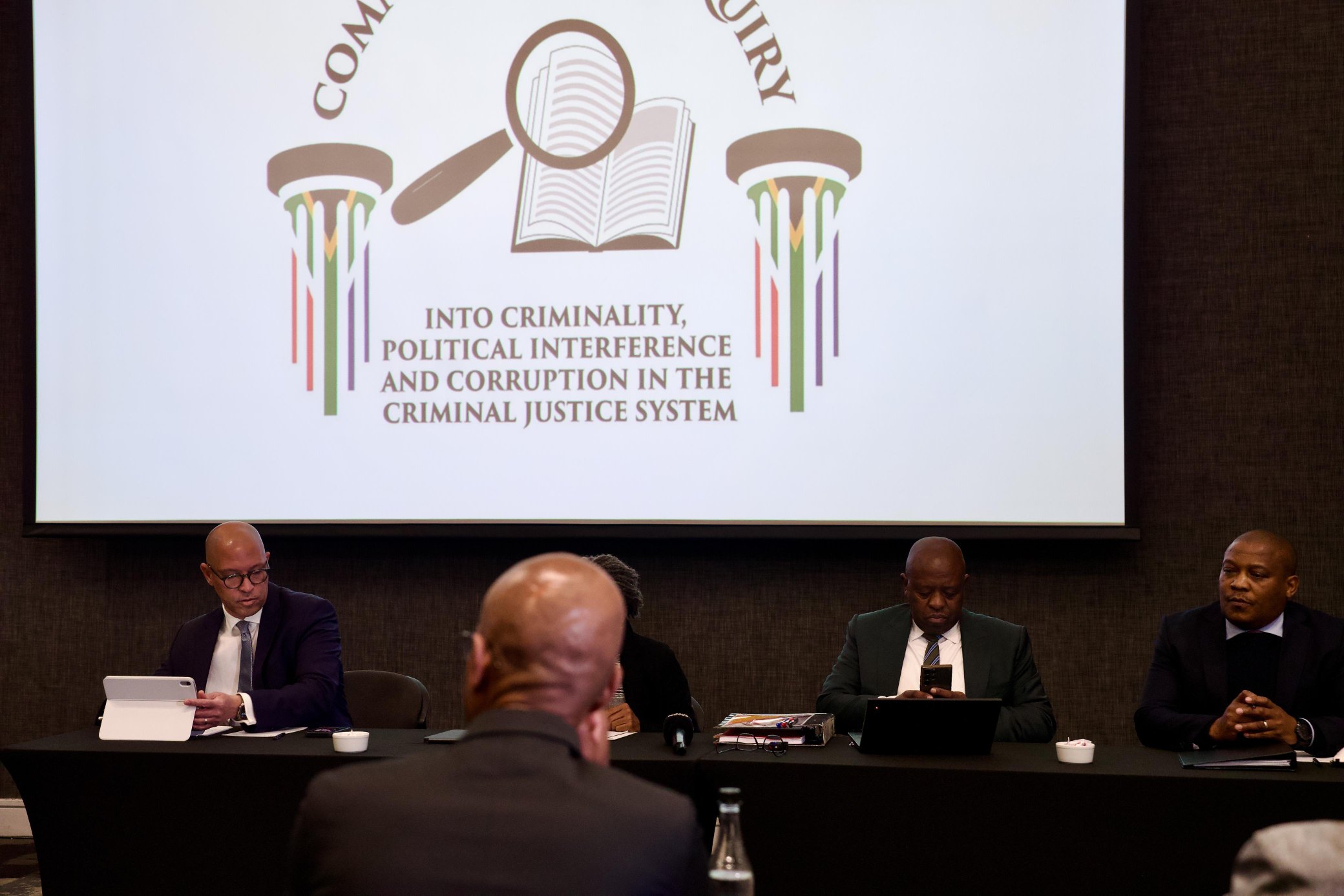
Van Rooyen was testifying at the Madlanga Commission in Pretoria on Thursday.
This marks the sixth day of public hearings, with the legal division official becoming the third witness to take the stand.
The testimony follows explosive accounts from KwaZulu-Natal Police Commissioner Lt-Gen. Nhlanhla Mkhwanazi and National Police Commissioner Gen. Fannie Masemola.
The legal expert provided a deep dive into the legislative framework governing SAPS operations, offering critical insight into the extent of ministerial authority and accountability.
The minister unlawfully strayed into the constitutional competence of the national commissioner when he issued the letter for the disbandment of the PKTT,” she said.
“What would have been an appropriate path is for the minister to express that he no longer considers political killings to be a priority and direct the national commissioner to consider and take steps to align it with his directive.”
She made it clear that while the police minister’s role was on policy and legislation, the national police commissioner dealt with day-to-day operational matters.
Van Rooyen said a minister could identify areas that needed special attention, for example, gangsterism and cash-in-transit crimes.
“However,minister cannot prescribe or direct at an operational level how policy is to be implemented; that is to be left to the national commissioner, “she said.
All SAPS officials had to act in accordance with the Constitution or the law and not in the interests of a political party.
She focused on Mchunu’s directive to disband the PKTT.
“It can never be appropriate for a minister to instruct the national commissioner not only to disband the PKTT, but also to say that the disbandment must be done immediately,” Van Rooyen said.
“That constitutes not only a usurping of the powers of the national commissioner, but also undermines the constitutional objectives of the SAPS… especially in respect of ongoing criminal investigations and the potential risk that further crimes may be committed.”
Masemola, when testifying earlier this week, on Tuesday, said that he had tried to get Mchunu to provide him with reasons about why, on 31 December 2024, he directed the PKTT to be disbanded.
He said Mchunu at some point told him that political killings had only happened before 1994, when South Africa became a democracy, and that “what is happening now is just murders”.
Mchunu had therefore tried to use this alleged stance, which Masemola countered was false because political killings were clearly happening, to suggest the PKTT was no longer necessary.
Van Rooyen also focused on the 121 PKTT dockets linked to the deputy commissioner Shadrack Sibiya.
Mkhwanazi previously said he removed the dockets from the PKTT on Mchunu’s orders. Van Rooyen said that an instruction relating to the movement of the dockets should have come from Masemola.
Van Rooyen acknowledged that the removal of the dockets from the PKTT could be tantamount to suppressing investigations.
She also referred to a parliamentary police committee meeting in March this year – roughly four months before Mkhwanazi held his press conference, during which he made the accusations that led to the Madlanga Commission.
Mkhwanazi and Mchunu had been among those present at the March meeting in Parliament. Issues touched were among those addressed in Mkhwanazi’s subsequent press conference.
Van Rooyen said on Thursday that she would have expected the parliamentary police committee to have acted on the issues discussed in its March meeting.
The fact that the portfolio committee didn’t act on that is, in my mind, a failure of their mandate,” she said.
“Even if they initiated an investigation [or] called the management of the police to come and explain, that would’ve already been an exercise of oversight on their part to ensure that the matter received attention.”
After Mkhwanazi’s press conference, it was decided in Parliament that an ad hoc committee would run parallel to the Madlanga Commission to investigate Mkhwanazi’s allegations and related issues.