
By Lehlohonolo Lehana.
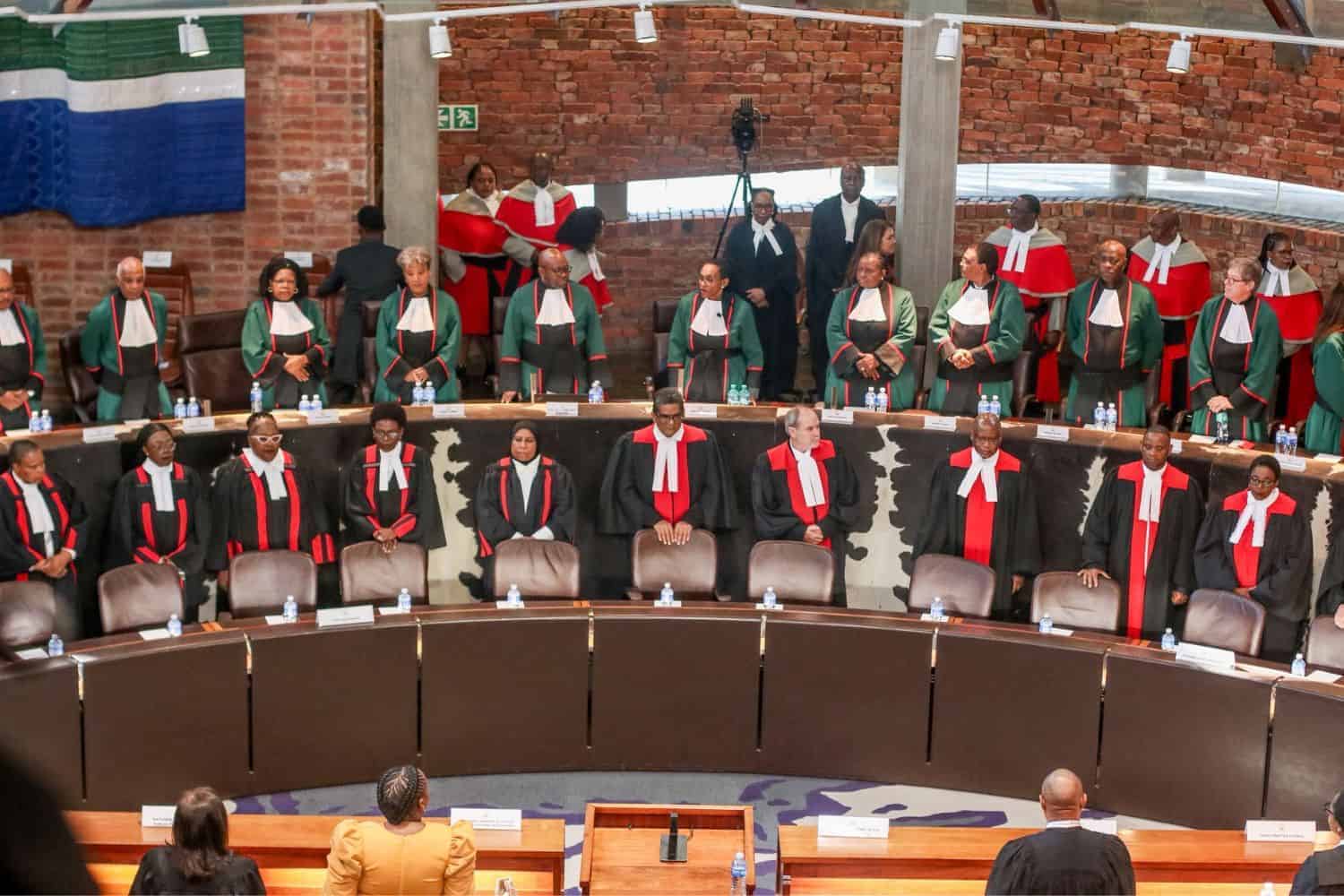
The Constitutional Court has reserved Judgment in the landmark case challenging aspects nor the definition of consent under the Sexual Offences Act.
The case was brought by the The Embrace Project (NPO), who argue that SA’s legal definition of consent is fundamentally flawed and contributes to widespread impunity in sexual offences.
In terms of the Sexual Offences and Related Matters Act, a person charged with rape can avoid conviction if they can show it is reasonably possible that they believed the complainant had consented to sex.
The case follows a 2024 Pretoria High Court ruling by Judge Selby Baqwa, he believed consent defence is unconstitutional, condemning it for shielding perpetrators and entrenching myths that deepen survivors’ trauma.
In his ruling he declared sections 3 to 9 and 11A, together with section 1(2) defining consent as a “voluntary or uncoerced agreement”, unconstitutional.
The Embrace Project urged the court to uphold the high court’s decision and adopt an objective standard for consent.
During oral arguments before the Constitutional Court on Thursday, Nasreen Rajab-Budlender SC on brief for Embrace and Holzträger, submitted in one of her responses that the relief sought from the court will, to an extent, reduce instances of rape.
Rajab-Budlender SC argued that it was a nuanced question whether the aim of the application was to secure more convictions and in so doing reduce incidences of rape, adding that rape has many factors.
She submitted that these factors include “our brutal past, our huge employment statistics and power imbalances”.
“We know that there are all of those reasons why our rape statistics are so high. We are not asking the court to fix the entire problem. This court can’t do that. We know that courts can only do part of the work and there is a huge amount of social work that must be done to fix the other parts of this problem. But where it comes before this court is through this Act.
“It’s the application of this Act that this context of gender-based violence, finds itself squarely in the court system…It will change the way in which individuals behave because it will require them to take steps to determine consent,” submitted Rajab Budlender SC.
However, Centre for Applied Legal Studies (CALS) believes that the proposed changes to the law do not go far enough. They want the words “without consent” taken out of the definitions entirely. These arguments were dismissed by Judge Baqwa.
Advocate Letlhogonolo “MX” Mokgoroane, representing CALS, submitted that the definition created a distinction between victims of gender-based violence and other crimes and thus requires “constitutional scrutiny”.
Instead of providing maximum protection to complainants and minimising secondary victimisation, the consent requirement perpetuates the trauma and places a disproportionate evidentiary burden on victims and hinders effective prosecution.”
The “consent” definition perpetuates the misconception that sexual offences are primarily about sexual activity rather than violence and coercion.
Removing it, would dispel the misconception that sexual violence is merely “sex gone wrong” rather than a serious act of criminality.
If the apex court agrees with Baqwa’s findings, it will mean that a person accused of a sexual offence must prove that he or she took “objectively reasonable steps to ascertain that the complainant consented to sexual conduct”.