
By Lehlohonolo Lehana.
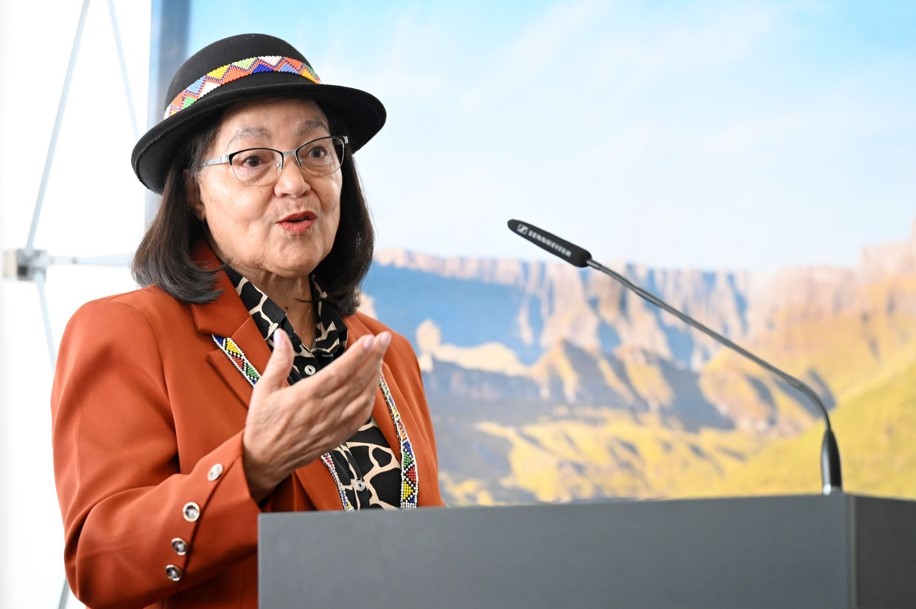
Minister of Tourism Patricia De Lille says World Tourism Day is a reminder that South Africa’s story is best told through its landscapes, its heritage, and its people.
De Lille was speaking at the Constitutional Hill in Johannesburg on Saturday to celebrate World Tourism Day.
She was joined by her deputy Maggie Sotyu, Deputy Chief Justice Dunstan Mlambo, Gauteng MEC of Economic Development Lebogang Maile, KZN MEC Economic Development Musa Zondi and Tourism Stakeholders.
The day marked a global nod to tourism’s power, with United Nations World Tourism Organisation’s 2025 theme focusing on “Tourism and Peace”.
She reminded the attendees that tourism remains one of South Africa’s strongest economic drivers, bringing culture, fashion, art, and vibrant experiences.
She says the sector contributes over 3% to the country’s Gross Domestic Product (GDP), supporting more than 1.5 million jobs, mostly for young people and women.
“South Africa remains one of the most visited destinations on the African continent, attracting millions of international travelers each year. From the bustle of Johannesburg to the natural wonders of Mpumalanga, the vineyards of the Cape, the rolling hills of KwaZulu-Natal, and the wildlife of Kruger National Park, the country’s tourism offering is as diverse as its people.
She said her department wanted South Africans to explore more within the country.
De Lille and the tourism industry appear to be doubling down on promoting local travel while assuring foreign visitors that SA remains a top destination.
In the 2024/25 financial year, Gauteng saw a notable increase in international tourism, with over 3.8 million international visitors, up from 2.6 million the previous year.
Maile described Gauteng as “the golden province, the seat of the South African Government, the home to the Cradle of Humankind World Heritage Site, Kwa-Ndonga Ziya-Duma, the connecting point of Mahatma Gandhi’s Satyagraha movement and Nelson Mandela’s rainbow nation.”
Maile positioned the province as South Africa’s economic powerhouse and as an essential beacon of cultural heritage and resilient transformation.
“Gauteng is determined to reclaim its place as a leading global tourism destination.”
“With a focus on innovation, heritage preservation, and infrastructure development, our province plans to turn its tourism assets into engines of social empowerment and economic opportunity for all its residents,” he said, calling on all sectors to embrace tourism as a catalyst for sustainable growth.
He emphasised that tourism is more than travel: it is “a feel-good industry, a national mood enhancer, and a powerful contributor to our happiness index.”
Noting the province’s firm but still recoverable tourism performance—accounting for over 3 million international arrivals and generating R41.2 billion in direct revenue—Maile outlined strategies to accelerate recovery and position Gauteng as a vibrant, innovative, and inclusive tourism hub.
Maile also spoke of the potential of Special Economic Zones (SEZs) in driving tourism growth. By leveraging the industrial potential of areas like the Tshwane Automotive SEZ, the plan seeks to create tourism experiences that blend business, innovation, and culture. This would not only attract business travelers but also encourage longer stays as tourists experience the region’s industrial capabilities alongside its cultural offerings.
Maile urged the sector and the public to participate in shaping Gauteng’s tourism future, promising increased government investment and partnerships to ensure the province remains a compelling destination on the African and global stage.