
By Lehlohonolo Lehana.
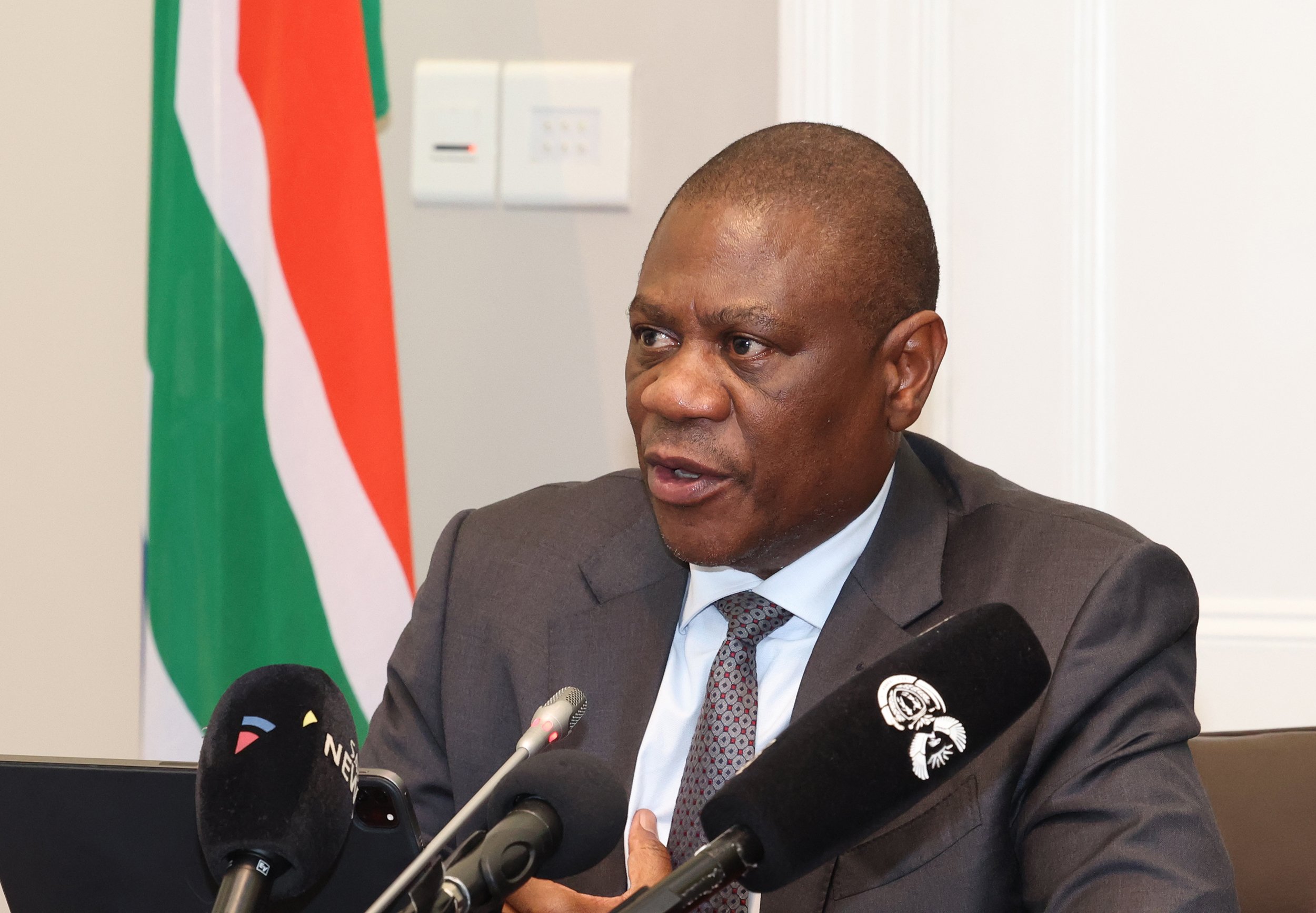
Deputy President Paul Mashatile has doubled down on Broad-Based Black Economic Empowerment (BBBEE), insisting that it is not a failed policy.
Mashatile was speaking at the inaugural Youth Investment Indaba at the Houghton Hotel in Johannesburg on Friday.
Hosted by the National Youth Development Agency (NYDA), the gathering convened leaders from government, the private sector, development institutions, and youth-led enterprises to drive youth-focused investment and inclusive economic growth.
“We support the implementation of this Act, as we will continue to do so with the BEE laws.”
He believes that Broad-Based Black Economic Empowerment (BBBEE) has proven effective, with more Black-owned companies operating successfully in mining and other sectors.
“South Africa and its youth need transformative policies,” the Deputy President said.
“We can’t drop transformative legislation. If there are challenges, we must fix them. BBBEE is a very important transformative legislation to empower previously disadvantaged people and it will be kept. We have an intention to reinforce this legislation, refine it and work through its shortcomings,” he said.
The country’s second-in-command outlined an ambitious vision for youth economic participation, emphasising that young people are not just beneficiaries but the nation’s most potent economic asset.
The Democratic Alliance (DA) recently announced that it was seeking for the Public Procurement Amendment Act of 2024 to be amended to repeal all race-based preferential procurement provisions and replace them with an empowerment system that targets poverty as the proxy for disadvantage instead of race.
During the DA sponsored the debate in Parliament on Friday, the party argued that the legislation must be relooked to ensure greater economic inclusion.
The DA’s finance spokesperson, Mark Burke, said BBBEE has “nothing to do with Black Economic Empowerment” and only serves to “deny economic opportunities for South Africans”.
It is difficult to get rid of BBBEE “if the fat Cat Matlala-types make sure that the tender kickbacks don’t stop flowing”, said Burke.
However, the African National Congress’ (ANC) Seaparo Sekoati countered the argument, saying BBBEE legislation does not target only black people.
He noted that the legislation has also benefited “white women who were also marginalised by white men”.
Sekoati maintained that the economy would never have transformed without the BBBEE legislation.
DA’s Public Procurement Amendment Bill proposes replacing the Black Economic Empowerment (BBBEE) framework with a nonracial, outcomes, based procurement model that measures inclusion through poverty, performance and social impact.
It calls for a shift from identity, based policy to measurable developmental results, arguing that empowerment should now be about poverty rather than race, about performance rather than participation.