
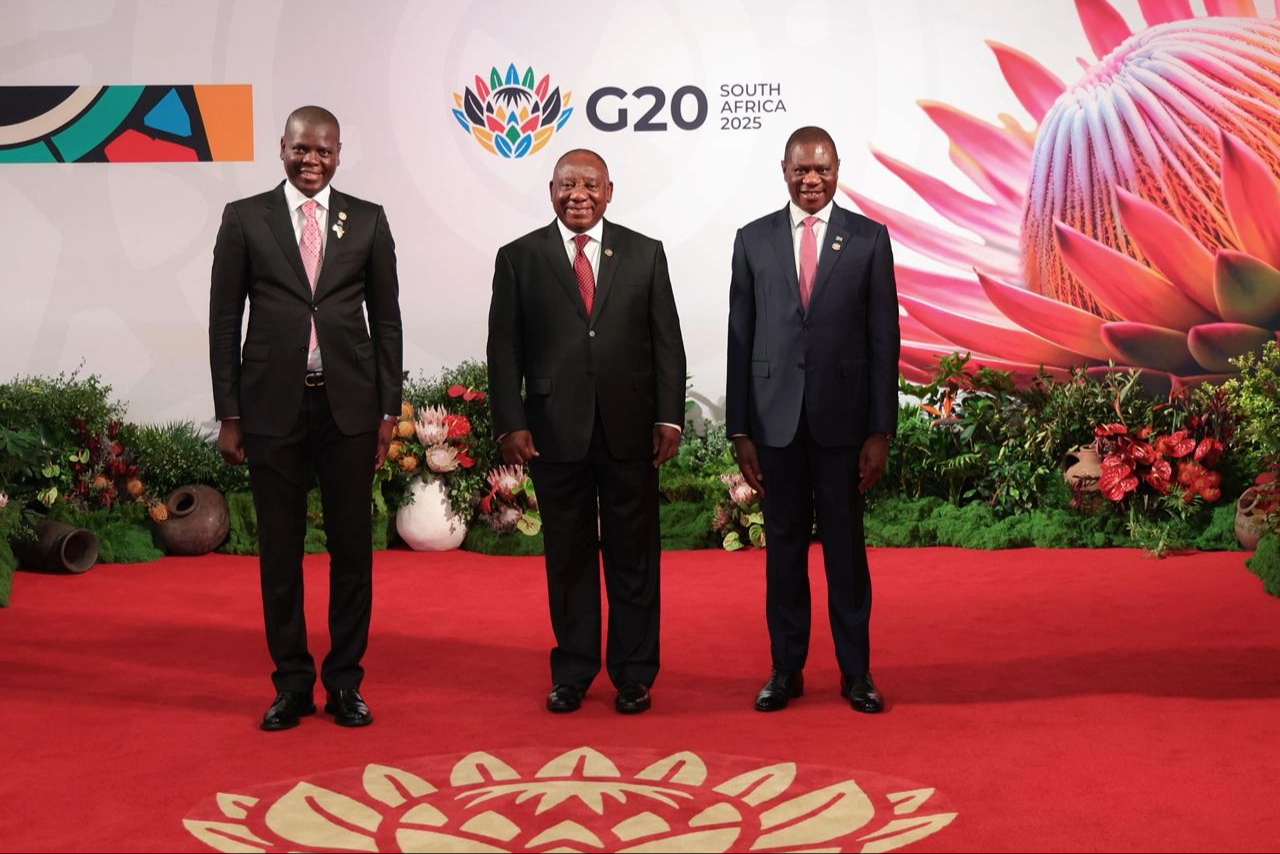
By Lehlohonolo Lehana, Live from Nasrec.
President Cyril Ramaphosa said in his opening remarks that South Africa has sought to preserve the integrity and stature of the Group of 20 (G20).
Ramaphosa said in pursuit of, and in conformity with, the founding mission of the G20, South Africa adopted the theme of ‘Solidarity, Equality and Sustainability’ for its G20 Presidency.
“Through solidarity, we can create an inclusive future that advances the interests of people around the world who are at the greatest risk of being left behind.
“This is important in an interconnected world, where the challenges faced by one nation affect all nations. By promoting equality, we strive to ensure fair treatment and equal opportunities for all individuals and nations.
“The disparities in wealth and development within and between countries are not only unjust and unsustainable. It is also one of the greatest impediments to sustainable growth.
Ramaphosa said that South Africa is committed to ensuring that the development priorities of the Global South and Africa find expression in the group’s agenda.
The president added there is an overwhelming consensus that one of the summit’s tasks is to adopt a declaration, emphasising the need for “multilateralism” to confront “the threats facing humanity today”.
The United States, which is boycotting the summit, has demanded that the summit not issue a declaration, which Ramaphosa rejected.
The summit started with an ambitious agenda to make progress on solving some of the longstanding problems that have afflicted the world’s poorest nations.
Leaders and top government officials from the richest and leading emerging economies came together at Nasrec Exhibition Centre in Johannesburg, South Africa, once home to iconic post-apartheid leader Nelson Mandela, to try and find some consensus on the priorities set out by the host country.
Many of South Africa’s priorities for the group, including a focus on climate change and its impact on developing countries, have met resistance from the US.
“We’ll see,” United Nations Secretary-General Antonio Guterres said on whether the G20 could prioritise developing world countries and make meaningful reforms.
“But I think South Africa has done its part in putting those things clearly upon the table.”
South Africa, which gets to set the agenda as the country holding the rotating presidency, wants leaders to agree to more help for poor countries to recover from climate-related disasters, reduce their foreign debt burdens, transition to green energy sources and harness their own critical mineral wealth – all in an attempt to counter widening global inequality.
Guterres cautioned that rich nations have often failed to make the concessions required to strike effective climate or global financial reform agreements.
The G20 is a group of 19 countries that includes the richest but also the top developing economies in the world. The European Union and the African Union, which joined in 2023, are also members, making it now a group of 21.
It was formed in 1999 and unlike the Group of Seven, which only includes the richest democracies, it offers some developing countries a forum to raise their problems.
Its focus is the global economy and international development, though it has no charter or permanent secretariat — unlike organizations such as the United Nations. It also doesn’t issue binding decisions and critics say there’s no meaningful mechanism for it to put words into action.
Watch Live in the video below:
Video Courtesy of G20.