
By Lehlohonolo Lehana.
National Treasury and the Department of Public Service and Administration (DPSA) are working together to keep the compensation baseline within affordable limits.
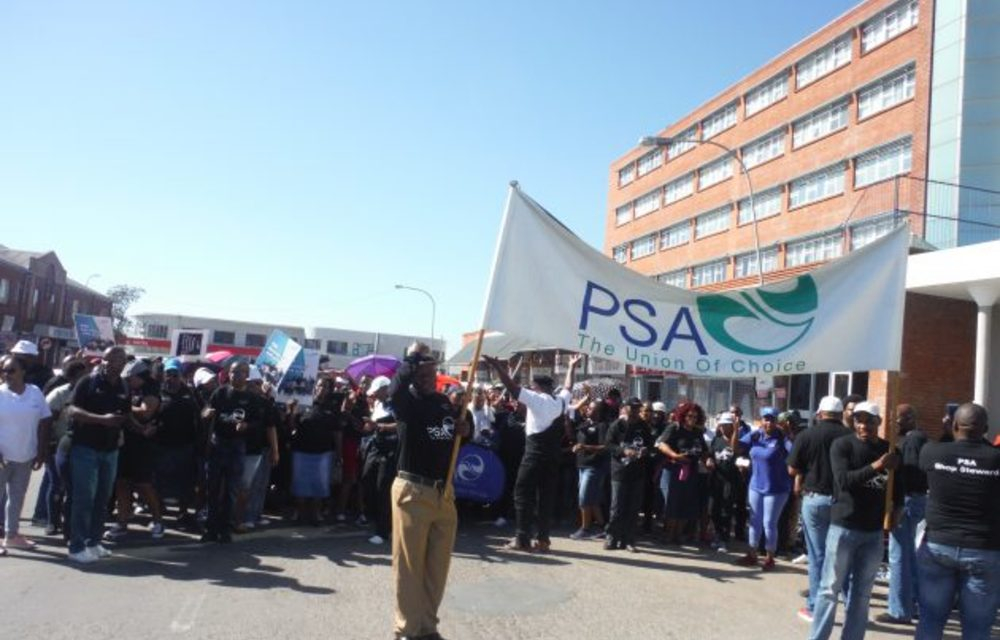
In its Budget Review document, National Treasury said a new round of collective bargaining will begin in March 2022.
“National Treasury is working with the Department of Public Service and Administration to keep the compensation baseline within affordable limits.
“As indicated in the 2020 Budget, compensation baselines will grow at the rate of inflation from 2024/25.
“Should collective bargaining result in salary adjustments that exceed compensation ceilings, reductions in headcount will be required.”
He said Treasury allocated additional funding of R20.5 billion in 2022/23 to meet the cost implications of the 2021 public service wage agreement, and that these matters would be addressed at a Public Sector Labour Summit that is scheduled to take the place in late March.
According to the 2022 budget review, government has allocated additional funding of R20.5 billion for 2022/23 to meet the cost implications of that 2021 public service wage agreement.
National Treasury said that the 2021 wage agreement awarded employees a non‐pensionable cash gratuity.
“In the absence of a new agreement, the same gratuity will be paid in 2022/23, and provision for this is made in the 2022 Budget.
“Baseline adjustments in previous budgets did not fully accommodate the gratuity costs and the impact of the pandemic, placing pressure on provincial health and education compensation budgets.
“To alleviate this short‐term pressure, a portion of the revenue improvement is allocated to provinces.”
Treasury said compensation spending for national and provincial government grew by 7.3 % on average for the period 2014/15 to 2019/20, compared with 6.8 % average growth in non‐interest expenditure.
This trend crowded out other spending items like goods and services, with a concomitant impact on service delivery.
“The decision to not implement the final leg of the 2018 wage agreement and other measures to reduce average wage costs have improved the wage trajectory.
“Medium‐term wage bill growth is projected to be much lower than the original trend. This will contribute to closing the gap between revenue and expenditure, improving the composition of expenditure.”