
By Lehlohonolo Lehana.
President Cyril Ramaphosa says government opted to engage in dialogue and mediation instead of taking a more “adversarial” position in the Ukraine issue so as to help South Africa contribute to the achievement of a resolution.
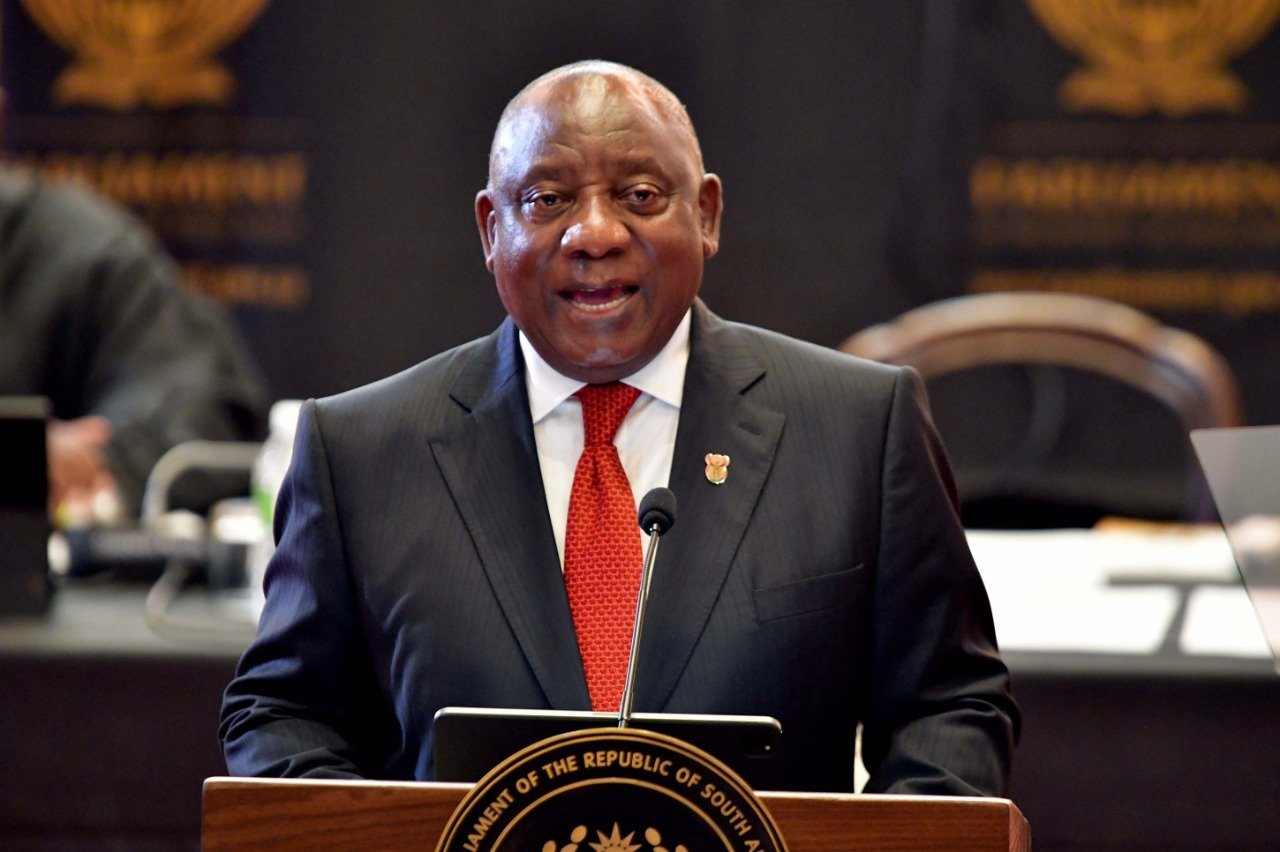
Ramaphosa said this when he responded to oral questions in the National Assembly on Thursday.
“We support the principle that members should refrain from the threat of use of force against the territorial and political independence of other States,” the President said.
The President said this is the reason South Africa, at the United Nations General Assembly, strongly urged all sides to uphold international law, including humanitarian law and human rights law, as well as the principles of the UN Charter, including sovereignty.
“While there are people within this country and elsewhere who want us to adopt a more adversarial position, our position seeks to contribute to the creation of conditions that make the achievement of a durable resolution of the conflict possible.”
The President said through this approach, South Africa is able to make its voice heard, not only publicly, but also to the parties that are involved in the conflict and by doing so, “…we bring our influence to bare in the issue of dialogue, mediation and negotiations…”
Ramaphosa blamed NATO for the war in Ukraine and said he would resist calls to condemn Russia, in comments that cast doubt over whether he would be accepted by Ukraine or the West as a mediator.
“The war could have been avoided if NATO had heeded the warnings from amongst its own leaders and officials over the years that its eastward expansion would lead to greater, not less, instability in the region,” Ramaphosa said.
But he added that South Africa “cannot condone the use of force and violation of international law” – an apparent reference to Russia’s February 24 invasion of Ukraine.
President Vladimir Putin has characterised Russia’s actions as a “special operation” to disarm and “denazify” Ukraine and counter what he calls NATO aggression.
Kyiv and its Western allies believe Russia launched the unprovoked war to subjugate a neighbour Putin calls an artificial state.
Ramaphosa also revealed that Putin had assured him personally that negotiations were making progress. He said he had not yet talked with Ukraine’s president Volodymyr Zelenskyy, but that he wanted to.
Economic recovery plan will protect economy from conflict-related pressures
Ramaphosa said, meanwhile, that the best way to protect South Africa from the external economic shocks, like the ripple effects of the Ukraine conflict, is to continue to implement the Economic Reconstruction and Recovery Plan.
He said like other countries, South Africa is concerned about the direct impact of the conflict on its own economy through financial markets and inflationary pressures “that will come about through food price increases and fuel price increases”.
“As a small and open economy with significant debt levels, one of the most significant steps we can take to reduce its vulnerability to external shocks it to improve our macroeconomic stability.”
The President said SA has many strengths, even as a small economy country.
“We have strengths such as the highly developed and well-capitalised financial and banking sector that adheres to internationally recognised frameworks.
“The depth of local capital markets reduces our vulnerability to foreign currency denominated debt.
“We benefit from having an independent central bank, a floating exchange rate regime and prudent capital controls,” he said.
The President said these strengths will be complimented by the work underway to stabilise debt and to reduce our deficit, alongside the far-reaching structural reforms that are now underway.
“In short, the best way to protect our economy and welfare of our people is to proceed with the implementation of the Economic Reconstruction and Recovery Plan,” he said.
Livestream Video Below:
Video Courtesy of Presidency.