
By Lehlohonolo Lehana.
The ATM’s court bid to force the Speaker of Parliament to have a secret ballot in motion of no confidence in President Cyril Ramaphosa has been struck from the roll.
Judge Rosheni Allie struck the party’s urgent application from the court roll this morning, saying it was not urgent and the urgency was self-created.
With just two days left before MPs vote on Wednesday on ATM’s tabled motion – and a similar motion brought by the Democratic Alliance (DA) against Ramaphosa’s Cabinet – the party wanted an order declaring parliament speaker Mapisa-Nqakula’s decision to reject their request for a secret ballot unconstitutional and invalid.
ATM also wanted the high court to review and set aside the speaker’s decision, taken on 16 February and 9 March 2022, rejecting their request, and to replace it with an order granting the secret ballot.
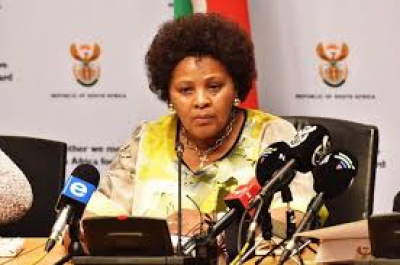
Mapisa-Nqakula rejected ATM and the DA’s request for a closed ballot, arguing that she does not believe a closed ballot is necessary or in the interest of democracy.
ATM’s media and communications manager Zama Ntshona said the party would approach Mapisa-Nqakula requesting her to postpone their motion to a later date.
“She has no choice but to accept our request as the matter is before the courts, “he said.
However this means that Wednesday’s motion of no confidence in Ramaphosa, the first he will face, can go ahead with an open ballot, as there is no court order preventing the National Assembly from continuing with it.
Mapisa-Nqakula argued that ATM’s court application was not urgent and that any urgency in their application was self-created.
The speaker also argued her decision to reject the party’s request was lawful, and that ATM spent nine days between 16 and 25 February 2022 before it decided to take her decision on legal review.
Mapisa-Nqakula said the delays in lodging the court application, which saw Parliament being given four days to file an answering affidavit to ATM’s application, were “patently unreasonable and impermissible”.
“There is no question that the ATM had the right to launch proceedings to review the speaker’s decision of 16 February 2022 immediately upon receipt of that decision. It did not do so at that stage – either urgently or at all.
“Instead, the ATM made an election. It opted instead to ask the speaker to ‘review’ her own decision. It is this election that has brought about the purported urgency of these proceedings. The ATM cannot now escape the consequences of its election.”
Mapisa-Nqakula argued that in using her discretion to decide on the secret ballot, it could not be assumed that merely because a motion of no confidence in the president is at stake, a secret ballot must follow.