
By Lehlohonolo Lehana.
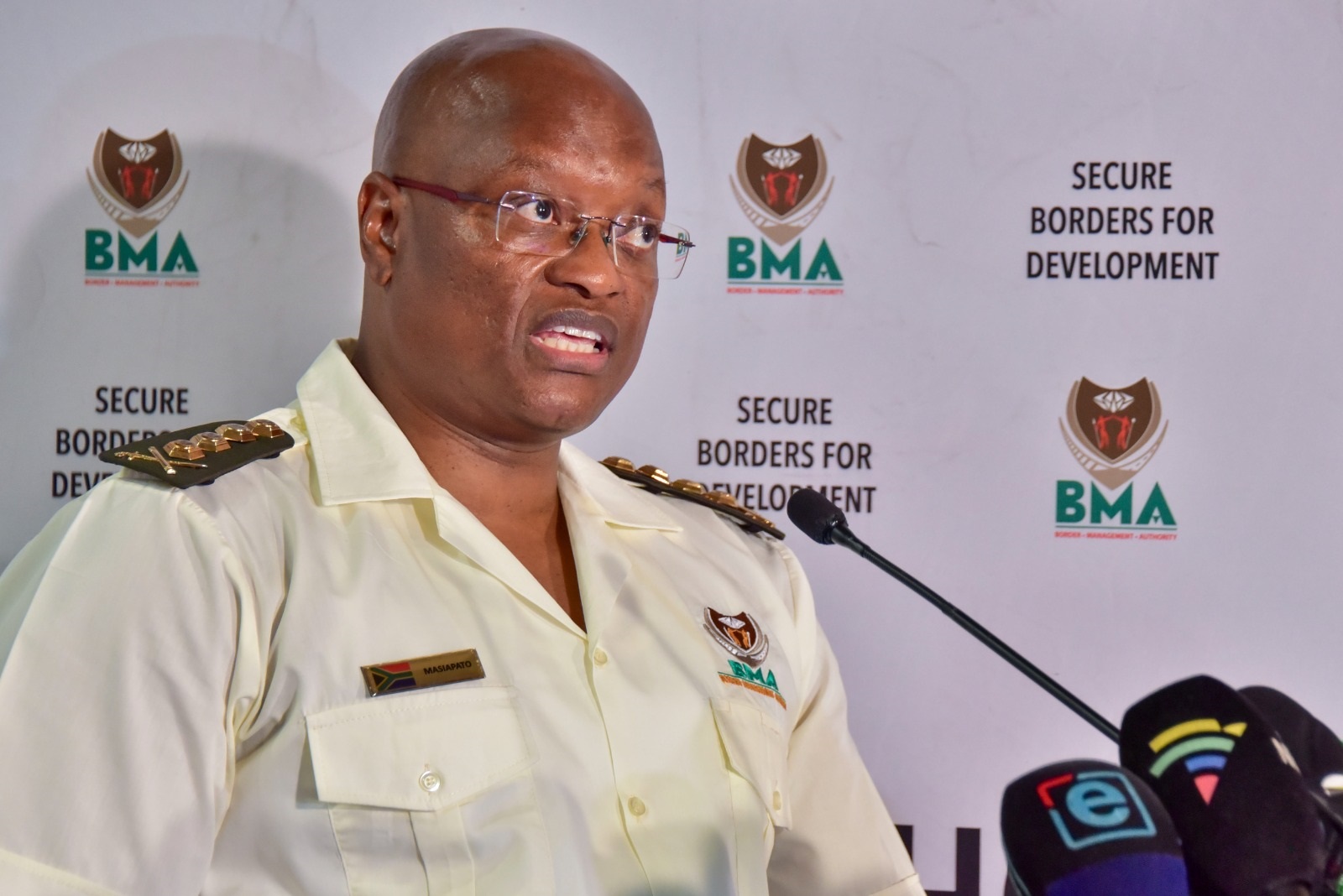
The Border Management Authority (BMA) commissioner, Dr Michael Masiapato, briefed the media on Sunday on festive season law enforcement operations.
Masiapato said the festive season operations plan has been endorsed by key structures critical to border management, including the Border Technical Committee, the Inter-ministerial Consultative Committee on Border Management, the Parliamentary Portfolio Committee on Home Affairs, and the Parliamentary Select Committee on Security and Justice.
Operational support will be provided by the National Joint Operations and Intelligence Structures (NATJOINTS) and provincial joint operations (PROVJOINTS) across all nine provinces.
“It covers the work of the BMA across 71 ports of entry, comprising 52 land ports, 10 international airports, and nine seaports,” he said.
“This includes immigration facilitation, agricultural and environmental biosecurity, port health, and general border law enforcement, including access control.”
The BMA’s jurisdiction extends 10 kilometres inward from internationally recognised borders and 12 nautical miles seaward along the coastline.
Masiapato said the plan was informed by historical patterns and lessons learned from previous festive seasons, emphasising inter-governmental cooperation, law enforcement collaboration, and coordination with border communities.
“The December and January festive periods always bring a significant increase in traveller volume, placing pressure on our ports of entry,” he said.
“South Africa continues to confront complex border-related challenges, including illegal migration, cross-border crime, and smuggling of illicit goods, which strain resources, hinder economic growth, and undermine regional integration.”
He said the BMA has engaged neighbouring states to develop a robust and well-resourced border management system free from criminal interference.
Masiapato said, those caught trying to enter illegally, about 4,000 are undocumented, 2,000 are inadmissible and almost 2,000 were registered as undesirable.
He added that the use of drones played an integral part in catching out those trying to cross borders.
Masiapato said most of the people they stopped from crossing into South Africa came from Lesotho.
“As is always the case in terms of historical and empirical data, the majority of the intercepted individuals in that second quarter were led by Lesotho nationals, followed by Mozambicans, Zimbabweans, as well as Swati nationals. This is a reflection of the consistent, longstanding migration patterns within the sub-region.”