
By Lehlohonolo Lehana.
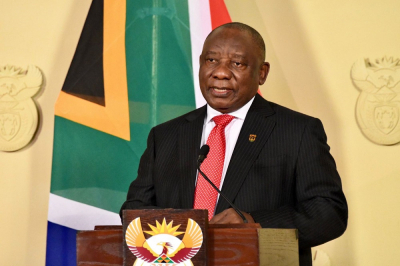
President Cyril Ramaphosa in a public address on Monday night, has outlined emergency measures to deal with South Africa’s electricity crisis.
These measures are aimed at stabilising the crippling power utility, which Ramaphosa admitted was “unreliable and vulnerable”.
Ramaphosa’s measures at stabilising energy security in the country including fixing Eskom and improving the performance of the existing fleet of power stations.
The plan is almost identical to one presented by Eskom to government recently, and is similar to many other expert plans that have been aired in the past few weeks. It does not, however, suspend legislation or impose a state of emergency or disaster.
The long list of measures also include Eskom importing power from neighbouring countries, hiring former plant managers who left the power utility, recruiting people who have the skills required to drive Eskom forward, cutting red tape and buying power from private producers.
Ramaphosa scrapped licence rules for private power generators in a sweeping overhaul of the energy industry to end electricity outages that are hobbling the economy.
Private producers will be allowed to build power plants with unlimited capacity without requiring a licence, compared with a previous cap of 100MW, He also announced that the government will double the amount of renewable energy it procures under the so-called sixth bid window process to 5.2GW.
Amongst the issues tabled is the debt of Eskom which is standing at about R400bn and has been one of the factors that have hindered the power utilities ability to address many of its issues.
“The National Treasury is working to finalise a sustainable solution to Eskom’s debt.”
“The Minister of Finance will outline how the government will deal with this matter in an effective manner when he presents the Medium-Term Budget Policy Statement in October.” said Ramaphosa.
Further measures include the use of climate funding which will be provided through the Just Energy Transition Partnership to invest in the grid and to repurpose the power stations that have reached the end of their lives.
The power utility is also expected to be constructing its first solar and battery storage projects at Komati, Majuba, Lethabo and several other power stations which are expected to boost the system with over 500 MW.
Ramaphosa said the challenges faced by the power utility in recent months included deliberate acts of theft, fraud and sabotage.
He has established a power crisis committee – that will include the department of public enterprising, the department of environment, forestry and fisheries, the department of mineral resources and energy, SAPS and the Treasury.
It will be co-ordinated from the presidency.
Ramaphosa has been under pressure to end rationing of power that’s plagued the economy for more than a decade, as Eskom’s nearly century-old monopoly has descended into an indebted, underperforming drag on the economy. The new measures are likely to inspire an unprecedented number of private projects.
Livestream Video Below
Video Courtesy of ENCA.