
By Lehlohonolo Lehana.
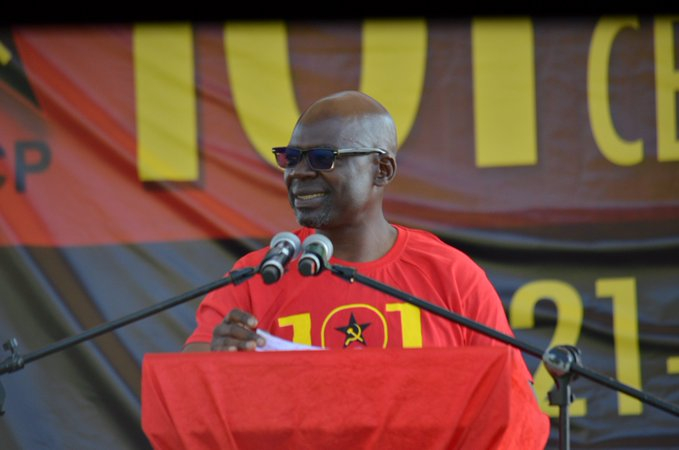
South African Communist Party (SACP) General Secretary Solly Mapaila has called on the alliance partners to work together find solutions to the current economic crisis in the country.
Mapaila was speaking during the party’s one-hundred and-one anniversary celebration in KaNyamazane, in Mpumalanga.
The anniversary celebrations were supposed to be held last week but they were postponed to accommodate the ANC policy conference that took place in Nasrec.
“Transcript we have seen for instance big business refusing to sign social compacts with government that minimum they could do , we don’t think the government under the circumstances should feel helpless it should move ahead and implement what is expected from business,for instance we can impose certain that economically are within our really prescript assets position of prescript assets in that way business will come screaming to table to participate in economic revival of our country,” said Mapaila.
Mapaila added that SACP wants government to force the private sector to participate in the revival of the economy, by implementing relevant policies.
He emphasised that radical change is needed because the economic framework that was pursued is not suitable for the country.
“We need to recast ourselves and relook into this economic framework so that it can respond to the living conditions of our people. Having said that, there are critical questions in the economic sphere that the alliance together with the ANC, Cosatu and others had agreed.”
He also pointed out that a comprehensive economic analysis needs to be attended to, so that jointly when challenges are upon the country no one is going to be blamed.
The SACP still views itself as guided by Leninist organisational and programmatic principles, possibly rather more so recently. At its special conference in 2015, it adopted a statement, ‘Towards an Organisational Renewal’, which emphasised the need ‘to strike a balance between ensuring an unstifled democratic process without undermining democratic centralism’, and it was quite clear that, at least in its formalised procedures, ‘centralism’ remains dominant.
In its view, the world’s existing communist parties fell into two groups: ‘adherents of the democratic centralism system’ and followers of ‘the notion of the party mass line’.