
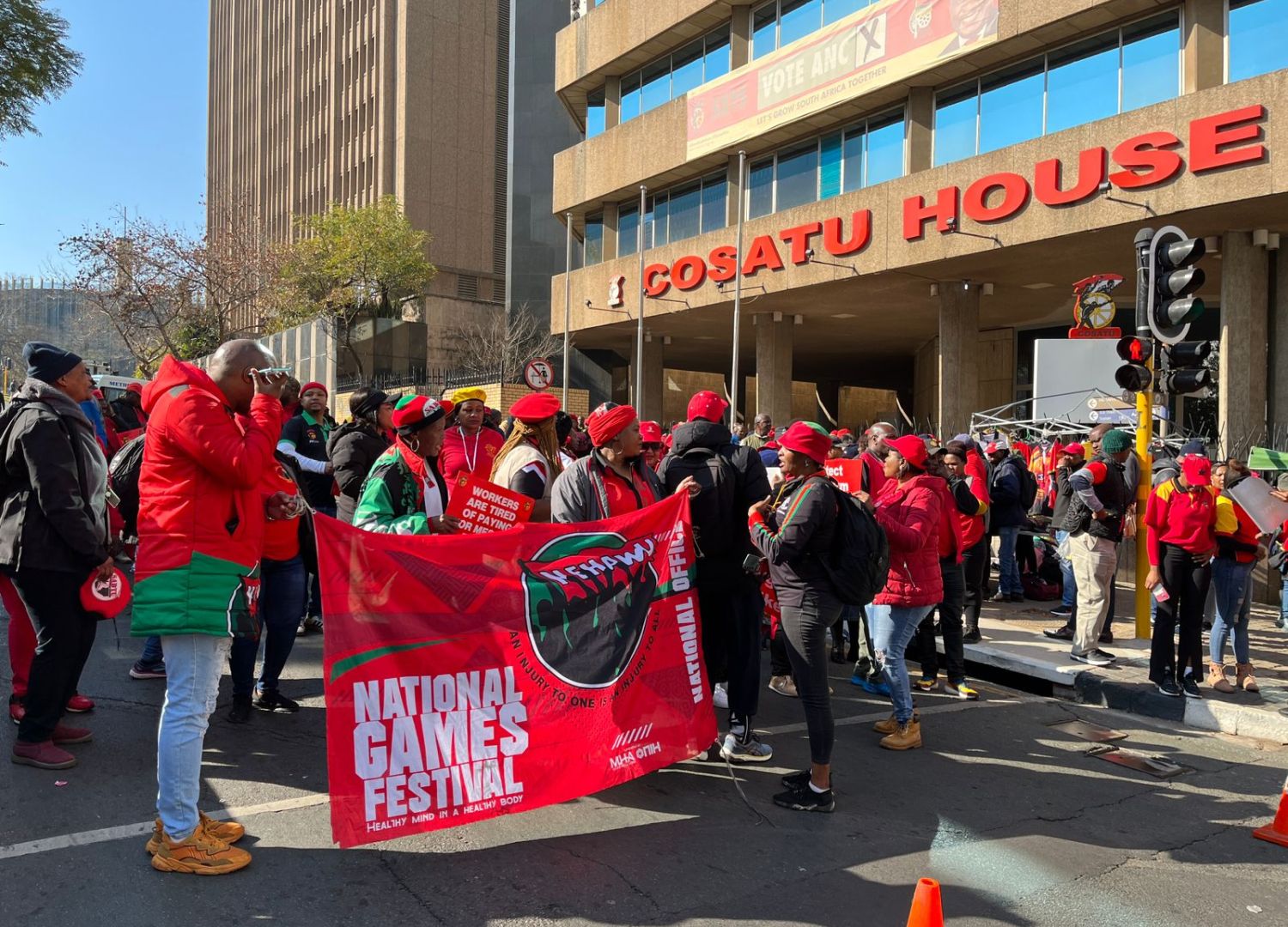
By Lehlohonolo Lehana.
Photo Credit: Michel Bega.
The Congress of South African Trade Unions (COSATU) welcomed the proposed 2026 increase of inflation plus 1.5% for the National Minimum Wage (NMW), saying the increase would see the current R28,79 per hour pass R30 in 2026.
The Department of Employment and Labour has gazetted the National Minimum Wage Commission (NMWC) recommendation that bottom-line pay for workers in South Africa be hiked by CPI+1.5% in 2026.
The commission makes its recommendation as part of consultations and deliberations on the National Minimum Wage.
It publishes its recommendation and invites the public to give input, and then submits it to the Department of Employment and Labour.
The department then considers it and announces the changes early in new year for implementation from March.
The National Minimum Wage is the lowest remuneration rate that employers are obligated and legally permitted to pay their employees for each ordinary hour worked.
“Whilst COSATU had tabled a slightly higher proposal, we are pleased that our demand for a positive above inflation increase prevailed and secured the support of the Commission. The proposed increase has now been gazetted for public comment. We encourage workers and progressive civil society to submit their messages of support for this increase to the NMW Commission which will then table the recommendation to the Minister for Employment and Labour, Nomakhosana Meth, for her final approval, said the federation in a statement.
“The NMW Act mandates the Commission to ensure the NMW is not eroded by inflation as this would plunge many workers deeper into debt, poverty and despair. This positive increase will help protect the value of the NMW and workers’ ability to take care of their families. It will inject badly needed stimulus into the economy, spurring growth, sustaining and creating jobs. It will provide relief to 5.5 million workers earning within the NMW range in particular farm, domestic, construction, retail, transport, hospitality, security, and cleaning workers.”
“Beyond the NMW, government needs to expedite measures to tackle the network and other obstacles to growing the economy as well as reinforce the various elements of the social wage, e.g. subsidised public transport, education, housing, municipal services and social security. These are critical to fixing the state, unlocking the economy, reducing poverty, creating decent jobs as well as ensuring workers earn a living wage, it said.”
However, the commission said it is important to note that rate of inflation that will be implemented will be the inflation rate six weeks prior to the 1st of March, which is the date that the new minimum wage comes into effect.
The recommendation is open for public comment until 12 January 2026.