
By Lehlohonolo Lehana.
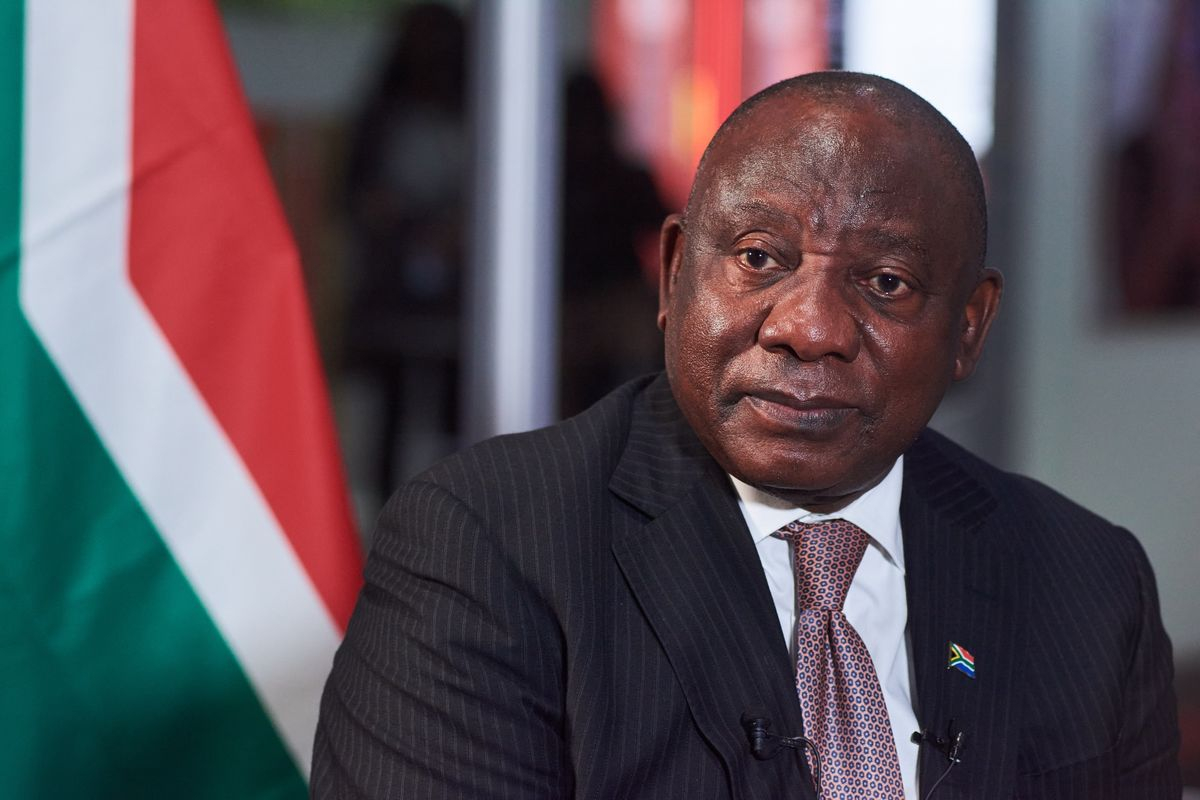
President Cyril Ramaphosa committed to the National Assembly he would implement the State Capture Commission’s recommendations, despite him stating in court papers the commission’s recommendations are “not binding”.
The President was responding to questions for oral reply in the National Assembly.
He was answering a range of questions posed by parties represented in Parliament.
In January this year, Chief Justice Raymond Zondo handed over the first three-volume report almost four years since the establishment of the Commission at the Union Buildings in Pretoria.
“When I received the final report of the State Capture Commission in June 2022, I said that I would study the report and provide a comprehensive response and a plan for implementation within the court-stipulated timeframe of four months,” he said.
According to the President, this requires consideration of some 358 recommendations from the Commission.
They range, according to the President, from taking action against alleged perpetrators and enablers of corruption to the recovery of funds, proposed reforms and prosecution.
“As a result, many of the recommendations for criminal investigation, prosecution and asset recovery contained in the Commission’s report were already receiving priority attention.”
In addition, work was underway across all stakeholders to deal with the Commission’s findings and recommendations.
“You may recall that I amended the regulations of the State Capture Commission in 2020 to permit sharing of information, records or documents with any law enforcement agency.
“This was to enable law enforcement agencies to proceed with investigations while the State Capture Commission was busy with its work.”
As a result, many of these recommendations for criminal investigation, prosecution and asset recovery contained in the report are receiving attention.
These include reforms of the intelligence services, various legislation reforms, new financial and governance reforms, capacity building, and improved information to prevent state capture and corruption.
Meanwhile, he said, this does not mean that government has been waiting for the tabling of this response plan to start the process of implementation of recommendations made by the Commission.
“Our approach is guided by the need to ensure both that the perpetrators of State Capture face the consequences of their actions and that we use this opportunity to design and implement far-reaching reforms to prevent a future occurrence.”
He believed it was important to view the State Capture Commission report as a great opportunity to deal with what happened in the past.
“But more importantly, to also deal with what should happen in the future in the form of preventing State Capture in any shape or form re-emerging in our country.”
Ramaphosa added the commission approached the court to condone the final report’s late submission and correct some errors.
If there is a change in the plan to meet the deadline, they will alert Parliament and provide reasons.