
By Lehlohonolo Lehana.
State owned power utility Eskom says it will suspend Stage 2 load shedding from midnight on Sunday, then implement it between 4pm until midnight from Monday to Wednesday.
“The load shedding is required to help manage emergency generation reserves during the evenings. Eskom will publish a further update on Wednesday or as soon as any further significant changes occur,” it said.
Since yesterday afternoon, two generation units at Grootvlei as well as a unit each at Kriel and Majuba power stations were returned to service. A generation unit at Lethabo power station was taken offline for repairs.
The group currently has 5,244MW on planned maintenance, while another 15,612MW of capacity is unavailable due to breakdowns.
Load shedding was downgraded to stage 1 on Friday, following stage 2 for most of the week. Load shedding was suspended last weekend for a little over a day before breakdowns forced rolling blackouts to return.
Before being suspended, Eskom was on the longest load shedding streak in history, carrying the schedules over 32 days.
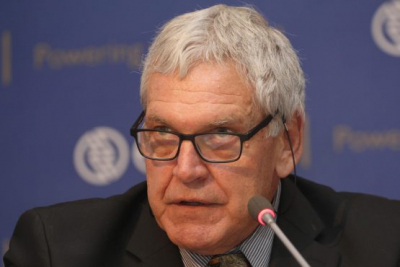
Earlier this week, Eskom chief operating officer Jan Oberholzer said that the country will be dealing with persistent load shedding for at least 18 months before new generating capacity can be added to the grid.
“We need another year or year-and-a-half to get out of this,” Oberholzer said at the Agri SA conference near Johannesburg on Thursday. “We are going to go through a tough time over the next year and a half.”
For access to other load shedding schedules, Eskom has made them available on loadshedding.eskom.co.za.
Smartphone users can also download the app EskomSePush to receive push notifications when load shedding is implemented, as well as the times the area you are in will be off.
Meanwhile South Africa and Saudi Arabia have signed 17 memoranda of understanding related to various industries, says president Cyril Ramaphos – key of which relates to renewable energy and green hydrogen projects.
The president was in the middle eastern nation this weekend, bolstering relations and trying to draw investment amid several crises hitting the country.
Remarking at the closing session of the Saudi Arabia-South Africa Investment Conference on Saturday, Ramaphosa noted that trade relations between the two countries already amounted to $5 billion, which could grow even further.
In particular, the countries could partner on mining and industry – including health products, chemicals, steel, automobiles and many others; agriculture and food processing; tourism and hospitality; and most importantly, energy and renewables.
“I look particularly forward to welcoming more of your renewable energy firms and technologies to enter our market. We hope to see you partnering with South African firms as we increase our renewable energy generation footprint and manufacture green energy components,” he said.
“An area of potential synergies I want to particularly refer to is the green hydrogen economy,” he added.
Ramphosa referred to Saudi Arabia’s Neom project on the Red Sea Coast – an ambitious and futuristic smart city concept valued at over $500 billion – noting that its 100% renewable energy target would make partnering with South Africa a key opportunity.
“With plans to source 100% of Neom’s energy from renewable sources, including hydrogen-based power, Saudi investors will find substantial opportunities to leverage in South Africa in this regard. Similarly, there are opportunities for South African businesses to leverage at Neom,” the president said.
“Our ambitious plans to unlock the potential of the green hydrogen economy include developing a Hydrogen Valley that stretches from the platinum belt through the country’s industrial heartland. A number of multinational investors like Anglo-American Platinum have already begun leveraging these opportunities.
“Saudi investment across the value chain of the green hydrogen economy will not just support South Africa’s economic goals, but those of Saudi Arabia as well in its ongoing drive towards sustainability.”