
By Lehlohonolo Lehana.
South Africa Water Utility Rand Water has urged Gauteng residents to use water sparingly at least until the province experiences more rainfall and lesser heatwaves.
Rand Water gave an update to the public on its water supply constraints as some household and businesses continued to battle water outages under stage 2 restrictions.
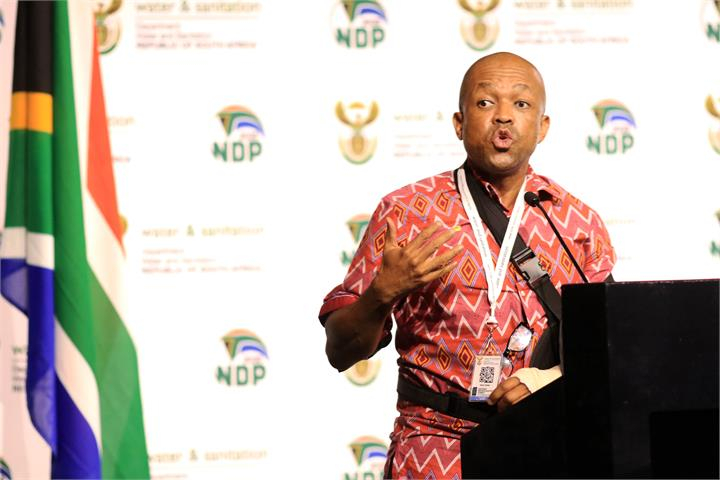
During the briefing, Rand Water CEO Sipho Mosai assured residents that the utility’s pumping enough water to the 18 municipalities it services including Johannesburg, Tshwane and Ekhurhuleni adding that there was enough water to go around.
“We cannot act when the resource is completely depleted and start doing something about it. So we are doing this not because we don’t have water, but we are saying we need to distribute it, conserve it and use it wisely if we practice sound water conservation matters.”
However, Mosai said the decaying infrastructure in the municipalities was hindering the delivery of this basic human need.
“I don’t think at municipal level, because of the financial challenges we have, they are budgeting enough to fix leaks and invest in infrastructure. So, selfishly as a water practitioner, I want to see more budgets and more allocations that go to fixing leaks at that level.”
As parts of Gauteng languish without water for close to three weeks, Mosai said the utility’s reservoirs have shown some slight improvements.
Mosai acknowledged that the water outages were crippling South Africa’s economic hub, but seemingly failed to announce when supply would be stabilised.
He instead refuted claims that the utility’s infrastructure was caught off guard by the high volumes of water consumption in the various metros.
Municipal Debt
Gauteng metros are using more and more water, but increasingly falling behind on paying for the resource.
Municipalities owe a collective R5.3 billion.
Mosai said municipalities’ failure to pay affected the entity’s ability to upgrade its infrastructure, which had a knock-on effect on its ability to supply water.
The bulk water supplier supports 18 municipalities, 46 mines and 959 industrial and direct consumers in Gauteng, Mpumalanga, the Free State, and Northern Cape.
This after major water interruptions in many areas in the northern provinces, especially Gauteng’s three metros which are densely populated.
“There are financial implications of increasing the water supply to municipalities suffering serious economic hardship.
“[The hardship] is a function of what we are seeing with the tough economic conditions people are experiencing after the Covid pandemic.
“We are pushing more water [into the reservoirs] but debtors’ days are going the wrong way.”
Mosai said municipalities which normally paid within 30 days, were now taking an average of 80 days to pay for water.
Rand Water purifies and then supplies water to municipalities through reservoirs.
From there, municipal entities, like Johannesburg Water, transport the water to municipal reservoirs and towers and then into reticulation to residents and businesses.
The Rand Water’s year-to-date collection rate is 69% with the debtors’ book sitting at just under R5.3 billion. The accounts overdue outside the current account period sit at R3.3 billion.