
By Lehlohonolo Lehana.
President Cyril Ramaphosa visited the exhibition at the 2nd Presidential Summit on Gender-Based Violence and Femicide now underway at the Gallagher Convention Centre in Midrand, Johannesburg.
The two-day summit is being held under the theme: “Accountability. Acceleration and Amplification, NOW!”.
The summit will reflect on the work undertaken since the first Presidential Summit on GBVF in November 2018, report on key successes and challenges, and outline clear strategies to overcome them.
The objectives of the summit are:
- To demonstrate continued high-level commitment and state accountability for the national response to GBVF;
- To accelerate actions and accountability by key government departments and all stakeholders, including civil society, the private sector and labour;
- To be a platform through which to share areas of progress by government, civil society, the private sector, labour and other sectors to inspire similar actions across all stakeholders; and
- To provide a space for wider collaborative engagement between all stakeholders to strategise on strengthening the overall response to and prevention of GBVF in the country, bringing the -whole-of society approach strongly into focus.
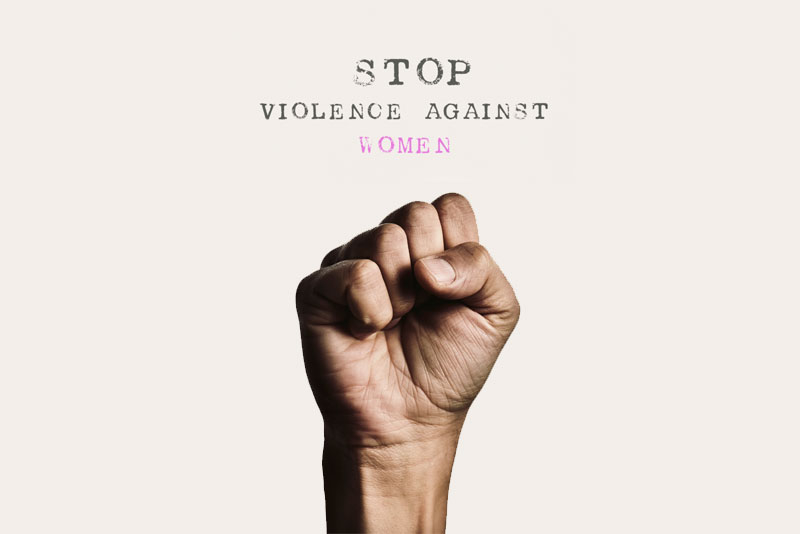
Ramaphosa has challenged delegates attending the second Presidential Summit on Gender-Based Violence and Femicide (GBVF) to be focused on action and results toward ending violence against women and children.
“As a society, ending violence against women and children cannot be anything but our foremost priority, “Ramaphosa said.
Delivering his keynote address, the President noted that during the first summit, the participants collectively made a firm commitment to the nation to undertake a comprehensive, effective and united response to gender-based violence and femicide.
Women, Youth and Persons with Disabilities Minister, Maite Nkoana-Mashabane, has called on citizens to practice the real cultural norms they know and love, which protect women and children.
“There’s no culture that says you must kill women and kill children. We need to practice the real cultural norms we know,” Nkoana-Mashabane said.
Nkoana-Mashabane made the remarks at the Second Presidential Summit on Presidential Summit on Gender-Based Violence and Femicide (GBVF), currently underway at Gallagher Convention Centre in Midrand.
The Minister argued that there is no need for South Africa to have many women and children dying as the country is not facing any war.
“South Africa is not a war country, so, there’s no need for children to feel unsafe in the streets and women feel unsafe in their bedrooms.”
According to the Minister, the National Strategic Plan on Gender-Based Violence and Femicide (NSP on GBV)) is the only way to deal with GBVF.
The NSP is outlined in six pillars, which include accountability, coordination and leadership; prevention and rebuilding social cohesion; justice, safety and protection; response, care, support and healing; economic power; and research and information management.
Filling of forensic analysis vacancies
Highlighting progress made since the first Presidential Summit on GBVF held in November 2018, Police Minister Bheki Cele said the filling of 34 vacancies for forensic analysis is underway and at an advanced stage to capacitate the Eastern Cape with 28 analysts, and six for the Western Cape.
He also noted that the department has able to address backlog in DNA tests from 241 000 last year to 71 000 this year.
“In terms of training and development, 22 forensic analysts from the Eastern Cape Biology Laboratory are undergoing training in DNA Analysis. The Western Cape and Gauteng FS laboratories have been equipped with additional thermos shakers, centrifuges, crime index lanes, and genetic analysers,” Cele said.
Correctional Services Minister, Ronald Lamola, said the number of Thuthuzela Care Centres (TCCs), have been increased from 55 to 61, with the National Prosecuting Authority’s Sexual Offences and Community Affairs Unit redesigning the centres to allow the survivors of rape to report the cases direct to the Thuthuzela Care Centres.
The Thuthuzela Care Centres are one-stop facilities that have been introduced as a critical part of South Africa’s anti-rape strategy, aiming to reduce secondary victimisation and to build a case ready for successful prosecution.
Women also have rights to life
National Assembly Speaker, Nosiviwe Mapisa-Nqakula, emphasised that the Bill of Rights talks to the right to life, and “as women we have the right to life.”
Mapisa-Nqakula also warned that if women are not being attended to at the police stations when coming to report the cases of abuse, the number of women who are serving life at the correctional facilities, will keep on increasing.
“Scores of women are serving life because they have been subjected to gender-based violence and at some point they had to retaliate and ended up killing their abusive partners,” Mapisa-Nqakula said.
Livestream Video Below:
Video Courtesy of SABC.