
By Lehlohonolo Lehana.
The parties in the conflict in Ethiopia’s northern region of Tigray have agreed on a “permanent cessation of hostilities”, the African Union mediator said, just more than a week after formal peace talks began in South Africa.
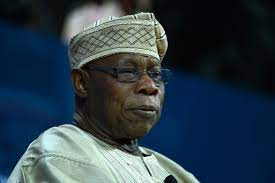
Former Nigerian President Olusegun Obasanjo, in the first briefing on the peace talks on Wednesday, said Ethiopia’s government and Tigrayan authorities have agreed on “orderly, smooth and coordinated disarmament” along with “restoration of law and order”, “restoration of services” and “unhindered access to humanitarian supplies”. Obasanjo was briefing the media in Pretoria regarding the AU-led negotiations to resolve the conflict in Ethiopia.
He described the truce as a beginning of a new dawn for Ethiopia, and Africa as a whole.
“Let me hasten to thank God for this new dawn. We are seeing in practice and actualisation what we have tried to achieve for ourselves over the years – African solutions for African problems.”
The Chairperson said he views the peace agreement signing exercise as the implementation of Agenda 2063 – which embodies silencing the guns in Africa.
“The two parties in the Ethiopian conflict have formally agreed to the cessation of hostilities as well as to systematic, orderly, smooth, and coordinated disarmament, restoration of law and order, restoration of services, unhindered access to humanitarian supplies, protection of civilians especially women, children, and other vulnerable groups, among other areas of agreement,” he explained.
The conflict started on November 2020, when Ethiopian Prime Minister Abiy Ahmed ordered a military offensive against regional forces in Tigray.
The Prime Minister, accused the region’s ruling party, the Tigray People Liberation Front (TPLF), of attacking the base and later the Ethiopian military bombed the facility in retaliation.
Soon after, the massacres were blamed on the TPLF and militia from the neighbouring Amhara region of Ethiopia, which were supporting government troops.
“The agreement also ensures security for all concerned within and outside Ethiopia,” said the Chairperson.
Obasanjo, who was appointed as High Representative for the Horn of Africa to promote peace, security and stability, visited Ethiopia several times and went to the Tigray region eight times.
Over the last 14 months, he also consulted regional leaders and stakeholders in Ethiopia, Intergovernmental Authority on Development (IGAD) Member States, Africa and outside the continent.
“Only last month, and for the exercise that has brought us here, the Chairperson of the AU Commission appointed former President Uhuru Kenyatta and former Deputy President, Phumzile Mlambo-Ngcuka, to join me in moving the process forward.”
He also congratulated the two warring sides on what they had achieved.
“This moment is not the end of the peace process but the beginning of it. Implementation of the peace agreement signed today is critical to the success of the process,” he said.
Obasanjo also appreciated President Cyril Ramaphosa and his government for being a “wonderful” host during peace talks held in South Africa.
He also thanked three observers, the UN, IGAD and the United States, and the many that were not in the room during the briefing.
“We particularly thank the African Development Bank and the European Union for their financial support and the United Nations (UN) for their logistical support.”
The UN-backed investigators found that the Ethiopian government committed crimes against humanity of murder, torture, rape and sexual violence during the civil war.
Bloomberg cited research from Belgium’s Ghent University that estimates half a million people have died since the war broke out, between 50 000 and 100 000 from the fighting, 150 000 to 200 000 from starvation and more than 100 000 from the lack of medical attention.
Meanwhile minister Ahmed hailed Wednesday’s breakthrough deal and committed to working towards the agreement.
“The commitment to peace remains steadfast. And our commitment to collaborating for the implementation of the agreement is equally strong,” he said in a statement.
Tigray’s rebels hailed the deal and said they had made concessions.
“We are ready to implement and expedite this agreement,” said the head of their delegation, Getachew Reda.
“In order to address the pains of our people, we have made concessions because we have to build trust.
“Ultimately, the fact that we have reached a point where we have now signed an agreement speaks volumes about the readiness on the part of the two sides to lay the past behind them to chart a new path of peace,” said Reda.
United Nations Secretary-General Antonio Guterres welcomed the truce.
“It is very much a welcome first step, which we hope can start to bring some solace to the millions of Ethiopian civilians that have really suffered during this conflict,” the spokesperson for the secretary-general, Stephane Dujarric, told reporters.
The United States also hailed the agreement.
“The African Union’s announcement of the signing of a cessation of hostilities between the government of Ethiopia and the Tigray People’s Liberation Front represents an important step towards peace,” Department of State spokesman Ned Price told reporters.
Mesenbet Assefa, an assistant professor of law at Addis Ababa University, described the agreement as a “huge political development”.
International Affairs Minister Naledi Pandor has hailed the historic agreement between warring parties in Ethiopia and says it signals a commitment to ending the use of force by parties.