
By Lehlohonolo Lehana.
Department of Mineral Resources and Energy Minister says electricity generation will remain largely in government hands for the foreseeable future amid calls for ailing state power utility Eskom to be privatised.
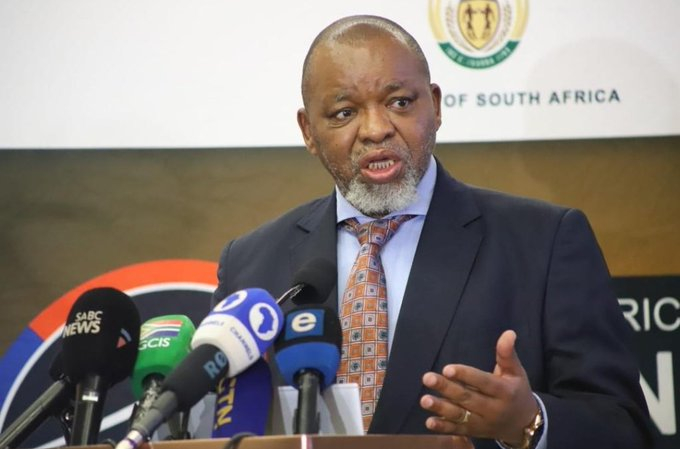
Mantashe was speaking during a virtual National Assembly debate of the Just Energy Transition (JET).
He said previously that overreliance on the private sector would be a mistake. He suggested the establishment of another state entity to compete with Eskom and boost energy supply.
“The state must continue playing its role in ensuring that people have access to this public good. Hence the talk of the generation which should be a public entity that continues to develop baseload capacity.
“It must therefore be clear that Eskom is not for sale. It remains the country’s baseload energy generator. The disaggregation of Eskom into three utility divisions…forms part of our plan to secure energy supply to society,” he said.
Mantashe reiterated his stance that a “combination of energy technologies” – an energy mix – is the most “reliable solution” to addressing energy supply needs while embarking on a transition from high carbon emissions to a low carbon economy.
“We ought to guarantee baseload energy supply through a combination of gas, nuclear, coal and hydro. A pendulum swing from coal powered energy generation to renewable energy does not guarantee baseload stability. It will sink the country into a baseload crisis.
“The pressure to abandon coal instantly must be resisted and opt for a systematic step by step transition that we can afford.
“The work done by the Council for Geoscience in collaboration with the World Bank on carbon capture, utilisation and storage gives us hope that coal will continue to play a critical part in our Just Energy Transition,” he said.
Mantashe emphasised that South Africa’s JET must bear in mind the livelihoods of those working in and benefitting from the coal industry.
“The Just Transition debate is a complex and contested terrain in which countries across the globe seek to advance their own national interests. We accept that a transition is a journey and not an event.
“It is a journey that must be ‘just’. Justice must be seen to be done, it must be people centred and not just about numbers and it must take into consideration socioeconomic conditions of communities that will be affected.
“It is our collective responsibility to ensure that the people of South Africa are cushioned from the dire consequences associated with the Just Energy Transition, including job losses in carbon intensive industries. Our transition must be geared towards advancing our national interests…not hinder the country’s pursuits of its socioeconomic objectives.”