
By Lehlohonolo Lehana.
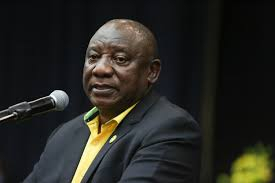
ANC President Cyril Ramaphosa delivered the closing address as the ruling party’s three day NEC meeting officially came to a close at the Naserc Expo Center.
Ramaphosa said the NEC discussed coalitions and “affirmed a commitment to the party’s manifesto” that outlines the improvement of service delivery at municipalities.
“Our previous and more recent experience with coalitions showed that they tend to contribute to instability in councils. The ANC NEC reaffirmed its principled approach towards a coalition government.
“This is based on the need to advance the achievement of our manifesto commitments, particularly to build local democracy and service delivery and improve accountability to citizens.”
The ANC’s control of key metros started waning after the 2016 local polls and has since failed to gain permanent control of councils such as Tshwane, Johannesburg and Ekurhuleni in Gauteng and Nelson Mandela Bay in the Eastern Cape.
Ramaphosa also said BEE remains one of the ANC’s key policies.
“The NEC has affirmed the ANC’s position that broad-based black economic empowerment remains one of our key policy instruments. Through the NEC economic transformation committee, we will monitor progress in the implementation of this policy and engage with stakeholders especially black business and black professionals,” said Ramaphosa.
Finance minister Enoch Godongwana this month gazetted the new Preferential Procurement Regulations, expected to take effect in January 2023. Experts seek to relax the requirements for parastatals to procure equipment from local or black suppliers.
Ramaphosa said the ANC has to strengthen its affirmative action measures as more black people still had to benefit.
He added that the ANC would continue to tackle the ‘triple faultlines’ of poverty, unemployment and inequality in South Africa.
Moving forward, without giving any specific plans, Ramaphosa said that the ANC will double down on its efforts to address the growing crisis by extending social grants where possible and focus on basic education and universal healthcare.
“We are committed to maintain and, to the extent possible, expand social security to protect the vulnerable and reduce poverty,” Ramaphosa said. “This must form part of our efforts to build a comprehensive social security system.”
The party emphasised its pursuit of the National Health Insurance scheme (NHI) and accelerated land redistribution – two of the most controversial policies in its current basket – while talking up black economic empowerment and clamping down on corruption.
Ramaphosa said as the term of the current NEC comes to an end, they will be able to report to the national conference next on some of the successes since its election in 2017.
The political and organisational reports that will be tabled at the conference must, however, be honest about the failures of this NEC, Ramaphosa said.
“Now our report will reflect that while this NEC has had to confront serious challenges, we can point to several achievements and progress in a number of areas. At the same time, we will need to acknowledge our shortcomings and our failings as the National Executive Committee,” he said.
“As we also point out some of the areas where we’ve been able to make progress, we must ensure our political and organisational reports are frank, critical and comprehensive so that we can empower delegates to develop a programme that takes our movement into a new phase of rebuilding.”
Sunday’s speech concentrated largely on committees having submitted various reports and preparations for the upcoming December elective conference.
Ramaphosa said the NEC discussed the party’s preparedness to hold its 55th elective conference.
The elective conference will reaffirm the commitment by party members to the renewal of the organisation,” he said.