
By Lehlohonolo Lehana.
The 2022 edition of the Kearney Annual Global Cities report has revealed leading global cities that have been impacted by higher-than-expected global inflation, climate-related hazards, and investments they are making in their futures.
The report analyses the performance of 156 cities around the world.
The report utilises the Global Cities Index (GCI) as the picture of the present standing while using the Global Cities Outlook (GCO) as a forecast for the future.
The rankings measure cities by their ability to attract and retain global capital, people, and ideas and to sustain this performance in the long term.
Globally, cities were impacted by higher-than-expected inflation worldwide, the ongoing economic and political repercussions of the conflict in Ukraine, and the escalating effects of climate change, manifesting in calamities such as extreme heat, droughts, and increasingly intense storm activity.
These harsh realities of 2022 affected all cities globally, but some weathered the storms better than others.
Ultimately, cities that were more resilient in the face of these challenges and better adapted to the changing circumstances ranked higher.
The report also provides recommendations that cities could follow to adapt successfully and pre-emptively respond to the challenging economic conditions.
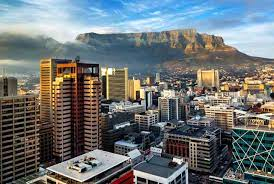
Out of the 13 African cities included in the study, Johannesburg remained the highest ranking in 58th place – despite dropping by three positions compared to 2021. The report showed that Cape Town, which ranked 81st last year, climbed by one spot and now ranks 80th.
The outlook for both cities remains negative, with the report placing Joburg and Cape Town in the bottom 50 in the ranking. Both cities’ prospects remained unchanged – ranking 122nd and 126th, respectively, the same positions recorded in 2021.
Kearney’s outlook report highlights hyperinflation’s strong knock-on effects on the future viability of a global city.
Reflecting the overwhelming impact of the rising costs of living, retention of human capital, and access to innovation metrics are the most significant predictors of change in overall scores and rankings as entrepreneurs and creators consider moving out of the largest (and costliest) urban centres, it said.
Despite economic headwinds constricting many cities in this year’s results, the top cities demonstrated unparalleled resilience.
Kearney said that New York, London, Paris, and Tokyo retained the top four positions in the index – becoming seemingly entrenched, holding these positions for the sixth consecutive year by demonstrating the robustness of their diversity of global strengths.
There were changes at the top of the index, however. Beijing broke into the top five trading places with this year’s sixth-place city, Los Angeles, due to its growth in information exchange and political engagement scores.
“In the coming year, we expect a major flux among global city rankings as policymakers and decision-making takes centre stage for 2023,” the group said.
“City leaders have a daunting task with an outsized role – positive or negative – in determining how the residents of their cities weather the anticipated economic storm ahead. In such volatility and uncertainty, prudent decision-making is more important than ever.
“The past two years of necessary, but frequently reactive, policymaking has shown that well-intentioned policies can lead to painful after-effects. Simply solving the immediate problem can worsen existing challenges in the medium term or create new issues altogether.”